
What Are the Top Material Handling Equipment Types in 2026?
Material Handling is changing, but the right equipment still depends on the job. A forklift moving mixed pallets through a loading bay solves a different problem from an automated system feeding cartons to a packing line. In 2026, buyers will compare familiar workhorses—forklifts, conveyors, cranes, and pallet trucks—with automated guided vehicles, autonomous mobile robots, and automated storage and retrieval systems. The best choice is rarely the newest one.
Industry data helps explain the growing interest in automation. The International Federation of Robotics reported 541,302 industrial robot installations worldwide in 2023, with 4.28 million robots operating across industries. These figures describe industrial robots broadly, not material handling equipment alone. Still, they signal a wider move toward mechanized workflows. MHI’s 2024 Annual Industry Report also surveyed supply chain professionals about technology adoption and investment, offering useful context for companies assessing modernization. Survey results reflect respondents’ plans, however—not guaranteed outcomes.
This guide compares major equipment types by function, common applications, and practical trade-offs. It considers throughput, floor space, load characteristics, safety, maintenance, and integration with warehouse systems. A busy distribution center may benefit from conveyors and AMRs; a smaller facility may get more value from well-maintained forklifts. Simple, but important. Technology does not fix poor process design by itself. Some choices will remain imperfect, and site-specific assessment matters. The goal is to help readers ask better questions before selecting equipment for 2026.
What Material Handling Equipment Does in Modern Operations
Material handling equipment does more than move products from one point to another. It links receiving, storage, picking, packing, and shipping into a working flow. When equipment suits the task, workers spend less time carrying loads or waiting for access. That can reduce delays and unnecessary physical strain.
At a loading dock, pallet jacks move short distances, while forklifts handle heavier loads and higher storage positions. Small details matter. A narrow aisle, uneven floor, or poorly placed pallet can slow a shift. Conveyors keep cartons moving between work areas, but their speed and layout must match the actual order mix. Racks make stock easier to locate, provided labels remain visible and items are stored within safe load limits.
Some operations use automated vehicles or sensors to move goods and track inventory. These tools can improve consistency, yet automation is not automatically the right answer. A sensor that misses a damaged label may create more work than it saves. People still need clear routes, practical training, and a way to report equipment problems. Sometimes the most useful improvement is a better-positioned staging area, not another machine. A layout that looks efficient on a plan can feel awkward during a busy shift.
How Material Handling Equipment Is Classified by Function
Material handling equipment is easiest to understand by the job it performs, not by how large or modern it looks. Transport equipment moves goods between locations. Conveyors carry cartons along a fixed route, while forklifts and pallet trucks handle loads that need flexible movement. A hoist can lift a heavy motor onto a workbench. The route matters.
Positioning equipment adjusts a load for the next task. Lift tables raise pallets to a comfortable picking height, and turntables rotate bulky items for inspection or packing. Unit-load formation equipment groups separate goods into a single load. Stretch wrappers and palletizers help stabilize stacked cartons, though a poorly arranged pallet can still shift during handling.
Storage and retrieval equipment holds goods until they are needed. Shelving suits small items picked by hand; pallet racks use vertical space for larger loads. Automated storage systems can retrieve containers quickly, but they depend on accurate inventory data and careful maintenance. Identification and control tools, such as barcode readers and warehouse software, help track items and coordinate equipment. Categories overlap in real operations. A conveyor may transport a carton and feed it directly into a sorting system, so the best classification depends on the task being measured.
The Leading Material Handling Equipment Types in 2026
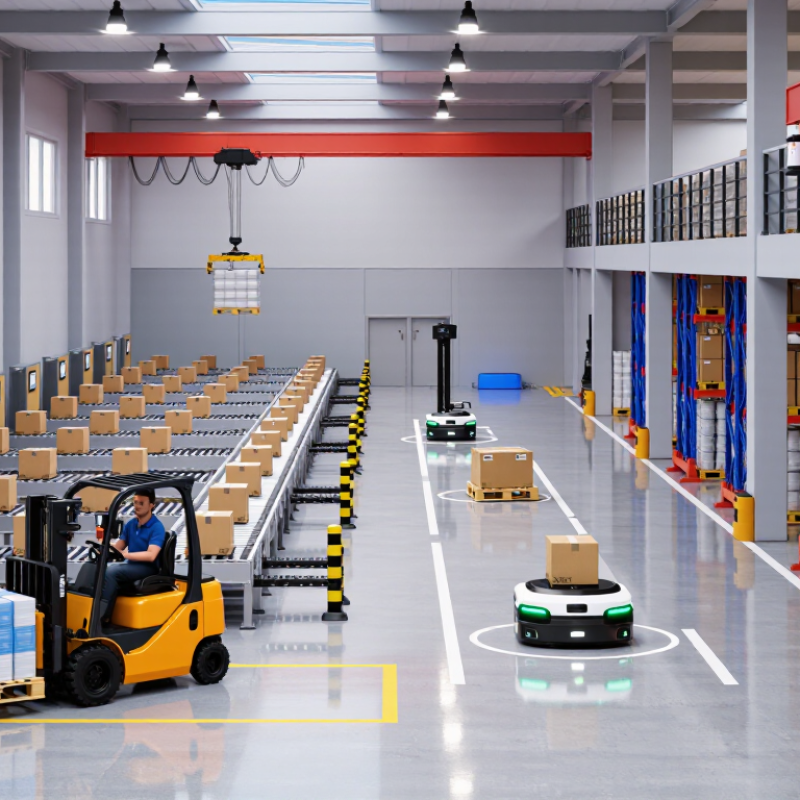
In 2026, leading material handling equipment types will include conveyors, forklifts, automated guided vehicles (AGVs), autonomous mobile robots (AMRs), and automated storage and retrieval systems (AS/RS). Conveyors and sorters move cartons steadily across packing areas; forklifts handle pallets at docks and racking. AGVs follow set routes, while AMRs can navigate changing layouts. AS/RS can use vertical space when floor area is tight. Fit matters more.
MHI’s 2024 Annual Industry Report found that 55% of surveyed organizations planned to increase investment in supply chain technology. That signals ongoing interest in automation, not a guarantee that every warehouse needs it. A narrow aisle, uneven floor, or frequently changing product mix can make a costly system less useful than expected. Match equipment to load size, travel distance, throughput, and operator workflow. A small pilot can reveal practical snags before a full installation.
Tips: Measure peak-hour traffic, not just daily averages. Check turning space, floor condition, and charging needs. Keep a manual backup plan; even well-designed systems can cause bottlenecks when a process changes.
How Automation Is Shaping Equipment Design and Use
In 2026, material handling equipment is increasingly designed around connected workflows, not isolated machines. Conveyors move steady, repeatable loads, while autonomous mobile robots can reroute totes around temporary obstacles. Automated storage and retrieval systems use vertical space, and robotic palletizers handle repetitive stacking. Yet automation changes more than speed. Sensors, safety scanners, and fleet software influence aisle width, handoff points, and maintenance access. A poorly placed charging station can disrupt a whole shift.
Tips: Map real travel paths before choosing equipment. Test with mixed loads, peak-hour traffic, and a blocked aisle. Keep manual fallback steps clear. Track jams and battery downtime weekly.
Automation works best when equipment suits the work, not the other way around. A narrow facility may benefit from compact mobile robots, while a high-volume dock could need conveyors and lift systems. Data can reveal recurring delays, but it cannot explain every cause. A sensor may record a stop; a worker may know a pallet was wrapped unevenly. That gap deserves attention. Training, simple controls, and accessible service points remain essential, even in highly automated sites. Some setups will need adjustment after launch.
How to Select Equipment for Loads, Facilities, and Workflows
What Are the Top Material Handling Equipment Types in 2026?
The right equipment depends less on trends than on the load and the route it travels. Pallet jacks suit short, level moves; forklifts handle heavier loads and vertical storage. Conveyors can keep repetitive goods moving, while carts work well for smaller batches. Match capacity to the heaviest expected load, not the average one. Check load dimensions and stability, too. A tall, uneven pallet may need different handling than a compact crate.
Tips: Measure aisle width, turning space, and floor condition before choosing. Include the full load weight, packaging included. Small details matter. Leave room for people and safe stopping distances.
Think about the facility and workflow together. Narrow aisles may favor compact equipment, while ramps, rough floors, or tight doorways can rule out options that look suitable on paper. For frequent, predictable movement, powered equipment may reduce effort; for occasional short trips, a manual cart could be enough. Check charging access, maintenance needs, operator training, and storage space. Then observe a typical shift: where do loads wait, turn, or get handled twice? Real workflows are often messier than diagrams. I would review the choice after a trial, since one busy week can reveal bottlenecks that a site walk misses.
Related Posts
-
10 Tips for Choosing Material Handling Supplies?
-
What Is a Material Handling Solution?
-
China Top Material Handling Equipment Suppliers?
-
Exploring Innovative Alternatives in Material Handling Products for Enhanced Efficiency
-
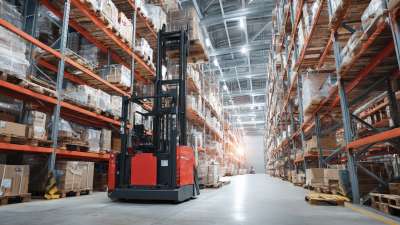
Revolutionizing Warehousing: How Advanced Material Handling Equipment Boosts Efficiency by 30% in Supply Chains
-
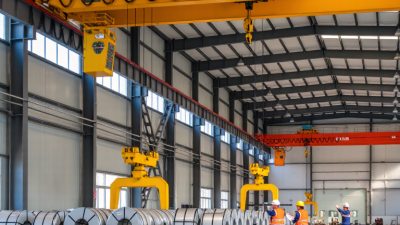
Top Material Lifting Equipment Suppliers in China?