
What Is a Material Handling Solution?
What Is a Material Handling Solution? The answer reaches far beyond forklifts and warehouse shelves. It covers the planned movement, storage, protection, and control of materials across a facility. James M. Apple Jr., a respected material handling author, described the discipline as “the art and science involving the movement, packing and storing of substances in any form.” That definition remains useful because every box, pallet, tote, and component needs a safe path.
In practice, Material Handling Solutions connect people, equipment, software, and operating procedures. A small warehouse may use pallet jacks, shelving, barcode scanners, and clearly marked walking lanes. A larger distribution center may add conveyors, automated storage systems, robotic vehicles, and warehouse management software. The goal is not automation for its own sake. It is better flow. Fewer unnecessary touches. Safer work.
A strong solution begins with observation. Where do delays occur? Which items are lifted repeatedly? Does a worker walk twenty meters for one label? These details matter. Still, no design is perfect. A system that looks efficient on paper may frustrate employees during a busy shift. Dust, damaged cartons, poor lighting, and seasonal demand can expose weak assumptions.
Reliable providers study the site, test practical options, and measure results after installation. They consider ergonomics, maintenance, training, energy use, and future growth. Cost matters, but so does daily usability. The best approach may be simpler than expected. Sometimes, a better layout solves more than expensive equipment.
Definition and Scope: What a Material Handling Solution Includes
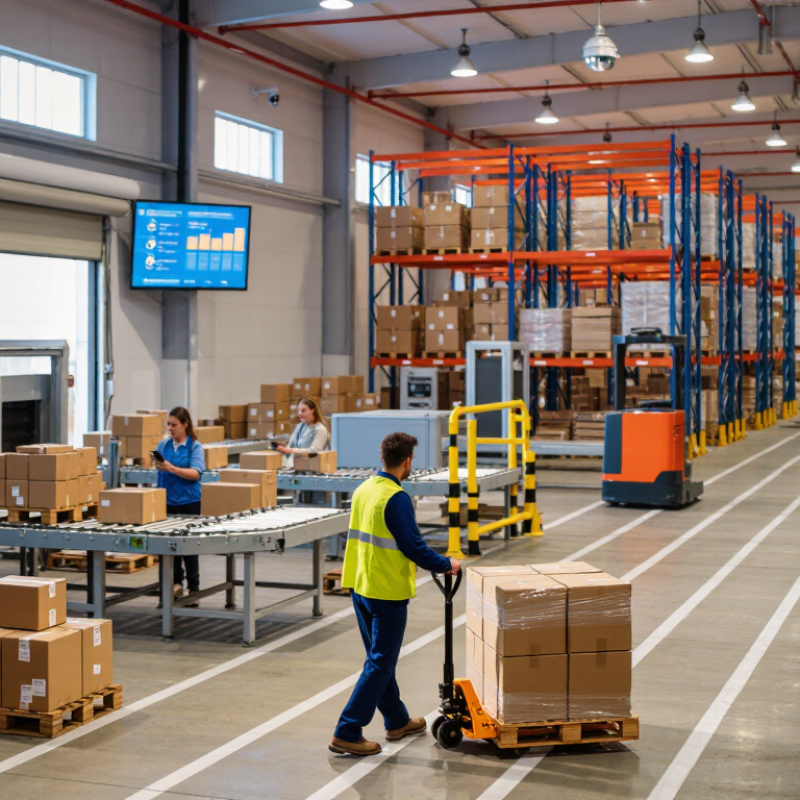
A material handling solution is a coordinated method for moving, storing, protecting, and tracking materials. It covers more than equipment. Its scope includes layout planning, storage systems, conveyors, lifting tools, software, training, maintenance, and operating procedures. Each part should support safe and efficient movement from receiving to dispatch.
In a working warehouse, the solution begins with real material flows. Teams examine package sizes, weights, travel distances, order volumes, and handling frequency. A small parcel may need different support than a heavy pallet. Clear labels, suitable aisle widths, and accessible inspection points also matter. Good planning reduces unnecessary walking and prevents repeated lifting. It should also account for changing demand, because a fixed design can become a costly obstacle.
Reliable solutions use documented procedures and measurable controls. Managers can monitor picking accuracy, damage rates, equipment downtime, and near-miss events. Operators need practical training, not only written instructions. Maintenance records should show what was checked and when. Still, no design is perfect. Forecasts can be wrong, and workers may create shortcuts under pressure. Regular observation reveals these weaknesses. A useful review might discover that one staging area causes congestion every afternoon. The layout then needs adjustment, even if it looked efficient on paper. Safety, usability, and performance must be tested together.
What Is a Material Handling Solution? - Definition and Scope: What a Material Handling Solution Includes
| Scope Dimension | What It Includes | Typical Examples | Primary Objective |
|---|---|---|---|
| Definition | An integrated method for moving, storing, protecting, identifying, and controlling materials throughout a facility or supply chain. | Manual processes, mechanical equipment, automated systems, software, procedures, and trained personnel. | Coordinate material flow from receiving through storage, production, order fulfillment, and shipping. |
| Receiving | Unloading, counting, inspecting, documenting, and directing incoming materials. | Loading docks, dock levelers, pallet trucks, scales, receiving stations, and barcode scanning. | Reduce receiving delays and improve inventory accuracy. |
| Transportation | Horizontal, vertical, or continuous movement of materials between defined locations. | Conveyors, carts, forklifts, hoists, cranes, guided vehicles, and lifts. | Move materials safely with fewer unnecessary handling steps. |
| Storage | Temporary or long-term placement of raw materials, work-in-process items, finished goods, and supplies. | Pallet racking, shelving, bins, cabinets, floor storage, mezzanines, and automated storage systems. | Use available space efficiently while maintaining accessibility and product protection. |
| Unit Load Formation | Combining individual items into a stable, manageable load for movement or storage. | Pallets, totes, cartons, roll cages, stretch wrapping, strapping, and protective packaging. | Simplify handling and reduce product damage or load instability. |
| Order Fulfillment | Picking, sorting, batching, packing, labeling, and staging customer orders. | Pick carts, pick-to-light systems, sortation equipment, packing benches, and label printers. | Improve order accuracy, throughput, and dispatch readiness. |
| Production Support | Supplying workstations and production lines with the correct materials at the required time. | Line-side racks, kitting carts, tugger trains, replenishment routes, and work-in-process buffers. | Prevent material shortages and maintain a steady production flow. |
| Identification and Control | Tracking material identity, quantity, location, status, and movement history. | Barcodes, radio-frequency identification, scanners, inventory software, sensors, and location codes. | Provide traceability and reduce misplaced, duplicated, or inaccurate inventory records. |
| Automation and Software | Technologies that automate movement, storage, scheduling, inventory control, or decision-making. | Warehouse control systems, warehouse management systems, conveyors, automated storage, and mobile robots. | Increase consistency, visibility, and scalability where operational volume justifies investment. |
| Safety and Ergonomics | Controls and practices that protect workers, materials, equipment, and facilities. | Guardrails, pedestrian barriers, load limits, equipment inspections, lifting aids, and ergonomic workstations. | Reduce collision, lifting, falling-load, repetitive-motion, and material-damage risks. |
| Packaging and Protection | Materials and methods used to protect products during handling, storage, and transport. | Cartons, cushioning, dividers, reusable containers, shrink film, edge protectors, and moisture barriers. | Limit damage, contamination, loss, and unnecessary packaging consumption. |
| Shipping and Dispatch | Final staging, verification, loading, documentation, and transfer of goods to the next destination. | Shipping lanes, staging areas, loading equipment, manifests, scales, and dispatch scanning. | Ship the correct goods on time and minimize loading errors. |
| Reverse Logistics | Handling returned, reusable, repairable, recyclable, or rejected materials. | Return inspection stations, quarantine areas, reusable containers, refurbishment zones, and recycling points. | Recover value and maintain clear control over returned materials. |
| Performance Measurement | Methods for evaluating service level, capacity, cost, productivity, quality, safety, and resource use. | Order accuracy, inventory accuracy, throughput, cycle time, utilization, damage rate, labor productivity, and on-time shipment rate. | Identify constraints and support continuous improvement decisions. |
Related Posts
-
Discovering Quality Suppliers for Best Material Handling Systems with Proven Strategies
-
5 Unique Best Material Handling Solutions for Your Business Growth
-
Top Material Lifting Equipment Suppliers in China?
-

Common Challenges Faced in Material Handling Cart Efficiency and Optimization
-
Revolutionizing Efficiency in Warehousing with Advanced Material Handling Systems
-

7 Key Benefits of Investing in Material Handling Supplies for Your Global Supply Chain