

10 Tips for Choosing Material Handling Supplies?
Choosing the right Material Handling Supplies can shape productivity, safety, and operating costs across a busy facility. A warehouse may look organized, yet one weak caster, poorly sized bin, or overloaded rack can create daily delays. John Paxton, former president and CEO of MHI, describes material handling as “the backbone of every supply chain.” That perspective matters. Supplies are not isolated purchases. They support every movement from receiving docks to shipping doors.
This guide explores ten practical tips for making better purchasing decisions. Start with the load. Record weight, dimensions, frequency, and travel distance before comparing products. A hand truck carrying uneven cartons needs different support than a pallet jack moving sealed loads across smooth concrete. Check capacity ratings carefully. Leave a sensible margin. Real workplaces are rarely as predictable as product catalogs suggest.
Think about ergonomics, floor conditions, temperature, cleaning routines, and storage space. A metal cart may survive heavy use, while a plastic bin may resist moisture better. Ask whether replacement wheels, handles, labels, and fasteners remain available. Supplier support also deserves attention, especially when equipment needs inspection or repair. Price still matters, but the cheapest choice can become expensive through damage, downtime, or worker strain. I have learned that specifications do not replace observation. Walk the route. Watch the task. Notice the awkward reach. Then reconsider the purchase before approving it. A careful decision may feel slower today, but it can prevent costly problems tomorrow.
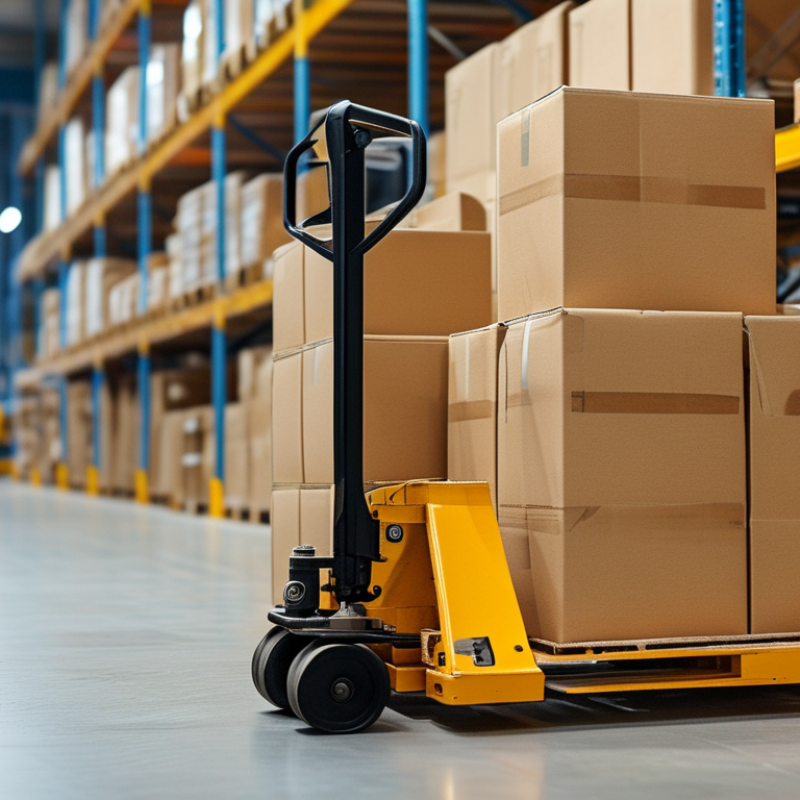
Define Load Profiles with NIOSH’s 51-lb Recommended Weight Limit
Material handling supplies should be selected from real load profiles, not guesswork. NIOSH’s Revised Lifting Equation uses a 51-pound load constant only under ideal conditions. The load must be close to the body, lifted from about 30 inches high, and handled with minimal twisting. Most workplaces are less perfect. The equation also reduces the recommended weight limit when reach, frequency, asymmetry, or poor hand coupling increases.
Tip 1: Record the heaviest routine load. Tip 2: Measure its size and grip quality. Tip 3: Note lifting height and distance. Tip 4: Count lifts per hour. Tip 5: Mark twisting angles. A 51-pound box reaching across a pallet is not equivalent to a compact box held at waist height. NIOSH’s Applications Manual for the Revised NIOSH Lifting Equation explains this adjustment process. It remains a useful screening method, not a guarantee of zero injury.
Tip 6: Choose carts for long horizontal travel. Tip 7: Use lift tables when floor-level handling repeats. Tip 8: Select handles that keep wrists neutral. Tip 9: Check wheel resistance on actual floors. Tip 10: Test supplies during a normal shift. The Liberty Mutual Workplace Safety Index reported approximately 27.1 billion dollars in direct costs from overexertion involving outside sources, based on 2020 U.S. data. That figure makes equipment selection measurable. Still, my practical mistake has been trusting catalog ratings without observing workers. A short trial often reveals awkward reaches, unstable loads, or handles that look useful but fail under pressure.
10 Tips for Choosing Material Handling Supplies? - Define Load Profiles with NIOSH’s 51-lb Recommended Weight Limit
Representative two-handed lifting profiles for selecting appropriate containers, lift assists, shelving, and handling equipment
| Load Profile | Typical Handling Task | Load Weight (lb) |
Horizontal Location, H (in) |
Hand Height, V (in) |
Vertical Travel, D (in) |
Asymmetry Angle, A (degrees) |
Frequency / Duration | Coupling Quality | Calculated RWL (lb) |
Lifting Index (Load ÷ RWL) |
Supply-Selection Implication |
|---|---|---|---|---|---|---|---|---|---|---|---|
| Profile 1: Close waist-level lift | Moving a compact carton from one waist-height surface to another | 20 | 10 | 30 | 25 | 0 | 1 lift every 5 minutes for 1 hour |
Good | 45.0 | 0.44 | Use rigid containers with secure hand openings and a stable base. |
| Profile 2: Waist-to-waist carton transfer | Transferring a medium carton between adjacent workstations | 35 | 10 | 30 | 25 | 30 | 1 lift per minute for 1 hour |
Fair | 36.8 | 0.95 | Choose cartons that support a two-hand grip and minimize twisting between stations. |
| Profile 3: Floor-to-waist pallet lift | Lifting a heavy case from a low pallet position to a work surface | 20 | 20 | 15 | 30 | 0 | 1 lift every 5 minutes for 1 hour |
Poor | 16.9 | 1.18 | Use pallet-height adjustment, a lift table, or smaller containers to reduce the load demand. |
| Profile 4: Low shelf replenishment | Placing packaged items onto shelving below knee height | 15 | 15 | 10 | 25 | 30 | 2 lifts per minute for 1 hour |
Fair | 15.9 | 0.94 | Use shallow bins, front-access shelving, and handles that remain clear of the shelf edge. |
| Profile 5: Shoulder-height storage | Placing a carton onto an upper storage shelf | 10 | 25 | 60 | 20 | 45 | 1 lift every 2 minutes for 2 hours |
Fair | 10.4 | 0.96 | Limit upper-shelf loads, provide step-free access, and use lightweight, easy-to-grip containers. |
| Profile 6: Long-reach case placement | Placing a case toward the back of a deep rack | 12 | 25 | 30 | 25 | 30 | 1 lift per minute for 1 hour |
Poor | 19.7 | 0.61 | Specify shallow racks or sliding shelves to reduce reach distance and improve coupling. |
| Profile 7: Repetitive picking task | Picking small packages from a conveyor into a tote | 8 | 15 | 30 | 15 | 15 | 4 lifts per minute for 1 hour |
Good | 19.6 | 0.41 | Use lightweight totes, adjustable conveyor height, and smooth-grip handles to control repetition. |
| Profile 8: Extended vertical transfer | Moving a container from floor level to a high staging surface | 15 | 15 | 15 | 40 | 0 | 1 lift every 5 minutes for 1 hour |
Fair | 18.3 | 0.82 | Use height-adjustable staging or divide the contents into smaller loads. |
| Profile 9: Twisted transfer | Moving a carton from a pallet positioned beside the worker | 20 | 15 | 30 | 25 | 60 | 1 lift every 5 minutes for 1 hour |
Fair | 21.2 | 0.94 | Reorient the pallet or use turntables, conveyors, and containers with balanced handholds. |
| Profile 10: Single-lift bulky load | Occasional removal of a large container from a floor-level position | 40 | 20 | 15 | 25 | 30 | 1 lift per 5 minutes for less than 1 hour |
Poor | 17.2 | 2.33 | Use a mechanical lift assist, team-handling procedure, or substantially reduce container weight. |
| Calculation basis: The Revised NIOSH Lifting Equation uses a 51 lb load constant: RWL = 51 × HM × VM × DM × AM × FM × CM. The Lifting Index is calculated as LI = actual load weight ÷ RWL. A Lifting Index above 1.0 indicates that the task may exceed the recommended weight limit and should be reviewed for engineering or administrative controls. Values shown are representative calculations based on the listed task conditions; a qualified ergonomics professional should verify workplace measurements, frequency, duration, coupling, and worker-specific factors. | |||||||||||
Related Posts
-

Exploring Innovative Alternatives in Material Handling Products for Enhanced Efficiency
-

Common Challenges Faced in Material Handling Cart Efficiency and Optimization
-

7 Key Benefits of Investing in Material Handling Supplies for Your Global Supply Chain
-

How to Choose the Right Material Lift for Your Construction Project Needs
-

Top 10 Material Lifting Equipment You Need to Know?
-

2026 Top Handling Equipment Trends for Global Buyers?