

Top Material Lifting Equipment Suppliers in China?
Choosing among the top Material Lifting Equipment suppliers in China takes more than comparing prices. Buyers need to examine load capacity, operating conditions, documentation, and after-sales support. A hoist that looks robust in a catalog may behave differently on a dusty factory floor. Details matter.
Archimedes is often credited with saying, “Give me a place to stand, and I will move the Earth.” His words describe the power of mechanical advantage, a principle still central to lifting systems. They are not a modern supplier endorsement, of course. But they offer a useful lens: good equipment turns force into controlled, predictable movement.
This guide looks at Chinese suppliers through practical criteria, including product range, manufacturing capabilities, customization, quality evidence, and service responsiveness. It considers cranes, hoists, winches, and related systems, while recognizing that one supplier rarely suits every site. A buyer lifting steel coils indoors has different needs from a contractor handling materials outdoors. Ask for clear specifications, relevant test records, and references for comparable applications. Check how spare parts are sourced, too. Small omissions can cause real delays.
No supplier is perfect. Some public information may be incomplete, and claims deserve verification. The goal here is not to declare a universal winner, but to help readers shortlist credible manufacturers and ask better questions before requesting a quotation.
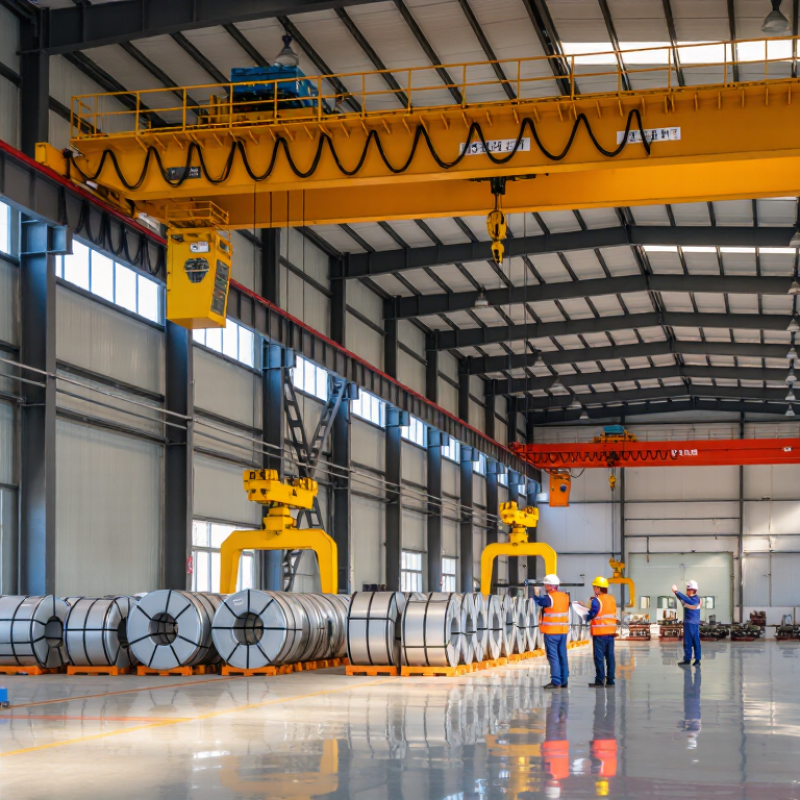
What Is Material Lifting Equipment?
Material lifting equipment is machinery and accessories used to raise, lower, position, or move loads. Common examples include hoists, overhead cranes, jib cranes, goods lifts, and forklifts. A chain hoist lifting a motor from a workshop floor is a simple example. Some systems move loads sideways too. The exact setup depends on the task.
The market is broad. Grand View Research valued the global material handling equipment market at about US$227.6 billion in 2023 and projected a 5.5% compound annual growth rate from 2024 to 2030. This figure covers more than lifting equipment alone, so it should not be read as a lifting-only estimate. When choosing equipment, check load weight, lift height, duty cycle, available floor space, and operating conditions. Details matter. A unit rated for the load may still be unsuitable for frequent use or a cramped work area.
Tips: Confirm the load’s weight and lifting points before selecting a hoist or crane. Check the rated capacity on the equipment and its accessories. Keep a clear path around the load, and observe how the equipment behaves during a controlled test lift. A checklist helps, though it cannot replace trained operator judgment.
Top Material Lifting Equipment Suppliers in China? - What Is Material Lifting Equipment?
Material lifting equipment is machinery used to raise, lower, or position loads in industrial, construction, warehouse, and logistics settings. The overview below compares common equipment categories and typical applications; capacities and configurations vary by model and operating conditions.
| Equipment Type | Typical Rated Capacity | Typical Lifting Height or Reach | Common Power Source | Typical Applications | Key Selection Considerations |
|---|---|---|---|---|---|
| Electric chain hoist | Approximately 0.125–20 tonnes | Commonly 3–30 m, depending on configuration | Electric motor; single-phase or three-phase supply | Workshops, assembly lines, maintenance bays, and light-to-medium-duty lifting | Load rating, duty cycle, lifting speed, headroom, suspension type, and required power supply |
| Wire rope hoist | Approximately 0.5–100 tonnes or more | Often 6–30 m; greater heights are available in specialized installations | Electric motor, typically three-phase | Factories, warehouses, steel handling, and heavier production lifting | Rope reeving, duty classification, travel arrangement, operating environment, and maintenance access |
| Overhead bridge crane | Commonly 1–100 tonnes; higher capacities are engineered for specific projects | Determined by building height, runway, and required hook approach | Electric motors for hoisting and crane travel | Indoor manufacturing, fabrication, foundries, and material transfer across a work area | Span, runway capacity, lift height, load spectrum, duty class, and building structure |
| Gantry crane | Commonly 1–100 tonnes; project-specific heavy-duty models can be larger | Varies with leg height and crane design | Electric power; some mobile models use diesel power | Outdoor yards, shipyards, construction sites, and locations without overhead runways | Ground bearing capacity, span, outdoor wind exposure, mobility, and available power |
| Jib crane | Commonly 0.125–10 tonnes | Usually suited to localized lifting within a defined working radius | Manual or electric hoist; powered or manual rotation | Workstations, machine loading, maintenance areas, and repetitive point-to-point handling | Arm reach, rotation angle, mounting structure, foundation requirements, and load frequency |
| Manual chain block | Commonly 0.5–20 tonnes | Typical standard lifts are around 3–12 m; other chain lengths may be available | Manual operation | Maintenance, installation, occasional lifting, and sites without electrical power | Rated load, chain length, operator effort, suspension point, and inspection condition |
| Hydraulic scissor lift | Platform capacities commonly range from about 230–1,000 kg | Platform heights commonly range from about 4–18 m | Battery-electric or engine-powered, depending on model | Elevated work, stock picking, facility maintenance, and personnel access with tools | Platform capacity, working height, indoor or outdoor use, ground conditions, and safety features |
| Forklift truck | Common warehouse models are rated around 1–5 tonnes; heavier models are also available | Common mast lift heights are approximately 3–7 m, with specialized options beyond this range | Battery-electric, LPG, diesel, or gasoline, depending on application | Pallet handling, loading and unloading, warehouse storage, and short-distance transport | Load center, aisle width, mast height, tire type, floor conditions, and indoor air-quality needs |
Capacity and height figures are indicative ranges, not a specification for any particular product. Confirm the rated load, operating duty, installation requirements, and applicable local safety standards with a qualified supplier or engineer before purchase or use.
Related Posts
-
Top 10 Material Handling Lifts for Efficient Warehouse Operations?
-
How to Identify the Best Manufacturers for High Quality Material Handling Supplies
-

Exploring Innovative Alternatives in Material Handling Products for Enhanced Efficiency
-

Common Challenges Faced in Material Handling Cart Efficiency and Optimization
-

7 Key Benefits of Investing in Material Handling Supplies for Your Global Supply Chain
-
How to Choose the Right Material Lift for Your Construction Project Needs