
What Are the Top Lift Cart Types in 2026?
Lift Carts are becoming more specialized as warehouses, hospitals, workshops, and production floors demand safer material movement. The strongest choices in 2026 include electric lift tables, hydraulic scissor carts, straddle lift carts, stainless-steel carts, and ergonomic mobile workstations. Each design solves a different problem. Load weight matters. So does travel distance.
Material-handling consultant David J. Chappell explains, “The best lift cart is selected around the task, not merely the lifting capacity.” That principle remains practical. A compact electric cart may suit narrow aisles and repeated transfers. A hydraulic scissor cart may offer dependable lifting beside a production line. Straddle models can handle pallets more effectively, while stainless-steel versions fit demanding washdown environments. Small wheels, poor visibility, or weak brakes can still undermine an otherwise impressive machine.
This guide compares the leading Lift Carts by capacity, power source, platform height, maneuverability, and operator safety. It also considers battery charging, maintenance access, turning radius, and floor conditions. These details are easy to overlook. They should not be. Real workplaces are rarely perfect. A cart may face uneven thresholds, rushed operators, or loads that are not balanced. That is where specifications meet experience. The “top” model is not always the most advanced one. Sometimes, a simpler cart performs better because employees can control it confidently every day.
Lift Cart Basics and Their Role in Modern Material Handling
What Are the Top Lift Cart Types in 2026?
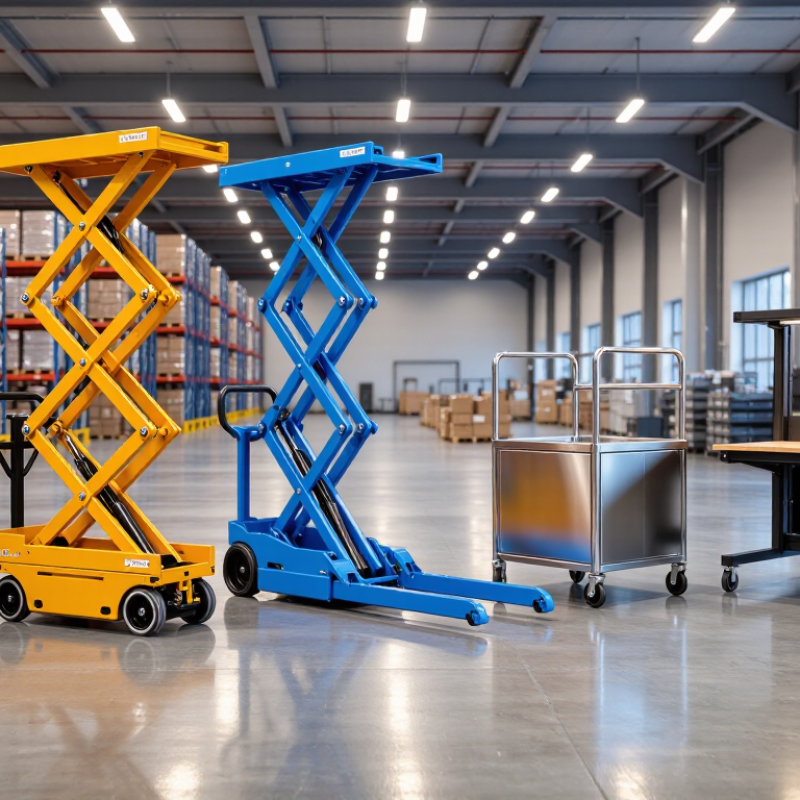
Lift carts are mobile platforms designed to raise, position, and move materials safely. Common types include manual hydraulic carts, electric lift carts, scissor-lift carts, and straddle carts. Each suits a different workflow. Manual models fit short moves and occasional lifting. Electric units reduce pushing effort in busy facilities. Scissor carts provide stable vertical access, while straddle designs handle wider or uneven loads.
The 2025 MHI Annual Industry Report states that 88% of supply chain professionals plan to increase technology and innovation investment. That trend supports wider use of powered lift equipment.
Yet basic selection still matters more than novelty. Check load capacity, lift height, platform size, turning radius, and battery endurance. A cart rated for 1,000 kilograms may still perform poorly in narrow aisles. Small wheels can struggle on damaged concrete. The specification sheet cannot show everything.
Workplace safety data reinforces this caution. The U.S. Bureau of Labor Statistics recorded 1,032 fatal injuries among transportation and material-moving occupations in 2023.
A lift cart cannot remove every hazard. Operators still need clear sightlines, stable loads, functioning brakes, and practical training. In real evaluations, the best cart is often not the fastest one. It is the model workers can control repeatedly without awkward posture. That judgment deserves more attention.
Main Lift Cart Types Available in 2026
In 2026, lift carts mainly fall into five practical types: manual hydraulic, electric, scissor, drum, and pneumatic models. Manual hydraulic carts suit short movements and low purchase budgets. Electric lift carts reduce pushing effort across warehouses and production floors. Scissor carts raise pallets, bins, or workpieces to comfortable heights. Drum carts handle cylindrical containers securely. Pneumatic units perform well where electricity creates operational concerns.
According to Grand View Research, the global material handling equipment market is forecast to expand steadily through 2030, driven by warehouse automation and e-commerce growth. This trend supports more electric and powered lift carts. However, market growth does not make every powered model suitable. A narrow aisle may need a compact electric cart, while a wet workshop may favor a sealed manual design. Capacity labels also deserve attention. A 500-kilogram rating can change with lift height, load shape, and center of gravity.
Tips: Check the full load chart before buying. Measure doorways, turning areas, and charging locations. Ask operators to test handle height and brake response. The U.S. Bureau of Labor Statistics continues to report thousands of annual workplace injuries involving material handling, so stability and training matter. In my experience, buyers sometimes overvalue maximum lift height. That choice can increase cost and reduce maneuverability. A simple cart is not always the weaker option. The best selection depends on floor condition, duty cycle, load geometry, and maintenance support. Some specifications remain unclear across suppliers, so written verification is wise.
What Are the Top Lift Cart Types in 2026? - Main Lift Cart Types Available in 2026
| Lift Cart Type | Lifting Mechanism | Typical Capacity | Typical Lift Height | Power and Operation | Maneuverability | Common Applications | Best Fit in 2026 |
|---|---|---|---|---|---|---|---|
| Manual Hydraulic Lift Cart | Foot-operated hydraulic pump raises a platform or forks. | 150–1,500 kg | 0.8–1.6 m | No battery or charging system; manually pushed. | Excellent in short-distance, low-speed indoor work. | Workshops, maintenance areas, loading tasks, and occasional pallet handling. | Low-use applications where low purchase and maintenance costs are priorities. |
| Electric Scissor Lift Cart | Battery-powered hydraulic or electro-mechanical scissor platform. | 300–1,500 kg | 0.9–2.0 m | Rechargeable battery; powered lifting with manual or powered travel. | Good indoor maneuverability; platform footprint can limit aisle access. | Ergonomic assembly, picking, maintenance, and material positioning. | Workstations that require adjustable height and reduced manual handling. |
| Electric Pallet Lift Cart | Electric motor drives hydraulic lifting of pallet forks. | 1,000–2,500 kg | 0.1–0.2 m for low-lift models; up to approximately 1.2 m for high-lift models. | Battery-powered travel and lifting; walk-behind or ride-on configurations. | Strong maneuverability in warehouses and loading zones. | Horizontal pallet transport, staging, replenishment, and dock operations. | Frequent pallet movement where lower noise and zero tailpipe emissions are desired. |
| Walkie Stacker Lift Cart | Electric drive and mast-mounted hydraulic fork lifting. | 1,000–2,000 kg | 1.6–3.5 m | Battery-powered; operator walks behind the unit. | Compact turning radius for narrow indoor aisles. | Pallet stacking, rack replenishment, small warehouses, and retail backrooms. | Space-constrained facilities seeking more lift height than a pallet truck provides. |
| Straddle Stacker Lift Cart | Electric mast and hydraulic forks with adjustable straddle legs. | 1,000–1,500 kg | 1.6–3.5 m | Battery-powered; walk-behind or platform-assisted operation. | Stable around different pallet widths but requires clearance for the legs. | Open-bottom pallets, mixed pallet sizes, shelving, and light-duty stacking. | Facilities needing flexible pallet handling without a full-size counterbalance truck. |
| Reach Lift Cart | Telescopic or moving mast extends the forks into storage racks. | 1,000–2,000 kg | 4.5–10 m | Battery-powered; usually operated from a standing or seated position. | Designed for narrow aisles, with greater height capability than walkie stackers. | High-density pallet racking, distribution centers, and tall warehouse storage. | High-throughput warehouses prioritizing vertical space utilization. |
| Electric Counterbalance Lift Cart | Mast-mounted hydraulic forks balanced by a rear counterweight. | 1,000–3,500 kg | 3–6 m | Rechargeable battery; seated operator controls travel and lifting. | Versatile outdoors and indoors, but requires wider aisles than reach equipment. | Manufacturing, warehouses, loading docks, and mixed indoor material handling. | General-purpose operations requiring higher capacity and frequent use. |
| Order Picker Lift Cart | Powered platform and fork system raises the operator to picking levels. | 900–1,500 kg on forks; lower capacity at elevated platforms. | 2.5–10 m, depending on configuration. | Battery-powered; operator drives and selects individual items from elevated positions. | Optimized for controlled warehouse aisles and precise positioning. | E-commerce fulfillment, case picking, spare-parts storage, and distribution centers. | Warehouses where accurate piece picking and vertical access are more important than pallet stacking. |
| Mobile Work Platform Lift Cart | Hydraulic, electric, or manually assisted lifting platform. | 100–500 kg, including operator and tools. | 1.0–5.0 m | Manual or battery-powered; designed for personnel and light equipment rather than pallets. | High indoor maneuverability with stabilizers or locking casters for elevated work. | Facility maintenance, lighting, inventory checks, assembly, and service work. | Operations that need safer short-duration access to elevated work areas. |
Note: Capacity and lift-height figures are typical industry ranges. Actual specifications vary by configuration, mast design, battery system, load center, floor conditions, and safety requirements.
How Each Lift Cart Type Works and Where It Fits Best
Top Lift Cart Types in 2026
Manual hydraulic lift carts use a hand pump to raise pallets, boxes, or equipment. They suit small warehouses, workshops, and occasional lifting tasks. Their simple design reduces charging needs and keeps maintenance manageable. However, operators must control heavy loads carefully on ramps and uneven floors. They work best where travel distances remain short.
Electric lift carts use battery power for lifting and movement. They fit busy warehouses, retail backrooms, and production areas with repeated transfers. Operators usually benefit from smoother starts, adjustable travel speeds, and less physical strain. Battery capacity, charging time, and turning space require practical checks. A cart that looks powerful may still struggle during long shifts.
Scissor lift carts raise platforms vertically through linked folding supports. They provide a stable work surface for packing, assembly, and ergonomic loading. Some models lift loads to waist height, reducing repeated bending. Platform lift carts offer broader surfaces, while compact order-picking carts fit narrow aisles. Choosing between them depends on load shape, height, and aisle width.
Measure the real workspace.
Load balance matters. A tall box can become unstable before reaching the rated capacity. I have seen specifications appear suitable, yet wheel performance changed on rough concrete. That detail deserves more attention during selection. Operators should also inspect brakes, casters, guards, and emergency controls before regular use. Safety procedures must match the cart’s design and the facility’s daily conditions.
What Are the Top Lift Cart Types in 2026?
How each lift cart type works and where it fits best
The chart compares representative maximum lift-height ranges commonly found in the market. Manual hydraulic carts suit short-distance, low-level handling; electric walkie stackers work well in narrow aisles; counterbalance forklifts handle heavier loads and outdoor operations; high-lift scissor carts support ergonomic positioning; and order pickers are designed for elevated picking tasks. Actual capacity and lift height vary by configuration, mast design, battery, and operating environment.
Key Factors for Comparing Lift Cart Performance and Safety
In 2026, lift carts will likely fall into four useful groups. These include manual hydraulic, powered, scissor-lift, and order-picking carts. Their names matter less than operating conditions. Start with the floor. A 500-kilogram cart may perform poorly on a slope. A lower-rated cart may work better in narrow aisles. Compare rated load, lift height, travel speed, turning radius, and duty cycle. Test the cart with the real load, not an ideal pallet.
Safety deserves equal weight. OSHA estimates that powered industrial trucks cause about 85 work-related deaths and 34,900 serious injuries annually in the United States. This estimate covers a broad equipment category, not lift carts alone. However, it shows the scale of workplace exposure. Check emergency stopping, wheel locks, load backrests, pinch-point guarding, visibility, and battery protection. OSHA’s Powered Industrial Trucks guidance emphasizes capacity plates, inspections, and operator training. A quiet electric drive is not automatically safer. Poor visibility can cancel its advantage.
ANSI/ITSDF B56.10-2022 provides design and testing expectations for manually propelled high-lift industrial trucks. Match those checks with site records. Review near misses, floor damage, charging habits, and maintenance delays. A cart that lifts quickly may lose stability at full height. A heavier frame may reduce maneuverability. In practical trials, the best choice is rarely the fastest model. I would still question the test results. One shift is not enough. Fatigue, cold batteries, uneven floors, and rushed loading can change performance.
Choosing the Right Lift Cart for Different Workplace Needs
What Are the Top Lift Cart Types in 2026?
Choosing a lift cart starts with the task, not the catalogue picture. Manual hydraulic carts suit light-duty work, short travel, and occasional height changes. They remain simple, affordable, and easy to maintain. Electric lift carts fit busy warehouses, production lines, and repeated transfers. Their powered lifting reduces physical strain, especially during long shifts. Scissor-lift carts provide stable vertical movement for assembly, packing, and maintenance tasks. Platform carts work better when operators need a larger, steady surface. Narrow aisles may require compact stacker-style carts instead.
The U.S. Bureau of Labor Statistics recorded about 2.6 million nonfatal workplace injury and illness cases in private industry during 2023. OSHA continues to identify forceful lifting, awkward postures, and repetitive handling as ergonomic risks. These figures make operator posture and task frequency important selection factors. A cart with high capacity can still be the wrong choice. Excess weight may reduce maneuverability. Poor wheel selection creates noise, vibration, and unsafe stopping distances. In practice, floor condition matters more than many buyers expect. That lesson is easy to miss.
Tips: Measure load weight, lift height, aisle width, and daily cycles before purchasing. Test the cart with real loads. Check brake access, handle height, battery charging needs, and emergency lowering features. Review the manufacturer’s technical data and applicable safety standards, including ANSI/ITSDF B56.1 where relevant. Ask operators for feedback after trials. Their comments may challenge the original specification.
Related Posts
-
Innovative Roll Lifting Equipment Examples to Enhance Global Supply Chain Efficiency
-
Top 10 Material Handling Lifts for Efficient Warehouse Operations?
-

Innovative Material Handling Solutions for Efficient Warehouse Management
-
Revolutionizing Warehousing: How Advanced Material Handling Equipment Boosts Efficiency by 30% in Supply Chains
-
How to Choose the Right Vacuum Lifting Equipment for Your Business Needs
-
Ultimate Guide to Choosing the Best Material Handling Solutions for Your Business Needs