
R&D Ergo new logo

ERGONOMIC SOLUTIONS FOR OVER 25 YEARS.

To serve you better | Now merging service and customer support with our sister company Liftsafe Engineering and Service Group.

China Best Barrel Handling Equipment Suppliers?

China has a wide range of manufacturers and distributors serving businesses that need reliable Barrel Handling Equipment. Their products may include drum lifters, stackers, tippers, clamps, and pallet-based handling systems. The right choice depends on the barrels’ dimensions, filled weight, material, and movement path. A unit that works well on a smooth warehouse floor may struggle around tight corners or uneven surfaces. Details matter.

When comparing suppliers, look beyond catalogue photos and headline prices. Ask for rated load capacity, compatible barrel sizes, operating instructions, spare-parts availability, and clear warranty terms. Request drawings or demonstrations when the equipment must fit an existing production line. Check how controls, brakes, and lifting components are inspected before shipment. These questions can reveal whether a supplier understands daily operating conditions or simply offers a standard product. Not every specification is easy to verify remotely, so request written records and confirm key details before ordering.

The strongest supplier is not automatically the largest or cheapest. It is the one that can explain how its equipment matches your actual workflow, answer technical questions consistently, and provide support after delivery. Small omissions can matter. A handle positioned poorly, for example, may make frequent transfers tiring for operators. This guide introduces practical ways to assess China-based suppliers and compare equipment with greater confidence. Some requirements may only become clear after a site review, so leave room to reassess your choice.
China Best Barrel Handling Equipment Suppliers?

What Barrel Handling Equipment Includes and How It Works

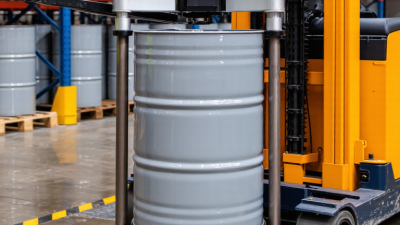
Barrel handling equipment covers tools that move, lift, position, and rotate drums. Common options include drum dollies, hand trucks, lifting clamps, hoists, and powered stackers. Some models grip a drum by its rim; others support its base. The right choice depends on barrel material, diameter, weight, and the route through the workspace. A narrow aisle changes the decision.

The process is straightforward, but details matter. An operator secures the drum, checks that its weight is within the equipment’s rated capacity, then raises it with a hand pump, winch, or motor. Wheels carry it across the floor. A tilting attachment can turn the drum for controlled pouring, while a stacker can place it on a pallet or shelf. It sounds simple. A loose clamp is not.

Before use, inspect wheels, straps, forks, and locking points for wear or damage. Keep the load low while moving, and avoid sudden turns on uneven floors. These checks reduce the chance of shifting or tipping, though they cannot fix poor equipment selection. In practice, product descriptions may make capacity seem universal. It isn’t; verify the drum size and load conditions against the equipment specifications.

China Best Barrel Handling Equipment Suppliers? — What Barrel Handling Equipment Includes and How It Works

Common nominal container volumes help explain why handling equipment must suit the container being moved.

Barrel-handling equipment includes drum lifters and clamps for gripping, drum trucks and dollies for transport, and drum rotators or tippers for controlled pouring. The chart compares common nominal container sizes: a 5-gallon pail, a 30-gallon drum, and a 55-gallon drum. These are container volumes, not equipment lifting ratings; always check the container type, load, and equipment’s rated capacity and compatibility before use.

Where Barrel Handling Equipment Is Used

China Best Barrel Handling Equipment Suppliers?

Where Barrel Handling Equipment Is Used

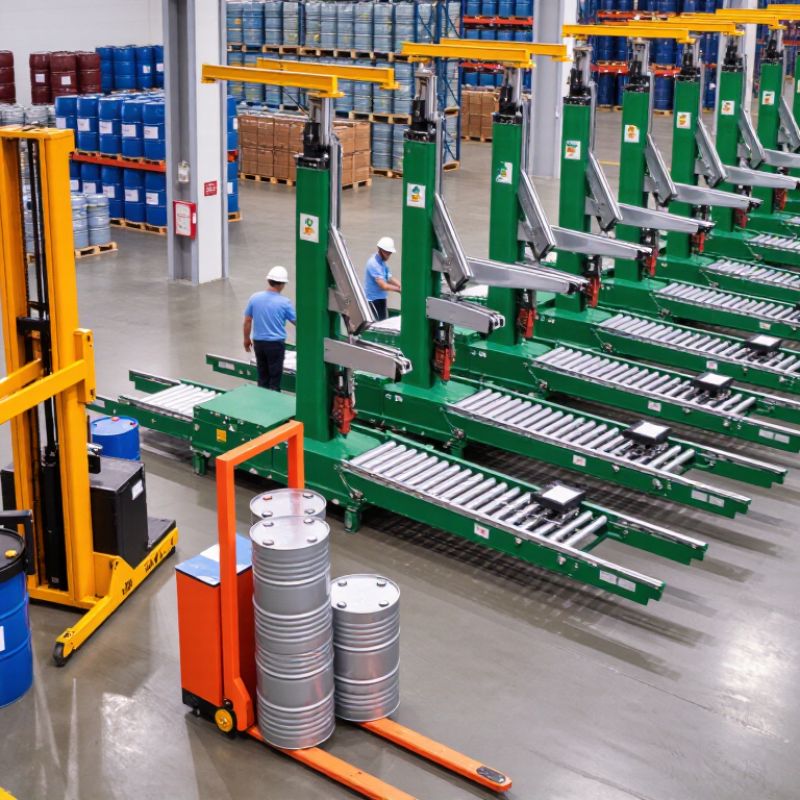
Barrel handling equipment is used in warehouses, factories, and distribution areas where drums are stored or moved. A drum trolley can help staff move containers across a level floor. A lifter may be more suitable when drums need to be raised onto a pallet or production line. The right choice depends on drum size, weight, and how often it must be handled.

In manufacturing plants, equipment can support movement between storage, mixing, and filling stations. Food and beverage facilities may use drum lifters to position ingredients near processing equipment. In workshops, compact dollies can help move lubricants or cleaning materials without repeated manual lifting. Keep routes clear. A tight corner or uneven floor can make a simple move harder than expected.

Loading bays and stockrooms also use barrel handling equipment to organize incoming and outgoing goods. Before choosing a tool, check its rated capacity, grip style, turning space, and compatibility with the drum material. Staff should understand the operating instructions and inspect moving parts before use. Specifications matter, but real floor conditions matter too. I have seen planning focus on the lift and overlook the route. That is an easy mistake to make.

China Best Barrel Handling Equipment Suppliers? - Where Barrel Handling Equipment Is Used

Workplace or industry Typical handling task Suitable equipment type Common barrel or drum formats Practical selection considerations
Warehouses and distribution centers Moving drums between receiving, storage, and dispatch areas Drum trucks, drum dollies, and forklift drum attachments Steel or plastic drums; palletized or handled individually Check drum diameter, rim design, floor condition, aisle width, and the attachment’s rated capacity.
Chemical and coatings facilities Lifting, positioning, and dispensing liquids or materials from drums Drum lifters, drum rotators, and powered drum positioners Closed-head or open-head drums, subject to the product and process Confirm chemical compatibility, spill controls, secure gripping, and any hazardous-area requirements.
Food and beverage production Supplying ingredients to mixers, tanks, or production lines Manual or powered drum lifters and tilters Food-grade plastic or stainless-steel drums, depending on the process Consider cleanability, product-contact requirements, controlled pouring, and safe operator access.
Pharmaceutical and laboratory operations Short-distance movement and controlled positioning of raw-material containers Compact drum trucks, lift tables, and low-speed powered handlers Small containers and standard drums, according to the facility’s handling procedure Assess hygiene, documentation, maneuverability, and compatibility with cleanroom or controlled-area rules.
Manufacturing plants and workshops Loading drums onto machines or transferring them between workstations Drum stackers, lifters, and forklift-mounted drum handlers Commonly handled steel or plastic drums in different capacities Match lift height and gripping method to the workstation, drum shape, and required handling frequency.
Waste management and recycling areas Moving, tipping, or emptying collection drums Drum tippers, drum rotators, and suitable forklift attachments Reusable or disposable drums, depending on waste type and handling rules Verify load security, controlled tipping, containment needs, and applicable waste-handling procedures.

Equipment capacity, compatible drum sizes, and operating limits vary by model. Confirm the manufacturer’s rated capacity and the drum’s actual loaded weight before use.

Types of Barrel Handling Equipment Suppliers in China

China’s barrel-handling suppliers generally fall into four groups: equipment manufacturers, system integrators, industrial distributors, and custom fabricators. Manufacturers supply drum trucks, lifters, tippers, and pallet positioners. Integrators combine these units with conveyors, weighing stations, or warehouse controls. Distributors often provide standard models and replacement parts. Custom fabricators adjust clamps, frame widths, and lift heights for unusual drums or narrow aisles. Manual still works. Fit matters.

The China Federation of Logistics and Purchasing reported total social logistics value of RMB 352.4 trillion in 2023. That represented 5.2% year-on-year growth. This broad indicator provides context, but it does not measure barrel-equipment sales. Compare rated load, drum diameter range, lift height, turning radius, surface protection, and test records. Ask for a filled-drum demonstration on your floor type; showroom trials can hide awkward steering.

Tips: Send suppliers photos, drum dimensions, and aisle measurements before requesting quotations. Confirm spare-part availability and operator training in writing. A low purchase price can conceal costly handling limits.

How to Evaluate Chinese Suppliers and Their Products

China Best Barrel Handling Equipment Suppliers?

How to Evaluate Chinese Suppliers and Their Products

A capable supplier should explain how its equipment fits your drums, workflow, and floor conditions. Specify drum material, dimensions, filled weight, lifting height, and turning frequency. Request the rated load, drawings, operating instructions, and a documented load-test procedure. Check that the rating covers the full handling position, not just a stationary lift. Small detail, big difference.

Safety evidence matters. Liberty Mutual’s 2024 Workplace Safety Index estimated that overexertion injuries involving outside sources cost U.S. employers $12.8 billion in 2021. This figure is not specific to drum handling, but it highlights the cost of poor lifting practices. Ask how the supplier assesses pinch points, drum slippage, braking, and operator exposure. ISO 12100 can provide a useful framework for discussing machinery risk assessment.

Evaluate the product, not only the quotation. Request a live demonstration with a drum similar in size and weight to yours. Observe how smoothly the clamp engages and whether the load stays stable during movement. Ask for spare-parts lists, warranty terms, inspection guidance, and realistic delivery schedules. Verify test records and material specifications against the actual unit. A polished catalog is not proof; factory checks can still miss issues, so document any gaps before ordering.

What to Compare Before Choosing a Supplier

China Best Barrel Handling Equipment Suppliers?

What to Compare Before Choosing a Supplier

Choosing a barrel-handling supplier in China takes more than comparing catalog prices. Match the equipment to your drums, loads, and floor conditions. A 200-liter steel drum behaves differently from a smaller plastic container. Confirm rated capacity, drum diameter range, lifting height, turning angle, and pallet compatibility. Ask for a drawing or operating video. Details matter.

Compare construction and service evidence, not just polished specifications. Check weld quality, wheel material, brake access, and how the gripper secures a drum during movement. Request load-test records and clear inspection and maintenance instructions. Ask which spare parts are stocked and how quickly technical questions receive practical answers. A supplier who explains equipment limits plainly can be more useful than one who promises everything.

If possible, visit the factory or request live footage of a loaded unit. Test it loaded. Consider operator feedback after a trial, especially when turning in tight aisles or loading near floor level. A trial might reveal a handle that sits too high or wheels that snag on rough concrete. That detail is easy to overlook.