

R&D Ergo new logo

ERGONOMIC SOLUTIONS FOR OVER 25 YEARS.

To serve you better | Now merging service and customer support with our sister company Liftsafe Engineering and Service Group.

Why Choose a Stationery Hardware Manufacturer?

Choosing a Stationery Hardware Manufacturer can shape the quality, reliability, and appearance of every paper product you sell. The right partner does more than supply metal rings, clips, eyelets, or binding mechanisms. It understands how these small parts behave during assembly and daily use. A well-made mechanism should open smoothly, close firmly, and remain aligned after repeated handling. Small details matter.

Experienced manufacturers usually control material selection, tooling, surface finishing, and production tolerances in one process. They may test spring tension, coating adhesion, corrosion resistance, and load performance before shipment. These checks reduce common problems, such as sharp edges, loose rivets, scratched surfaces, or uneven plating. Ask for samples. Inspect them under normal working conditions. A sample that looks attractive on a desk may perform poorly after hundreds of openings.

Reliability also depends on communication. A professional manufacturer should explain minimum order quantities, lead times, packaging methods, and quality procedures clearly. Certifications and inspection records can support trust, but they do not replace practical verification. No supplier is perfect. Even a capable factory may need time to adjust a new mold or correct a tolerance issue. That reality deserves honest discussion. Share drawings, material preferences, and intended use before production begins. Request approval samples and define acceptable limits in writing. This approach creates accountability without making unrealistic promises. It also helps your brand deliver stationery that feels dependable in the hand, not merely attractive in a product photograph.
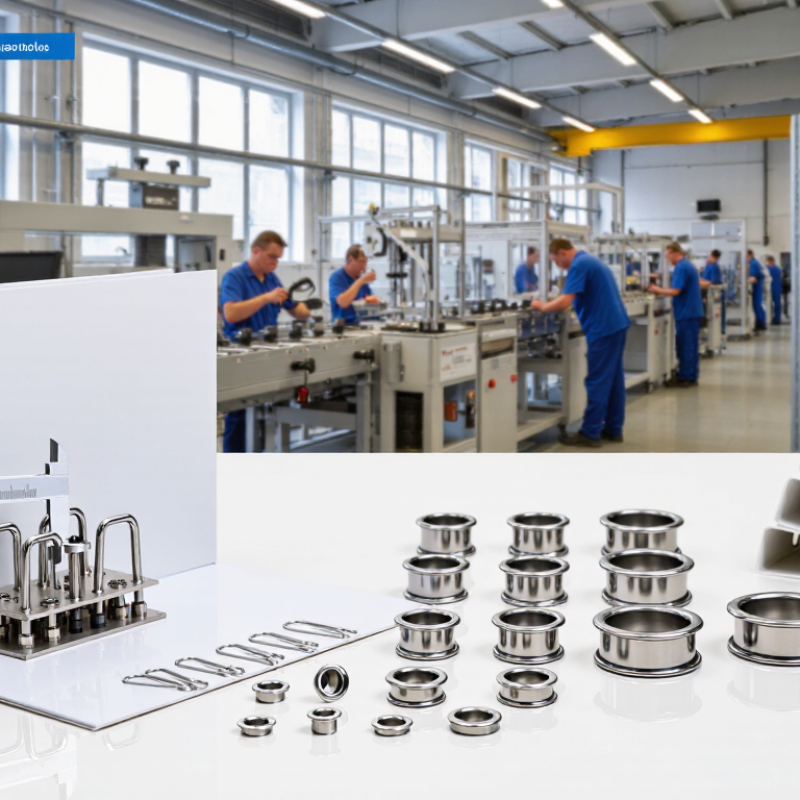
Why Choose a Stationery Hardware Manufacturer?

What Is a Stationery Hardware Manufacturer?

A stationery hardware manufacturer produces the small metal and plastic components that make stationery usable and durable. These parts include binder rings, clip mechanisms, eyelets, fasteners, corners, and document holders. The manufacturer normally manages material selection, tooling, stamping, forming, surface treatment, assembly, and quality inspection.

This role is more technical than it appears. A ring must open smoothly, align correctly, and survive repeated use. A clip needs stable pressure without damaging paper.

Grand View Research estimates that the global stationery products market reached about 90.6 billion US dollars in 2023. The report also projects continued growth through 2030. This demand increases the need for consistent hardware and reliable production control.

In practical sourcing, inspect samples before discussing large orders. Check dimensions, coating adhesion, spring strength, burrs, and opening cycles. Ask for material specifications and inspection records. ISO-based quality systems can improve traceability, but certification alone proves little. A supplier may pass one inspection and still deliver uneven batches. That is an uncomfortable reality. Clear drawings and approval samples reduce that risk.

Tips: Request a pre-production sample. Test it on real paper. Measure repeated use, not just appearance. Allow room for honest corrections.

What Products and Services Do They Provide?

Why Choose a Stationery Hardware Manufacturer?

A stationery hardware manufacturer supplies more than metal parts. Its product range may include binder rings, clip mechanisms, eyelets, buckles, pen holders, and corner protectors. Materials commonly include steel, stainless steel, aluminum, and zinc alloy. Surface options include nickel plating, powder coating, polishing, and matte finishes.

Small details matter. A stiff ring can tear paper, while weak plating may leave marks on fingers.

Manufacturers also provide engineering support, sampling, tooling, and custom production. Designers can submit a sketch, paper sample, or dimensional drawing. The factory can then test spring force, opening cycles, coating adhesion, and load performance.

According to Grand View Research, the global stationery products market was valued at approximately USD 90.6 billion in 2023.

This scale increases the need for consistent components, not merely attractive ones. However, a sample can still pass visual inspection and fail during repeated use.

Quality services often include incoming material checks, in-process inspection, final sampling, and packaging control. ISO 9001-based systems support documented procedures and traceability, although certification alone cannot replace practical testing.

Manufacturers may also assist with mold development, color matching, barcode labeling, and export packaging. The 2024 Global Metal Stamping Market report from MarketsandMarkets identifies automation and precision production as major industry drivers.

That sounds efficient, but human review remains useful. A misplaced rivet or uneven edge can damage an otherwise reliable stationery product.

How Do They Control Product Quality and Consistency?

A stationery hardware manufacturer controls quality through a repeatable production system, not visual inspection alone. Incoming metal coils are checked for thickness, hardness, surface marks, and coating uniformity. Operators record these results before stamping begins. This creates traceability from raw material to finished clips, rings, eyelets, or fasteners.

The 2023 ISO Survey reported 1,265,216 valid ISO 9001 certificates across 189 countries and economies. This figure shows how widely documented quality systems are used in manufacturing. A capable factory applies similar discipline through approved work instructions, calibrated gauges, first-article inspection, and statistical process control. During production, technicians measure dimensions at fixed intervals. They also compare samples against approved limits, rather than relying on personal judgment. Small details matter. A slightly uneven bend can damage paper or weaken assembly performance.

Consistency also depends on corrective action. When a batch shows excessive scratches, loose joints, or inconsistent plating, the manufacturer should isolate it, identify the cause, and verify the fix. ANSI/ASQ Z1.4 provides established sampling guidance for acceptance inspection, though sampling cannot replace process control. That limitation deserves attention. A perfect sample can hide unstable production. Experienced manufacturers therefore review machine settings, tool wear, operator records, and environmental conditions. Independent laboratory testing can further verify corrosion resistance, coating adhesion, and material composition. The process may still need refinement, because no factory eliminates variation completely. Reliable suppliers measure it, disclose it, and reduce it over time.

What Are the Benefits of Choosing a Direct Manufacturer?

Why Choose a Stationery Hardware Manufacturer?

What Are the Benefits of Choosing a Direct Manufacturer?

Choosing a direct stationery hardware manufacturer creates a clearer path from design to production. You speak with the people managing materials, tooling, and assembly. This reduces communication gaps and helps prevent costly misunderstandings. In practice, a technical drawing can be reviewed by an engineer before production begins. Small details matter. Hole spacing, spring tension, and surface finishing can affect daily use.

Direct manufacturers also provide stronger quality control. They can inspect metal thickness, coating adhesion, and dimensional accuracy during each production stage. Sample approval becomes more useful when the factory shares measurement records and testing methods. Buyers can request traceable batch information and discuss corrective action quickly. This supports more reliable purchasing, especially for folders, clips, binders, and other frequently handled products.

Cost control is another practical benefit. Removing unnecessary trading layers may improve pricing, while direct planning can shorten replenishment times. However, direct sourcing is not automatically cheaper. Minimum order quantities, tooling fees, and inspection costs still require careful review. I have seen attractive quotations become less valuable after shipping and packaging were added. A thoughtful manufacturer explains these details instead of hiding them. The first sample may also expose a weak hinge or an uncomfortable edge. That is not failure. It is useful evidence for improving the next production run.

How Should Businesses Evaluate Potential Manufacturers?

Choosing a stationery hardware manufacturer requires more than comparing unit prices. A reliable supplier should show how materials, tooling, and inspections support consistent production. Ask for recent samples, not polished display pieces. Examine spring tension, plating coverage, edge smoothness, and hole alignment under normal handling. Small defects become expensive when thousands of pieces reach assembly. Details matter.

Request documented material specifications and batch traceability. For metal clips, fasteners, rings, or custom fittings, tolerances should be measurable and agreed in writing. Ask which gauges, calipers, or pull tests operators use, and how often equipment is calibrated. An experienced manufacturer can explain rejection limits without hiding behind vague quality language. Review process records, corrective-action reports, and independent test results where appropriate. Factory visits help, but a tidy tour proves little. Production data matters more.

Evaluate capacity against your actual order pattern, including seasonal increases and small trial runs. A factory may promise high output yet struggle with mixed specifications or changing artwork. Ask about tooling ownership, lead times, spare parts, packaging, and backup production plans. Confirm labor, environmental, and product-safety practices through credible documents and contracts. Speak with technical staff, not only sales representatives. Leave room for doubt. My assessment improves when I record unanswered questions after each meeting. That habit is imperfect, but it prevents enthusiasm from replacing evidence.

Why Choose a Stationery Hardware Manufacturer? — How Should Businesses Evaluate Potential Manufacturers?
Evaluation Dimension Practical Benchmark What Businesses Should Verify Business Impact Suggested Weight
Product Quality and Consistency Stable performance across repeated production batches, with documented inspection criteria for dimensions, surface finish, assembly, and function. Quality-control plans, inspection records, sample comparison reports, defect classifications, and retained production samples. Reduces returns, customer complaints, rework, and inconsistent product appearance. 20%
Material Selection and Safety Materials should be suitable for the intended use and supported by traceable specifications. Metal parts should be checked for corrosion resistance and restricted substances where applicable. Material specifications, supplier declarations, safety data where relevant, coating information, and test reports from competent laboratories. Supports product safety, regulatory readiness, durability, and reliable long-term use. 12%
Manufacturing Capability Documented capability in processes such as stamping, wire forming, injection molding, machining, surface treatment, assembly, and packaging, according to product requirements. Process flow charts, equipment lists, production samples, maintenance records, and process-capability data for critical dimensions. Helps ensure the manufacturer can produce the required design accurately and repeatedly. 14%
Customization and Engineering Support Ability to support drawings, prototypes, tooling reviews, design-for-manufacturing feedback, and controlled engineering changes. Technical communication process, prototype workflow, drawing-review examples, tooling ownership terms, and change-control procedures. Shortens development cycles and helps avoid costly design changes after production begins. 10%
Minimum Order Quantity and Scalability Order quantities should match the buyer’s launch volume while allowing a clear path from pilot production to larger-scale manufacturing. Quotation at different volume levels, pilot-order conditions, capacity statements, lead-time assumptions, and production scheduling rules. Reduces inventory risk for new products while preserving access to competitive unit costs at higher volumes. 8%
Lead Time and Delivery Reliability Lead times should be clearly separated into sampling, tooling, production, inspection, and shipping stages, with realistic contingency planning. Historical on-time delivery data, production schedules, order-confirmation procedures, and escalation contacts. Improves inventory planning and lowers the risk of stockouts or missed retail and promotional deadlines. 12%
Quality Management System A documented quality system should define incoming inspection, in-process checks, final inspection, nonconforming-product control, and corrective actions. Quality manuals, audit results, corrective-action reports, calibration records, and evidence of management review. Creates a repeatable method for preventing defects instead of relying only on final inspection. 10%
Compliance and Traceability Products and materials should be traceable by purchase order, batch, production date, inspection status, and shipping documentation where needed. Batch records, lot-control procedures, product declarations, applicable conformity documents, and document-retention practices. Facilitates investigations, targeted recalls, customer audits, and market-entry requirements. 7%
Total Cost of Ownership Evaluation should include unit price, tooling, packaging, inspection, freight, duties, minimum-order effects, warranty exposure, and defect-related costs. Comparable quotations using the same specifications, packaging assumptions, payment terms, delivery terms, and forecast volumes. Prevents low purchase prices from hiding higher logistics, quality, or lifecycle costs. 5%
Communication and Commercial Reliability Responses should be timely, technically accurate, and documented, with clear ownership for quotations, approvals, changes, and claims. Response-time records, quotation completeness, contract terms, warranty policy, payment conditions, and issue-resolution examples. Reduces misunderstandings and makes long-term cooperation easier to manage. 2%