

What Are the Top Types of Threaded Inserts?
Threaded Inserts create durable internal threads in materials that may otherwise strip, crack, or wear under repeated fastening. The right type depends on the base material, installation method, load, and available access. A metal insert pressed into a machined hole behaves differently from a heat-set insert installed in a plastic boss. Small detail. Big consequences.
For this overview, fictional fastening engineer Alex Morgan offers an editorially created guiding line: “Choose the insert for the material and the load—not just the screw.” That distinction matters. A product that works well in a metal panel may perform poorly in soft plastic or thin sheet. This guide compares common options, including press-fit, heat-set, ultrasonic, self-tapping, helical wire, and key-locking inserts. It explains where each type fits, how installation affects performance, and what trade-offs deserve attention. Some choices are less obvious than catalogs suggest. A neat specification can still miss real assembly conditions.
Selection also involves practical checks: hole size, wall thickness, pull-out resistance, vibration, and service access. A heat-set insert, for example, needs controlled temperature and alignment; a self-tapping type needs suitable material and a properly prepared hole. Not every application has one clear winner. This guide offers a grounded starting point, not a substitute for product data or testing in the actual assembly. Small trials can reveal surprises.
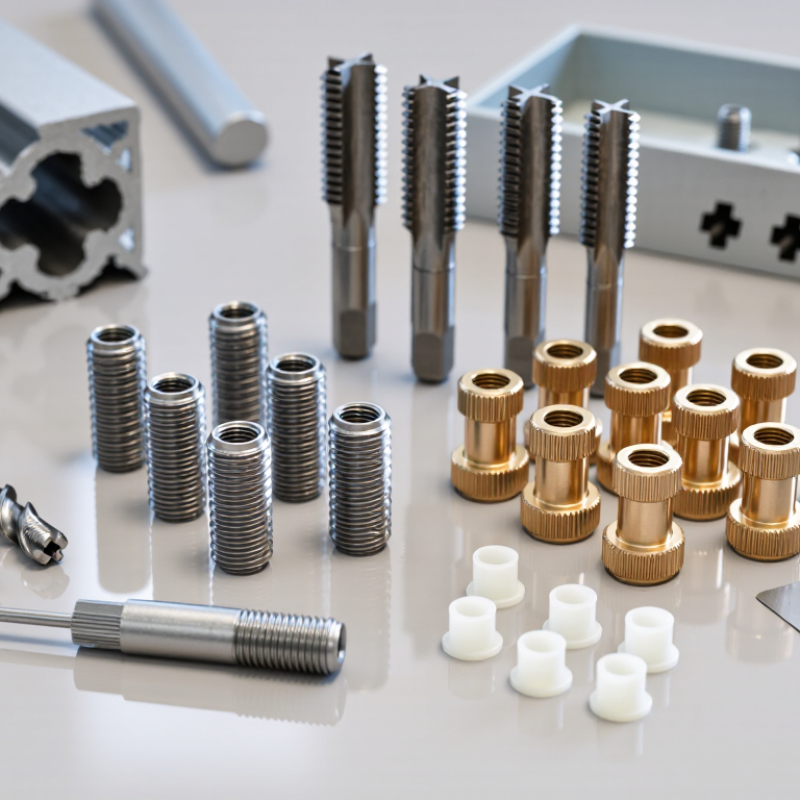
How Threaded Inserts Create Strong, Reusable Threads
A threaded insert gives a screw a durable internal thread in material that may be too soft, thin, or easily damaged on its own. Instead of repeatedly cutting into wood or plastic, the screw engages a metal thread designed for reuse. The insert also spreads the load across a larger area, reducing wear around the fastener hole. That matters. A loose screw can turn a simple repair into a larger one.
Different insert styles suit different materials and loads. Wire-thread inserts fit into a tapped hole and can restore worn threads in metal parts. Solid inserts provide a sturdier sleeve where greater support is needed. Press-in inserts are commonly used in softer materials, while heat-set inserts are installed in thermoplastics with a controlled soldering iron.
The fit is not always perfect on the first try. Hole size, installation depth, and alignment all affect performance. A crooked insert may still accept a screw, but it can make assembly awkward and place uneven stress on the part. Check the material and expected load before choosing a type.
Helical Wire Inserts for Repairing Damaged Threads
What Are the Top Types of Threaded Inserts?
Helical Wire Inserts for Repairing Damaged Threads
A helical wire insert is a coil installed in a freshly tapped hole to restore usable internal threads. The coil’s spring-like shape expands against the parent material, helping it stay seated under normal fastener use. It is useful when a bolt hole has stripped but the surrounding component remains sound.
Small coil. Big consequence.
The Federal Aviation Administration’s AC 43.13-1B includes helical-coil inserts among accepted thread-repair methods. Its guidance also makes clear that correct preparation and installation matter; an insert cannot compensate for cracked or badly weakened material.
Installation typically involves drilling to the specified size, tapping with the matching STI tap, cleaning out chips, and winding in the insert. The top coil should sit slightly below the surface, not proud of it.
For example, ISO 898-1 uses a tensile stress area of about 20.1 mm² for an M6 × 1 fastener. That figure describes the fastener’s thread section, not the repair’s guaranteed strength. Insert length, base material, hole condition, and installation quality all affect performance.
It is tempting to treat a repaired hole as new. That assumption deserves a second look, especially in vibrating assemblies or parts that are removed often.
Solid Inserts for High-Load and Permanent Connections
Solid threaded inserts provide a durable internal thread when a component’s original material may wear, strip, or deform. They are often used in metal housings, plastic parts, and assemblies that need repeated fastening. Many designs have external threads that engage a prepared hole and internal threads for the screw or bolt. The insert can spread load into the surrounding material, but it cannot make a weak or cracked substrate strong. For permanent service, correct sizing and installation matter. A small alignment error can cause trouble later.
Tips: Check the parent material, hole dimensions, and expected load before selecting an insert. Follow the insert maker’s installation instructions, and test a sample assembly when failure would be costly. Don’t guess the torque.
Material compatibility deserves attention. A steel insert in a soft aluminum part may work well, but the housing still needs enough wall thickness. In plastics, temperature and creep can gradually loosen a connection. For critical joints, evaluate vibration, pull-out force, and service conditions—not just thread size. I would also inspect a trial installation; it is easy to overlook a slightly damaged first thread. Solid inserts suit demanding connections, but the surrounding part remains part of the fastening system.
Top Types of Threaded Inserts for High-Load, Permanent Connections
This qualitative comparison shows typical suitability, not a standardized load rating. Actual performance depends on insert design, base material, installation, and joint geometry.
Solid inserts are often selected for robust, permanent metal-to-metal connections. Molded-in inserts can also provide strong retention in plastics when designed into the part; heat-set and press-fit inserts are commonly used in thermoplastics. Helical wire inserts are widely used to reinforce or repair internal threads.
Press-In, Heat-Set, and Ultrasonic Inserts for Plastics
Threaded inserts for plastics are not interchangeable. Press-in inserts are pushed into a molded hole, often with a simple arbor press. They need no heat or vibration, so installation is straightforward. Too much interference can split a thin boss; too little can let the insert rotate. A neat fit can still hide a weak joint.
Heat-set inserts use a heated tip to soften the surrounding thermoplastic, then remain in place as it cools. Temperature, pressure, and dwell time affect the result. Ultrasonic inserts use high-frequency vibration to melt plastic around their knurled surfaces. They can suit fast production, but poor horn alignment or thin walls may cause uneven seating. Small details matter.
Plastics Europe’s Plastics – the Fast Facts 2024 reports global plastics production of 413.8 million tonnes in 2023. That figure describes material production, not insert demand or joint strength. Choose the process for the resin, boss geometry, and service loads, then verify it with pull-out and torque tests. There is no universal winner. A single test condition may also miss long-term loosening or creep.
How to Choose an Insert for the Material and Application
What Are the Top Types of Threaded Inserts?
How to Choose an Insert for the Material and Application
Choosing an insert starts with the material around it, not the thread size alone. Heat-set and ultrasonic inserts work well in many thermoplastics because installation forms plastic around their outer features. They can provide repeatable threads, but thin walls may crack or bulge. Press-fit inserts suit some rigid plastics and metals, though excessive interference can split brittle parts. For wood, screw-in inserts bite into the grain; test the hole size on a spare piece. Fit matters.
Consider the load and how often the fastener will be removed. A lightly loaded cover has different needs from a joint exposed to vibration or repeated servicing. Helical inserts can reinforce or repair tapped metal holes, while solid inserts may be preferable where the surrounding material needs more support. Check pull-out strength, wall thickness, installation access, and the recommended hole dimensions. Small differences matter.
The environment also affects the choice. Moisture, heat, and dissimilar metals can influence corrosion or loosening, so match insert material to the assembly where practical. It is tempting to select the strongest insert available, but a strong insert in a weak substrate may simply pull out with a plug of material. There is no universal best type. Test the actual material, hole, and installation method before committing to a production design; that step is easy to overlook.

