Best Roll Lifting Equipment Manufacturers in China?
Choosing among the best Roll Lifting Equipment manufacturers in China takes more than comparing catalog photos or quoted prices. A roll may weigh hundreds of kilograms, yet its core, width, surface, and storage position change how it should be handled. A clamp that suits a paper mill may damage delicate film. A hoist that fits one production line may leave another operator reaching too far. Small details matter.
Ergonomics researcher Dr. Thomas R. Waters co-developed the Revised NIOSH Lifting Equation, a tool for assessing lifting demands. His research offers a useful principle for this comparison: “Assess the task, not just the load.” This is a concise paraphrase, not a direct quotation. Buyers should ask manufacturers for rated capacities, roll-diameter ranges, gripping methods, safety features, and maintenance guidance. Request drawings or a trial with a representative roll when possible. Then check whether the equipment fits the actual aisle width, lifting height, and operator workflow.
There is no universal winner. Some suppliers excel at custom designs; others offer simpler systems with easier servicing. A polished brochure proves little. Compare documented specifications, installation support, spare-parts access, and relevant project experience. Also consider what remains uncertain: performance claims may not reflect your exact material or work cycle. The strongest shortlist is built on evidence, practical fit, and clear answers—not impressive promises alone.
What Roll Lifting Equipment Does and How It Works
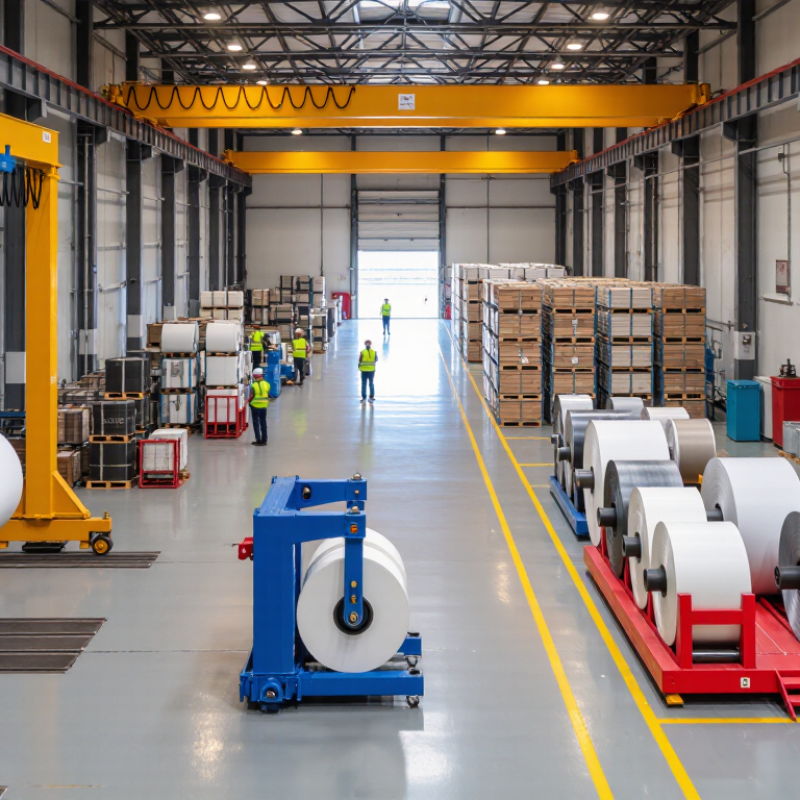
Roll lifting equipment moves wound stock from storage to a converting line. It must protect roll edges and prevent uncontrolled rotation. The lifting method depends on the roll’s core, weight, width, and surface. A mismatch can damage material or destabilize the load.
Common designs use a shaft through the core, an expanding mandrel, or padded clamps around the roll. A hoist, forklift attachment, or powered manipulator raises and positions it. Operators should verify rated capacity and the load’s center of gravity. Mechanical locks or hydraulic pressure secure the grip; sensors can assist, but do not replace inspection. Small details matter.
The U.S. Bureau of Labor Statistics reported 2.6 million nonfatal workplace injuries and illnesses in private industry during 2023, at a rate of 2.4 cases per 100 full-time workers (Employer-Reported Workplace Injuries and Illnesses, 2023). This figure is not specific to roll handling, but it gives useful context for safe material movement.
Check the core, contact surfaces, brake, and travel path before lifting. A smooth test lift is not proof of safety; recheck after changing roll size or material.
Main Types of Roll Lifting Equipment Made in China
Main Types of Roll Lifting Equipment Made in China
Chinese manufacturers produce several roll-handling designs for printing, packaging, paper, and film plants. Manual hydraulic roll stackers suit lighter loads and short moves between workstations. Electric roll handlers reduce pushing effort and often use adjustable clamps to grip a roll’s outside diameter. For rolls with a suitable central core, hoists with core shafts lift from the inside. Dedicated roll-lifting trucks can turn a roll from horizontal to vertical, which helps when loading machinery. Each design has limits. A clamp that fits one diameter may mark a softer paper edge.
Selection should start with roll weight, width, diameter, core strength, and the required lift height. Check rated capacity at the actual load center, not just the headline maximum. The International Federation of Robotics’ World Robotics 2024 report recorded 541,302 industrial robot installations worldwide in 2023, with China accounting for about 51%. That signals strong regional automation activity, but it is not a roll-lifter market measure. I would still verify weld quality, controls, and service access on the specific unit; brochures cannot show every awkward floor condition.
Tips: Ask for a load test using a representative roll. Confirm the clamp pads protect the material, and check turning clearance near doorways. Small details matter. A tight aisle can make a capable lifter frustrating to use.
Criteria for Evaluating Chinese Manufacturers
A roll-lifting supplier should prove its equipment fits the actual roll, not just a catalog sketch. Check rated capacity, roll width, core diameter, lifting points, and the roll’s center of gravity. Ask for drawings, material specifications, weld inspection records, and load-test documentation. Ask for evidence. A test certificate should identify the tested model and capacity, rather than merely show a generic factory procedure.
Compare how manufacturers handle real operating conditions: frequent lifting, narrow aisles, uneven loads, and delicate paper or film surfaces. Request a demonstration with a representative roll, and check whether the device grips securely without crushing its edges. Review inspection intervals, spare-part availability, and response times for technical support. Small details matter. A useful quotation also states operating limits and safety factors clearly. If the documentation is vague, pause and ask for clarification.
Grand View Research estimated the global material-handling equipment market at USD 214.7 billion in 2023, with projected growth of 5.5% annually from 2024 to 2030. This broad-market figure is not specific to roll lifters, but it signals a competitive, evolving equipment sector. Treat growth claims cautiously. A polished brochure is not proof of reliable engineering; independent testing and traceable records are more useful. No checklist catches everything, so a site trial may still reveal a mismatch.
Leading Manufacturers and Their Product Strengths
China’s leading roll-lifting equipment manufacturers tend to stand out through focused engineering rather than broad catalogs. Some specialize in compact hydraulic lifters for paper and film rolls, while others build powered units for heavier production lines. Their strengths often include adjustable mandrels, stable frames, and controls that let operators position rolls without striking nearby machinery. Small details matter.
Manufacturers with customization experience can adapt lifting height, roll diameter, and travel distance to a plant’s layout. A well-designed unit should hold a roll evenly, with clear capacity markings and accessible controls. Ask how the equipment performs with your actual roll core and surface. A catalog photo cannot answer that.
Reliable suppliers also provide load-test records, operating instructions, and access to replacement parts. Check weld quality, braking response, and whether the unit remains steady on the floor used in your facility. A sample load test matters. Yet specifications can still miss awkward daily conditions, such as narrow aisles or slightly uneven floors. That deserves a closer look before ordering.
Roll Lifting Equipment: Typical Functional Coverage
A functional comparison of common roll-handling equipment types—not a manufacturer ranking. A score of 1 indicates a function commonly available in that equipment type; actual capabilities depend on model and configuration.
How to Select a Roll Lifting Equipment Supplier
Best Roll Lifting Equipment Manufacturers in China?
How to Select a Roll Lifting Equipment Supplier
Choosing a supplier starts with your actual rolls, not a catalogue photo. Record each roll’s weight, width, core diameter, and lifting direction. Ask whether rated capacity applies to your specific attachment and lifting position. A machine may handle the stated load yet struggle with a narrow aisle or uneven floor. Request drawings, operating instructions, and relevant test documentation. Check how the equipment grips the roll and protects its edges. Small contact points can damage soft materials.
Tips: Share real roll dimensions and a layout drawing. Ask for a demonstration with a comparable load. Details matter.
Review the supplier’s engineering support, spare-parts availability, and operator training. Ask who responds when a clamp needs adjustment months later. Compare written specifications, not just sales promises. If possible, speak with users handling similar materials and shift patterns. A checklist can still miss awkward turns or changing roll sizes, so revisit the plan after a site walk. That extra review may feel fussy, but it can expose problems before installation.