Top 10 Plastic Injection Molding Press Manufacturers
Choosing a Plastic Injection Molding Press manufacturer involves more than comparing machine sizes or headline prices. Buyers need equipment suited to their materials, part geometry, production volume, and available floor space. A press that runs a small, thin-walled component may not fit a larger, heavier mold. Details matter.
This guide introduces ten manufacturers and offers a practical starting point for comparing their product ranges. It considers factors such as clamping force, injection capability, process repeatability, energy use, controls, and service support. For example, a packaging operation may prioritize fast cycles, while a technical parts producer may focus on stable shot control. Neither priority fits every factory. That is worth remembering.
Specifications can help narrow the field, but they do not replace a mold trial or a conversation with the manufacturer. Actual performance depends on the mold, resin, process settings, and operator experience. A brochure cannot show every production challenge. The companies featured here should therefore be viewed as options to investigate, not as a universal ranking. Readers should verify current machine specifications, regional service availability, and application references before making a purchasing decision. This comparison aims to make that research clearer, while acknowledging that some selection details may remain uncertain until a machine is tested under real production conditions.
Understanding Plastic Injection Molding Presses and Their Uses
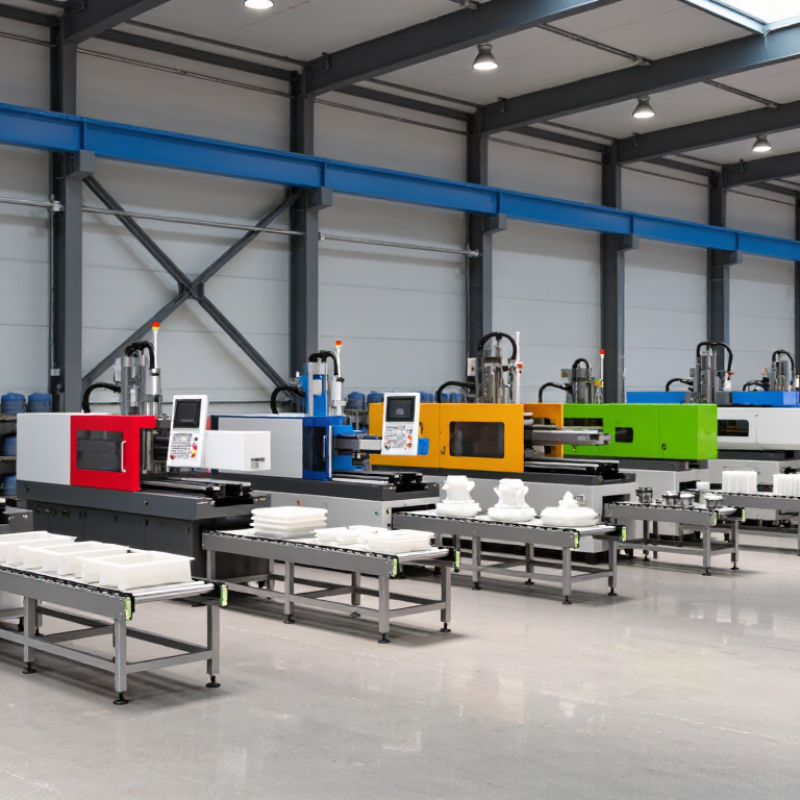
An injection molding press heats plastic pellets until they soften, then pushes the melt into a closed mold. The machine’s clamping unit holds the mold shut against injection pressure. After the material cools, the mold opens and ejector pins release the part. Cooling matters. A few seconds saved per cycle can add up across a long production run.
Presses make parts ranging from thin packaging lids to sturdy appliance housings and medical-device components. Choosing one involves more than comparing clamping force. The required shot size, mold dimensions, resin, expected cycle time, and part tolerances all affect suitability. An undersized press may struggle to fill a part consistently; an oversized one can waste energy and floor space. Small details matter, and real production trials may reveal issues that a specification sheet misses.
Grand View Research valued the global injection molding machine market at about US$10.5 billion in 2023 and projected a 4.6% compound annual growth rate from 2024 to 2030. This figure covers the broader machine market, not presses alone, so it should not be treated as a press-sales estimate. Still, it signals sustained industrial demand. Electric, hydraulic, and hybrid presses each offer different trade-offs in energy use, force, and control. There is no universal best choice; even a well-matched machine can need process adjustments when resin batches or ambient conditions vary.
Criteria for Comparing Injection Molding Press Manufacturers
A fair comparison starts with the parts you actually mold, not the largest number on a brochure. Check clamp force, shot capacity, tie-bar spacing, and platen dimensions against your largest tool. Ask for cycle-time and repeatability data using a comparable material and mold. Grand View Research’s Injection Molding Machine Market report estimated the global market at about $10.98 billion in 2023, reflecting a substantial field of suppliers and machine types. Still, market size does not prove a press will fit your production floor.
Look for measured energy use per kilogram, changeover time, control-system traceability, and access to local service technicians. Request references from plants running similar materials, mold weights, and shifts. Plastics Europe’s Plastics—The Fast Facts 2023 reported global plastics production of 400.3 million tonnes in 2022; that scale makes dependable uptime and process control meaningful comparison points. Small details matter. Ask how quickly common wear parts can be supplied, and whether training includes troubleshooting real process variation. Compare warranty terms and the assumptions behind quoted uptime figures. That part is messy. Supplier demonstrations rarely reproduce a crowded factory, an aging mold, or an operator learning a new interface. Record those limitations beside the scores, rather than pretending every measure is perfectly comparable.
Top 10 Plastic Injection Molding Press Manufacturers: A Comparison Criterion
Thermal processing range is one useful factor when comparing injection molding presses. The chart shows typical melt-processing temperature ranges for common plastics; actual settings vary by resin grade and application. Also compare clamping force, shot capacity, platen dimensions, and control capabilities.
Profiles of Ten Leading Plastic Injection Molding Press Manufacturers
Plastics Europe’s Plastics – the Fast Facts 2024 report estimates global plastics production at 413.8 million tonnes in 2023. That figure shows the scale of the manufacturing base, but it is not a machine-sales forecast.
A high-tonnage specialist builds two-platen presses for vehicle panels and large housings, prioritizing clamping stability.
An all-electric manufacturer targets electronics, where repeatable shot sizes and clean floors matter.
A hybrid-press maker balances electric precision with hydraulic force for varied production runs.
A micro-molding specialist focuses on tiny shots, close tolerances, and quick tool changes.
A multi-component press builder designs rotary platens and synchronized injection units for molded parts with multiple materials.
A vertical-press manufacturer supports insert molding, with operators loading components before each cycle. A large-machine builder serves oversized parts and emphasizes tie-bar spacing.
A packaging-focused producer pursues short cycles; cooling layout can matter as much as injection speed. A compact-cell supplier integrates presses with robots and material handling.
A service-led manufacturer differentiates through controls upgrades, spare parts, and local response.
Fit matters more. Buyers should compare clamp force, shot capacity, energy use, and service access against their actual tooling and resin.
This comparison remains imperfect: published cycle times rarely share identical molds, materials, or test conditions.
Comparison of Press Types, Clamping Forces, and Technologies
Press comparisons should begin with the job, not the machine’s maximum tonnage. Hydraulic presses suit demanding applications and broad force requirements; all-electric presses offer precise, repeatable movement; hybrid designs combine electric drive control with hydraulic force. The right choice depends on resin, part geometry, cycle time, and required process stability.
More force is not automatically better.
MARKET CONTEXT Grand View Research’s Injection Molding Machine Market report estimated the global market at about US$10.4 billion in 2023. Its segmentation includes presses rated up to 200 tons, 201–500 tons, and above 500 tons. These broad bands help frame a shortlist, but they cannot size a press by themselves. Check projected cavity pressure, projected part area, mold dimensions, and tie-bar spacing. Then verify the machine’s shot capacity and platen performance. A large press can still be a poor fit.
TECHNOLOGY & ENERGY Technology comparisons need similar care. Electric drives may support accurate position control and lower idle energy use, while hydraulic systems can provide strong, flexible force. Actual energy demand varies with the machine, material, and cycle. That matters. A short cycle with frequent stops may change the result. Compare measured energy per part and sample molded parts under production-like conditions; catalog specifications alone leave gaps.
Industrial Applications and Factors in Manufacturer Selection
Plastic injection molding presses support automotive interiors, appliance housings, medical-device components, and packaging. Each application places different demands on the machine. A thin-walled enclosure may need rapid, consistent injection, while a large structural part may require greater clamping force and platen space. Fit matters. A press must accommodate the mold’s dimensions, weight, and required opening stroke—not merely its advertised tonnage.
Selection starts with the part and mold. Compare clamp force, injection capacity, screw size, tie-bar spacing, and minimum and maximum mold height against actual production requirements. Ask how the press maintains repeatability across shifts, especially for parts with tight dimensions or visible surfaces. Energy use, cycle time, controls, and compatibility with automation also affect operating costs. Not just tonnage. A machine that is oversized can waste energy; one that is undersized can create flash, unstable cycles, or avoidable downtime.
Manufacturer evaluation should include documented performance, commissioning support, spare-parts availability, and technician response times. Request cycle data using a comparable material and mold, then check what conditions produced those results. A polished specification sheet can leave out practical details, such as changeover time or local service coverage. I would also ask operators to assess access to the clamp area and controls; small ergonomic problems tend to become daily frustrations. Safety features and maintenance instructions deserve the same careful review as output claims.