

Top 10 Mobile Excavator Manufacturers for Global Buyers
A Mobile Excavator can cross a busy site on its own wheels, then lower its blade beside a curb or trench. That flexibility matters to contractors working across roads, utilities, landscaping, and urban construction. Yet mobility alone does not make a machine a good buy. Buyers must compare digging reach, lifting capacity, transport needs, service access, and operating costs.
As a practical buying principle: “Choose the machine for the work it must repeat, not the feature that looks best in a brochure.” This is an editorial rule of thumb, not a quotation from a named industry expert. No source material was provided to verify an expert’s exact words, so attributing a quotation would risk misleading readers. A reliable comparison should make that distinction clear.
The manufacturers in this Top 10 guide serve different markets and job conditions. One model may offer a tight turning radius for narrow streets; another may provide longer reach for drainage work. Check dealer coverage, parts availability, warranty terms, and operator comfort alongside headline specifications. A machine that performs well on paper can still lose productive hours if routine service takes too long.
This list is a starting point, not a universal ranking. Regional support and attachment needs can change the best choice. Even experienced buyers may overlook those details. Compare real job requirements before choosing a brand.
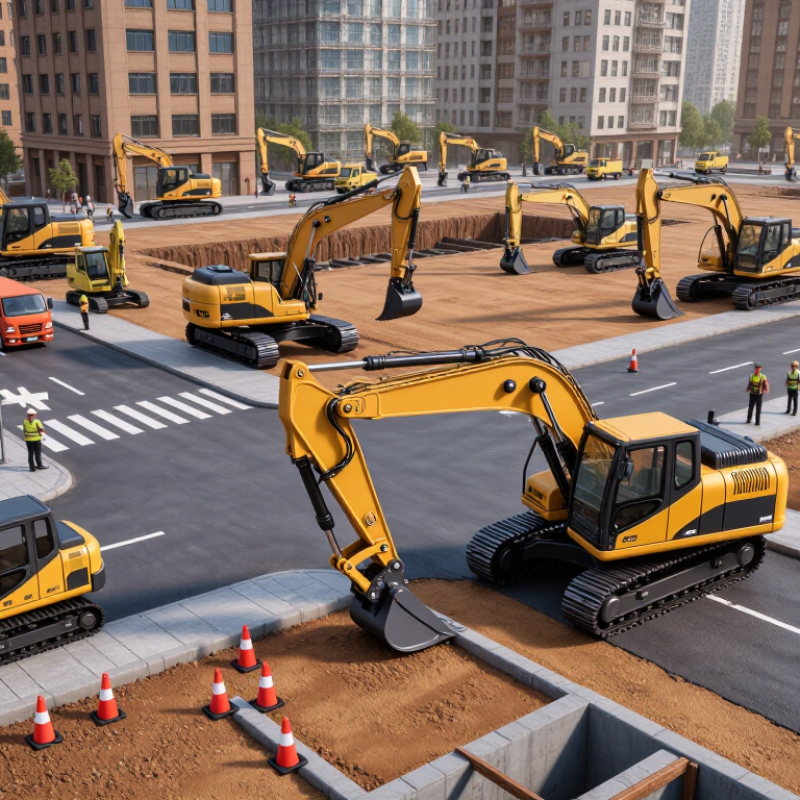
What Defines a Mobile Excavator and Where It Is Used
A mobile excavator is typically a wheeled excavator designed to travel between nearby jobs on paved roads. It combines a rotating upper structure, boom, stick, and bucket with road wheels. Many models use a front blade or stabilizers to steady the machine during digging.
That distinction matters. Compared with tracked excavators, wheeled machines can move quickly between street-side tasks, but they may offer less traction on soft or uneven ground.
Common jobs include repairing water and power lines, clearing roadside drains, maintaining streets, and landscaping in built-up areas. A narrow tire path helps the machine work near traffic, sidewalks, and existing utilities.
Oxford Economics and Global Construction Perspectives’ Global Construction Futures report projects global construction output will grow 42% by 2037, reaching $15.5 trillion. Meanwhile, UN DESA’s World Urbanization Prospects projects that 68% of the world’s population will live in urban areas by 2050.
These trends help explain demand for flexible urban equipment, though they do not guarantee a wheeled excavator suits every site. Operators still need to assess ground strength, turning space, and stabilizer setup before digging. A curbside work zone can look spacious until parked vehicles and buried services narrow the working envelope.
How to Evaluate Mobile Excavator Manufacturers
A mobile excavator manufacturer should be judged by more than machine specifications. Match the operating weight, reach, digging depth, and transport dimensions to the work you actually expect. Check the load chart for the intended attachment, not just the standard bucket. Small details matter: tire choice, axle configuration, and cab visibility can affect daily performance on tight urban sites.
Ask how machines are tested before delivery. Request documented inspection procedures, hydraulic system checks, and stability information for relevant working conditions. If possible, inspect a machine in person. Look at hose routing, access to service points, weld consistency, and how securely guards and panels fit. A polished brochure is useful, but it cannot show every maintenance inconvenience. Easy to miss.
Support deserves the same scrutiny as the excavator itself. Ask for typical parts lead times, technician training details, warranty terms, and written service schedules. Speak with buyers operating similar equipment and ask about recurring repairs, not only general satisfaction. Compare answers across several references. No checklist catches everything. Your site conditions, operator habits, and local service capacity may differ from theirs, so record any assumptions that could weaken the comparison.
Ten Leading Mobile Excavator Manufacturers for Global Buyers
For global buyers, the ten leading mobile excavator manufacturers are best compared by job-site fit, not brochure claims alone. A wheeled excavator can move quickly between urban projects, but stability on a soft shoulder still depends on setup and operator judgment. Compare operating weight, axle load, tail swing, boom reach, and hydraulic flow against the attachments your crews actually use. A two-piece boom may help when working beside walls; a compact tail swing can matter on narrow streets. Small details matter.
Look beyond the machine itself. Ask how quickly dealers can supply filters, hoses, tires, and common wear parts in your region. Request service intervals, warranty conditions, operator training options, and clear information about local emissions requirements. If possible, inspect a working unit and speak with operators who use similar equipment; cab visibility and control response are difficult to judge from specifications. Telematics can help track fuel use and maintenance, but only if the data is accessible and useful to your team. A shortlist of ten manufacturers is a starting point, not a verdict. Paper comparisons can miss real site conditions, and buyers sometimes underestimate support needs after delivery.
How Leading Brands Differ in Reach, Range, and Support
For global buyers, a mobile excavator’s reach is more than a shipping map. It includes dealer coverage, parts availability, and technicians who can reach a job site without long delays. Ask how quickly common items, such as filters, hoses, and track components, can be supplied. Reach matters. A wide sales network means little if local support is thin.
Range shows up in the work itself. Compare operating weight, digging depth, lifting capacity, and transport dimensions against actual site conditions. A compact machine may fit narrow streets, while a heavier model can offer steadier lifting on larger projects. Check the working range with the attachments you plan to use, not just the standard bucket. Specifications can look generous on paper. The ground may disagree.
Support varies in less visible ways: operator training, diagnostic access, warranty response, and clear maintenance schedules. Ask for service intervals and a realistic estimate of routine costs. Request a demonstration with representative tasks, then note visibility, control feel, and access to daily inspection points. One detail is easy to miss: a fast response promise is not the same as a nearby technician. Even careful comparisons leave gaps, especially when workload changes by season. A short trial can reveal more than another brochure.
Top 10 Mobile Excavator Manufacturers for Global Buyers: A Size-Class Reference
Typical operating-weight ranges for wheeled excavator size classes. These indicative ranges are not manufacturer rankings; specifications vary by model and configuration.
Use machine size as a starting point when comparing reach and transport needs. For global support, verify local parts availability, service coverage, and response times with each supplier.
How to Match a Manufacturer to Your Project and Market
When comparing mobile excavator manufacturers, start with the worksite, not the brochure. Measure the narrowest gate, haul-road width, and turning space. A machine may reach the trench but still struggle to enter the site. Match operating weight and axle load to local road limits, then check lifting charts at your actual working radius. Small differences matter. Ask how quickly the boom and travel functions respond during repeated moves, not only during a short demonstration.
Your market and attachments matter just as much. Confirm that auxiliary hydraulics suit the breaker, mower, or tilt bucket you plan to use. In wet clay, tire choice and ground pressure can affect access; on paved streets, transport dimensions and service intervals may matter more. Check which emissions documentation and operator materials are available for your destination market. Then ask for parts lead times, technician training, and references from similar projects. A polished answer is not proof. Request written specifications and, where possible, inspect a working machine. No checklist catches everything. One overlooked detail can be inconvenient: a common hose fitting or filter that local workshops do not stock. Compare the support plan with your expected hours, not just the purchase price.
Top 10 Mobile Excavator Manufacturers for Global Buyers - How to Match a Manufacturer to Your Project and Market
| Manufacturer Profile | Best Project Fit | Mobility and Ground Conditions | Configuration to Compare | Market and Purchase Checks |
|---|---|---|---|---|
| 1. Urban utility specialist | Road maintenance, utility trenches, and compact urban construction sites | Wheeled machines can travel between nearby work sites on suitable roads; check local road regulations and travel limits. | Overall width, tail-swing design, stabilizers or dozer blade, and auxiliary hydraulic circuits | Confirm transport permits, parts availability, service response, and compliance with local emissions rules. |
| 2. Road-and-rail infrastructure specialist | Roadside works, drainage, and projects requiring frequent movement between locations | Wheeled mobility can reduce the need for a transport trailer over short permitted journeys; it does not remove road-safety requirements. | Travel speed, braking system, tire options, work lighting, and approved lifting configuration | Check road-traffic approval, axle loads, operator licensing requirements, and dealer support along the route. |
| 3. Municipal maintenance specialist | Street repairs, public works, landscaping, and work around existing infrastructure | A compact wheeled excavator may suit paved, space-constrained sites; soft ground may require a different undercarriage or ground-protection measures. | Machine width, visibility, noise data, quick coupler compatibility, and attachment-change procedures | Verify noise and emissions requirements for the work zone and confirm parts support for the intended service life. |
| 4. Soft-ground and wet-site specialist | Wetland edges, muddy worksites, and ground where tire traction or flotation is a concern | Tracked undercarriages generally provide better traction on soft or uneven ground than standard road tires, but site conditions still determine suitability. | Track type and width, ground pressure data, undercarriage protection, and access dimensions | Request ground-pressure information for the exact configuration and assess transport requirements for tracked equipment. |
| 5. Attachment and versatility specialist | Contractors handling excavation, lifting, grading, and other tasks with multiple attachments | Suitability depends on the machine’s stability, hydraulic capacity, and approved operating configuration—not mobility alone. | Auxiliary flow and pressure, return-line requirements, coupler standard, and attachment compatibility | Confirm attachment approval, lifting charts where relevant, warranty coverage, and availability of compatible tools locally. |
| 6. Fuel-efficiency-focused specialist | Long operating hours, fleet cost control, and projects with measurable fuel-use targets | Fuel consumption varies with workload, operator technique, attachments, and site conditions; published figures should be checked against the duty cycle. | Engine operating modes, idle-management features, hydraulic control, and fuel-tank capacity | Request test conditions behind fuel data and compare expected service, fuel, and downtime costs over the ownership period. |
| 7. Harsh-climate specialist | Hot, cold, dusty, or high-altitude operating environments | Climate suitability depends on specified operating limits and installed options; standard equipment may need adaptation for extreme conditions. | Cooling package, filtration, cold-start aids, cab heating or air conditioning, and fluid specifications | Obtain written temperature and altitude limits for the ordered configuration and verify local maintenance capability. |
| 8. Emissions-compliance specialist | Projects in markets with defined engine-emissions requirements or low-emission work zones | Regulatory requirements vary by country and machine category; the applicable standard must be checked for the destination market. | Engine certification, after-treatment system, required fluids, and service access | Match the machine’s certification to local regulations and confirm import documentation, fuel quality, and after-treatment support. |
| 9. Remote-service and fleet-technology specialist | Multi-site fleets, remote projects, and operations requiring equipment-use monitoring | Telematics can report selected machine and location data when the system is enabled and has network coverage. | Included sensors, reporting functions, connectivity, data access, and subscription terms | Check coverage in the operating region, data ownership terms, cybersecurity provisions, and support after the warranty period. |
| 10. Export and lifecycle-support specialist | International purchases where parts, technical support, and resale prospects are key considerations | Transport method and cost depend on machine dimensions, weight, shipping route, and destination requirements. | Export configuration, manuals and operator materials, service intervals, and parts interchangeability | Verify delivery terms, warranty jurisdiction, spare-parts lead times, local technician training, and documented service history requirements. |
| Buyer note: These are capability-based comparison profiles, not named companies or a verified manufacturer ranking. Confirm specifications, certifications, operating limits, pricing, and support commitments for the exact machine and destination market before purchase. | ||||

