

Top 10 IPE Beam Types for Global Buyers?
Choosing the right IPE BEAM can influence structural safety, project cost, and installation speed. Global buyers often compare section weight, depth, steel grade, availability, and delivery conditions. A beam that looks economical may create higher transport costs or require extra connection work.
This guide examines ten widely requested IPE beam types for international construction and fabrication projects. It considers common sizes, including IPE 100, IPE 200, IPE 300, and heavier sections. The selection also reflects practical standards, especially EN 10365 dimensions and EN 10025 steel grades. Mill certificates, dimensional tolerances, surface condition, and traceability remain important purchasing details. These documents help buyers verify what arrives at the jobsite.
Real projects are rarely perfect. Stock availability may limit the preferred section. Local engineering rules may also differ from European specifications. Therefore, this list is a buying reference, not a substitute for structural design. Engineers should confirm loads, spans, buckling risks, connections, fire requirements, and corrosion exposure. Weather matters. A coastal warehouse needs different protection from an indoor factory.
The following comparison focuses on useful differences between IPE beam types. It explains where each section may fit, what buyers should inspect, and which questions deserve supplier confirmation. Price alone is not enough. A slightly heavier beam may reduce fabrication time and material waste. Still, that assumption needs checking against freight rates and actual stock. Careful buyers request drawings, test reports, packing details, and realistic lead times before placing an order. Mistakes happen. Good verification reduces their cost.
What Is an IPE Beam and Why Is It Important for Global Buyers?
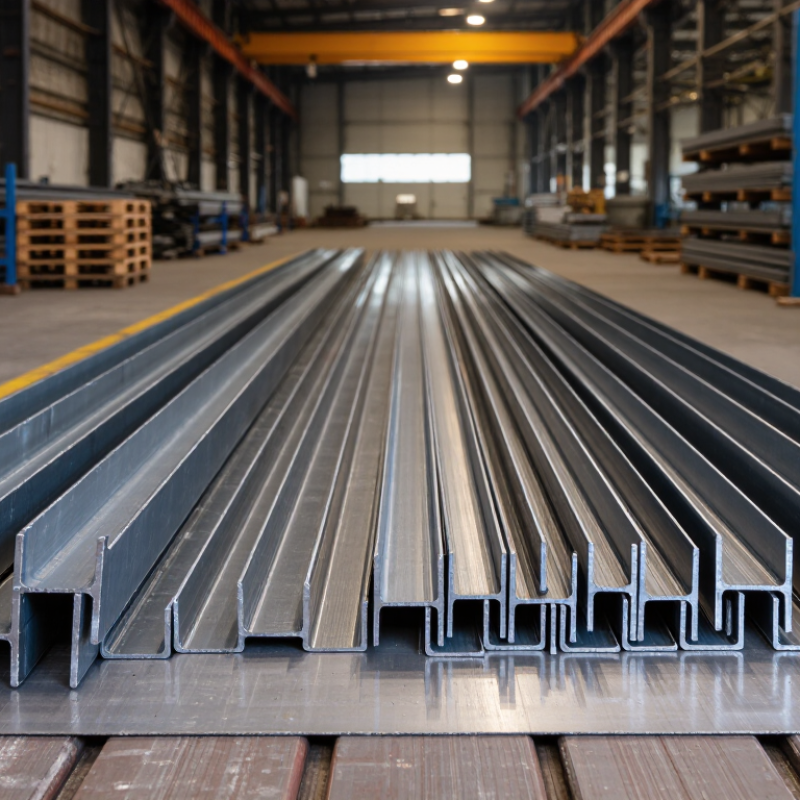
An IPE beam is a hot-rolled steel section with an I-shaped profile and parallel flanges. The web mainly resists shear, while the flanges carry bending stress. This geometry provides useful strength without excessive steel weight. For global buyers, that balance affects structural safety, transport costs, and installation effort.
IPE sizes commonly range from light sections, such as IPE 80, to much heavier sections, such as IPE 600. Each size has different depth, flange width, weight, and section properties. Choosing by visual size alone is risky. Engineers should check span, loads, deflection limits, connection details, and local design standards. A larger beam is not always the better answer.
Reliable purchasing also requires more than a competitive price. Request chemical composition, mechanical properties, dimensional tolerances, heat numbers, and inspection documents. Confirm whether the supplied steel follows the required standard and grade. Moisture during sea transport can create surface rust. Protective wrapping helps, but it is not a complete corrosion solution. Storage conditions still matter.
The ten most useful IPE beam types often differ mainly by nominal depth and weight. Yet regional availability can change the practical choice. A technically suitable section may cause delays if mills or fabricators cannot supply it. Buyers should compare certified data, delivery schedules, cutting plans, and freight dimensions. Small assumptions can become expensive mistakes. Rechecking the design is worthwhile.
How IPE Beams Are Classified by Size, Weight, and Section Design
Top 10 IPE Beam Types for Global Buyers?
IPE beams are commonly identified by their nominal height in millimeters. Typical choices include IPE 80, 100, 120, 140, 160, 180, 200, 220, 240, and 270. The number describes the approximate section height, not the complete beam specification. As the size increases, the cross-sectional area and weight per meter usually increase. This affects lifting plans, transport costs, and foundation loads.
Weight is normally listed in kilograms per meter. It helps buyers estimate shipment weight and steel consumption. However, weight alone cannot confirm structural performance. Buyers should also review flange width, web thickness, flange thickness, and total section area. A wider flange can improve stability, while a thicker web can better resist shear. Small dimensional differences matter.
Section design also includes moment of inertia and section modulus. These values indicate how efficiently an IPE beam resists bending around its main axis. IPE 200 may suit one span, while a lighter section may work elsewhere. The choice depends on span, load, deflection limits, connections, and support conditions. Check dimensional tables carefully. A catalog label can look simple, but mistakes happen when nominal size replaces engineering review. Confirm the applicable standard, mill certificate, tolerances, and actual measurements before ordering.
Top 10 IPE Beam Types and Their Main Structural Applications
Top 10 IPE Beam Types for Global Buyers
IPE beams are commonly identified by their nominal depth in millimetres. The ten practical types include IPE 80, 100, 120, 140, 160, 180, 200, 240, 300, and 400. Smaller sections suit lightweight frames, supports, handrail structures, and short-span roof members. IPE 120 and 140 often serve as floor joists, lintels, and secondary roof beams. IPE 160 and 180 are useful for moderate floor loads and platform framing.
IPE 200 and 240 can work as secondary girders, mezzanine beams, and transfer members when deflection remains controlled. Larger IPE 300 and 400 sections are selected for primary frames, industrial buildings, bridge components, and longer spans. Their deeper webs improve shear resistance, while the flanges provide bending capacity. However, depth alone does not determine performance. Steel grade, span length, restraint, connection design, and load combinations all matter.
A common purchasing mistake is choosing a section by weight only. That approach can create excessive vibration or lateral buckling. I would also avoid treating IPE 400 as an automatic solution for heavy loads. Engineers must verify bending, shear, deflection, fire exposure, corrosion allowance, and local design standards. Actual site conditions can change the best choice. Clearance restrictions may favour a smaller, stronger grade, but that decision needs calculation and documented approval.
How IPE Beam Standards, Materials, and Certifications Differ
Top 10 IPE Beam Types for Global Buyers
How IPE Beam Standards, Materials, and Certifications Differ
Global buyers often compare ten popular IPE sizes, including IPE 80, 100, 120, 140, 160, 180, 200, 240, 300, and 600. The number identifies the approximate nominal depth in millimeters. However, size alone does not define performance. Flange thickness, web thickness, weight, and section tolerance also affect design calculations, shipping weight, and fabrication costs.
The EN 10365 standard defines IPE dimensions and sectional properties. EN 10034 addresses dimensional tolerances. Material grades commonly follow EN 10025-2, such as S235JR, S275JR, and S355JR. S355 offers higher yield strength, but it may require different welding procedures. A thicker flange can also change bending behavior. Small details matter.
Certification needs careful checking. An EN 10204 type 3.1 inspection document links chemical results and mechanical tests to a specific production batch. CE marking may involve EN 1090-1 requirements, depending on the product’s intended structural use and market. ISO 9001 confirms a quality management system, not the beam’s complete compliance. That distinction is often missed. A buyer may assume one certificate covers everything, but it rarely does. Confirm the standard edition, steel grade, heat number, test results, and country-specific import rules before approving an order. Even experienced teams can overlook tolerance differences when converting between metric standards.
How Global Buyers Can Select and Source the Right IPE Beam
Top 10 IPE Beam Types for Global Buyers?
Selecting an IPE beam starts with the load, span, and connection details. IPE 80 and IPE 100 suit lighter frames, while IPE 300 to IPE 600 support heavier industrial applications. IPEA and IPEO profiles can reduce weight, but their thinner sections may demand stricter buckling checks. Always compare the section modulus, second moment of area, and nominal mass. A low-cost beam is not always economical. It may require thicker plates or extra stiffeners.
The 2024 World Steel Association World Steel in Figures reports approximately 1.84 billion tonnes of crude steel production worldwide. This scale creates many sourcing options, but quality still varies between mills and markets. Buyers should request EN 10365 dimensions, EN 10025 steel grade, and EN 10034 tolerances. Ask for heat numbers, mill test certificates, and independent inspection records. Check whether the certificate matches the actual bundle. Small details matter.
OECD’s 2024 steel market analysis highlights weak demand and expanding capacity as continuing market risks. Therefore, compare more than price and delivery promises. Confirm beam length, straightness, surface condition, corrosion protection, packing, and port handling requirements. A supplier may quote S355, yet omit impact testing or thickness tolerances. That omission can change the engineering decision. Verify design assumptions under EN 1993-1-1, especially lateral buckling and fire exposure. My practical caution is simple: spreadsheets look precise, but an incorrect grade or section designation can quietly invalidate the whole purchase.
Top 10 IPE Beam Types for Global Buyers
Common European IPE sections ranked by nominal mass per metre, based on standard EN 10365 section data.
Heavier IPE sections generally provide greater bending capacity but require higher material and handling costs. Buyers should confirm span, load, steel grade, corrosion protection, tolerances, and local design requirements before sourcing.

