

What Is a Salinity Meter and How Does It Work?
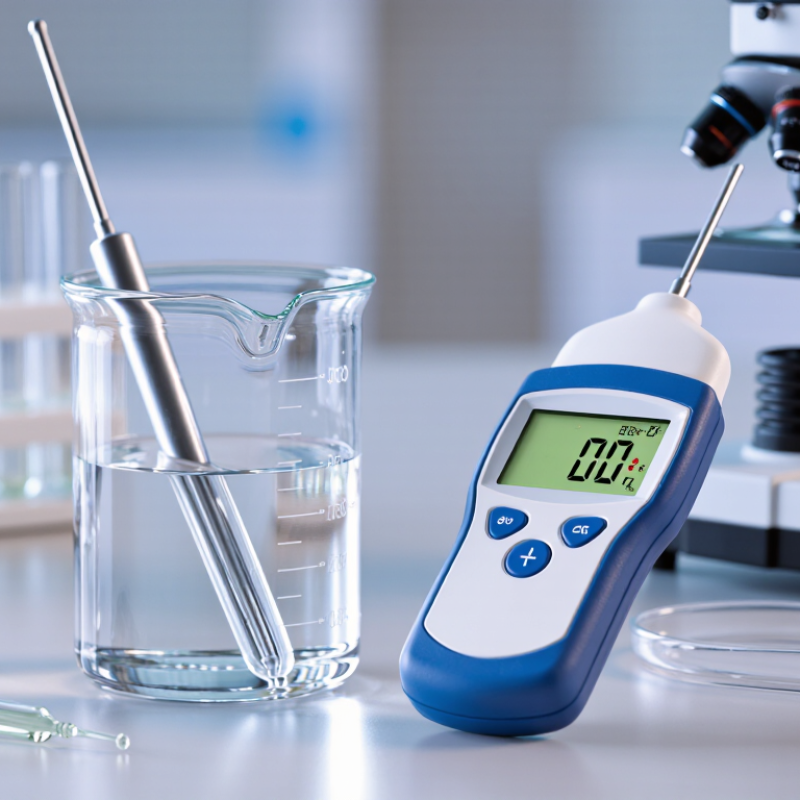
A Salinity Meter measures how much dissolved salt is present in water. It helps aquarium keepers, researchers, and water-treatment staff check conditions with greater consistency than visual inspection allows. The instrument may estimate salinity from electrical conductivity, because dissolved ions carry an electrical current. Some models use optical methods, measuring how light bends through a sample. The design matters. A conductivity meter and a refractometer do not work in exactly the same way, even when both display salinity.
Using one is usually straightforward. Rinse the probe or sampling surface, place it in a clean water sample, and wait for the reading to settle. Many conductivity meters apply a temperature adjustment, since warmer water can conduct electricity differently. Calibration also matters; a meter checked against an appropriate reference solution is more dependable than one used without a recent check. Small details matter. Record the displayed unit, such as parts per thousand or practical salinity units, rather than treating every number as interchangeable. A meter gives a useful measurement, not a full chemical analysis: it cannot identify which salts or other dissolved substances caused the reading. Results can also shift with residue, bubbles, poor calibration, or a worn sensor. That is easy to overlook. Understanding how the device senses water—and where its limits begin—makes its readings more useful and easier to question when they seem unexpected.
Salinity Meter Definition and the 35 PSU Seawater Reference
A salinity meter estimates how much dissolved salt is in water, usually by measuring electrical conductivity. In seawater, dissolved ions carry electric current; more ions generally mean higher conductivity. Some instruments use refractive index instead. The display may show practical salinity in PSU, a scale derived from conductivity rather than a direct count of salt particles. That distinction matters.
The familiar seawater reference is 35 PSU. It describes a common reference value for ocean water, not a fixed reading for every coast, bay, or aquarium. Rain, evaporation, river water, and ice melt can shift local salinity. PSU is technically dimensionless, so it is not exactly the same as grams of salt per liter. A reading near 35 is useful context, not proof that a sample is chemically identical to seawater.
Temperature affects conductivity, so a reliable measurement needs temperature compensation or a sample measured at a controlled temperature. Rinse the probe with clean water, remove visible residue, and let the reading settle. Small errors linger. I would also check calibration with an appropriate reference solution, especially when readings seem surprising. A meter can look precise while a dirty sensor or a warm sample quietly nudges the result.
Measurement Methods: Conductivity, Refractive Index, and Titration
What Is a Salinity Meter and How Does It Work?
Measurement Methods: Conductivity, Refractive Index, and Titration
A salinity meter may estimate dissolved salts rather than measure every salt directly. Conductivity meters track how easily electrical current passes through a sample. More dissolved ions usually mean higher conductivity. Temperature matters, so compensate for it and rinse the probe between samples. UNESCO’s Practical Salinity Scale 1978 report gives standard seawater at salinity 35 a conductivity of 42.914 mS/cm at 15°C and atmospheric pressure. That benchmark helps explain why temperature and calibration cannot be afterthoughts.
A refractometer measures how much light bends through a water sample. A drop on its prism can produce a quick reading, useful for field checks or small tanks. Yet the result depends on calibration and the sample’s dissolved substances; not every salty solution behaves like seawater. Conductivity methods are addressed in ISO 7888:1985, while the UNESCO report defines the oceanographic conductivity-based scale. Small details matter.
Titration takes a different route. A measured sample reacts with silver nitrate, and an indicator signals the endpoint. The chloride result can then support a salinity estimate, provided the sample’s ionic composition is understood. This method needs careful measuring and a steady eye on the color change. That assumption can fail in unusual waters. Readings from different methods may not match exactly, and that difference deserves investigation rather than a convenient average.
What Is a Salinity Meter and How Does It Work? - Measurement Methods: Conductivity, Refractive Index, and Titration
| Measurement method | What the instrument measures | How salinity is determined | Typical output | Strengths | Important limitations |
|---|---|---|---|---|---|
| Electrical conductivity | How readily the sample conducts electricity, which depends largely on the concentration and mobility of dissolved ions. | An electrode cell measures conductance or conductivity. The meter uses a calibration and, when selected, a temperature correction or seawater relationship to estimate salinity. | Conductivity is commonly reported in µS/cm or mS/cm. Salinity may be displayed as practical salinity (often written as PSS-78 or “PSU” on instruments) or as a concentration such as g/kg, depending on the method and calibration. | Fast, convenient, and well suited to repeated field or laboratory measurements. Temperature compensation is available on many meters. | Conductivity responds to all dissolved ions, not just sodium chloride. Results can be affected by temperature, electrode condition, bubbles, contamination, and the ionic composition of the sample. |
| Refractive index | The extent to which the sample bends light, measured with an optical refractometer. | The instrument measures refractive index and applies a calibration curve or scale to estimate salinity or dissolved-salt concentration. | Depending on the instrument and scale, readings may be shown as salinity, parts per thousand (ppt), or refractive index. | Quick measurement with a small sample volume. Handheld optical instruments can be useful for routine checks. | Temperature and sample composition affect the reading. A scale calibrated for seawater or sodium chloride may not give an accurate result for solutions with a different mix of dissolved substances. |
| Argentometric titration | The amount of chloride in a measured sample, determined by reacting it with a known silver nitrate solution. | A titrant is added until the specified endpoint is reached. Chloride concentration is calculated from titrant volume and concentration; salinity is estimated only when an appropriate relationship between chloride and total salts is valid. | Usually a chloride concentration, such as mg/L or g/L. A salinity value can be calculated where the sample type and method support that conversion. | Provides a chemical measurement of chloride and can be useful for checking or validating other measurements. | It is not a direct measurement of total dissolved salts. Other halides and endpoint detection can affect results; careful reagents, technique, and sample handling are required. |
| Temperature handling | Temperature is measured alongside the sample or controlled during measurement. | Conductivity and refractive index both vary with temperature. Instruments may compensate automatically, but compensation depends on the selected calibration or sample model. | Temperature is commonly displayed in °C or °F alongside the salinity-related result. | Recording temperature helps make measurements more comparable and supports correct interpretation. | Automatic temperature compensation does not correct for every difference in sample chemistry or replace proper calibration. |
| Calibration and checks | The instrument response against one or more solutions with known properties. | Use calibration standards appropriate to the measurement method and expected sample range, following the instrument’s procedure. Rinse and dry or blot the sensor as appropriate between samples. | A calibrated reading with the selected scale and units. | Regular checks help identify drift, residue, damaged sensors, or an unsuitable calibration range. | A calibration standard should match the method and intended measurement. A displayed salinity value is only as reliable as its calibration, sample handling, and assumptions. |
How Conductivity Cells Convert Electrical Response into Salinity
A salinity meter estimates how much dissolved salt is in a liquid. Many handheld meters do this by measuring electrical conductivity. Inside the probe, two or more electrodes form a conductivity cell. The meter applies a small alternating electrical signal, then measures how readily the liquid carries it. Dissolved ions, such as sodium and chloride, transport charge through the water. More mobile ions generally produce a stronger response.
That response is not a direct measurement of salt mass. The instrument converts conductivity into a salinity estimate using calibration data and a temperature correction. Temperature matters: warm water conducts electricity differently from cool water. A meter may display practical salinity, parts per thousand, or another scale, depending on its design. The conversion also assumes a typical mix of dissolved ions. Unusual brines can challenge that assumption.
That detail is easy to overlook.
Tips: Rinse the cell with the sample before testing, and gently remove trapped bubbles. Keep the electrodes clean; a thin film can affect readings. Let the probe and sample reach a stable temperature, then wait for the display to settle. Compare results with a suitable calibration solution. I still wouldn’t trust one reading alone—repeat it, especially when measurements seem inconsistent.
Temperature Compensation and PSS-78: 42.914 mS/cm at 15°C
A salinity meter estimates dissolved salt from electrical conductivity. Its probe uses electrodes to measure how readily ions carry current through a water sample. More ions usually mean higher conductivity. Temperature matters: warm water conducts better, even when its salt content stays unchanged. The display can shift if the sample warms in your hand.
The key reference is 42.914 mS/cm at 15°C. UNESCO’s Practical Salinity Scale 1978 report defines this conductivity for standard seawater with practical salinity 35, at atmospheric pressure. PSS-78 calculates practical salinity from conductivity, temperature, and pressure; it is not a direct measurement of salt mass. Small differences matter. A meter using a generic correction to 25°C may not reproduce a PSS-78 result unless its calculation is designed for seawater.
For dependable readings, rinse the probe, remove trapped bubbles, and let the sample temperature stabilize. Check calibration with a suitable conductivity standard, then record temperature with the result. The IOC’s TEOS-10 manual explains why salinity calculations depend on well-measured physical conditions. A useful limitation: compensation cannot repair a dirty sensor or a poor calibration. In field work, that part is easy to overlook.
What Is a Salinity Meter and How Does It Work?
Temperature Compensation and the PSS-78 Reference: 42.914 mS/cm at 15°C
A salinity meter measures electrical conductivity and uses temperature compensation to account for conductivity changes as water warms or cools. The chart shows approximate conductivity values for seawater at practical salinity 35; the PSS-78 reference value is 42.914 mS/cm at 15°C. A meter uses conductivity and temperature together to calculate practical salinity.
Calibration and Sample Handling for Reliable Field and Lab Readings
A salinity meter estimates how much dissolved salt is present by measuring a sample’s electrical response. Reliable readings depend on more than the instrument. Calibration and careful sample handling matter just as much.
Before fieldwork or lab work, inspect the probe for residue or damage. Calibrate with fresh standard solutions that bracket the expected salinity range, following the meter’s instructions. Let the solution and probe reach a similar temperature, and wait for the displayed value to stabilize. Rinse the probe with clean water between standards. Blot it gently; rubbing can leave fibers or create static. Small details count. Calibration is not magic, though. A reading can still drift if standards are old or contaminated.
Collect a representative sample in a clean cup, away from sediment or surface films unless those are part of what you intend to measure. Rinse the probe with a little sample before testing, then immerse the sensing area fully without letting it touch the cup. Stir gently to remove trapped bubbles, and allow the reading to settle. Note the temperature, calibration time, and sample location beside each result. If duplicate readings disagree, check for residue, temperature changes, or a loose connection before averaging them. Field conditions are messy; a rushed measurement may look precise and still be wrong.

