

R&D Ergo new logo

ERGONOMIC SOLUTIONS FOR OVER 25 YEARS.

To serve you better | Now merging service and customer support with our sister company Liftsafe Engineering and Service Group.

What Is a Rubber Slitter Cutting Machine?

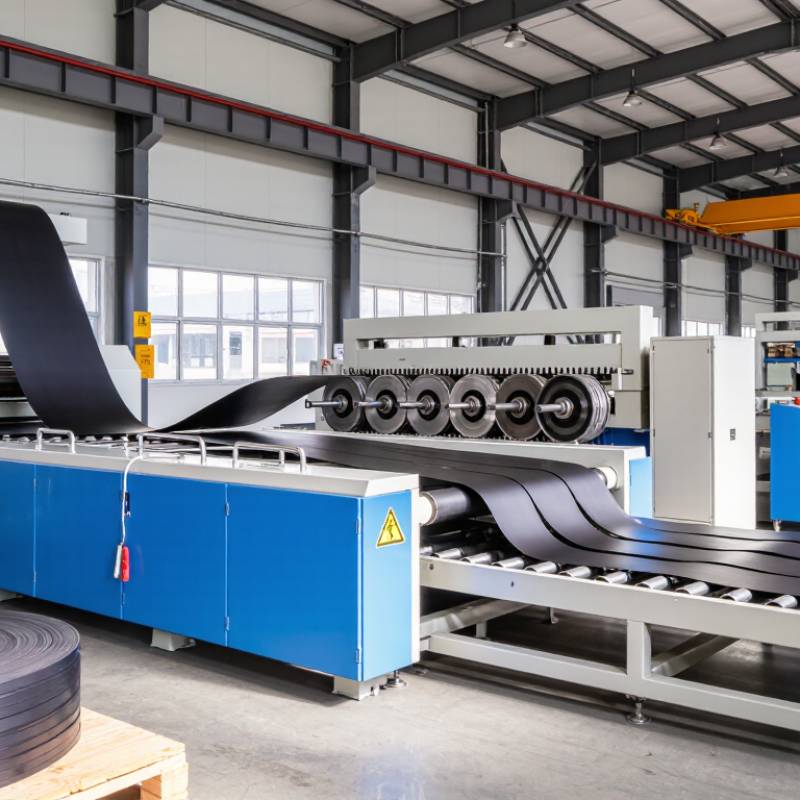
Rubber products rarely begin as finished shapes. In many plants, operators feed a wide rubber sheet or roll through a Rubber Slitter Cutting Machine. Rotary knives or fixed blades divide the material into narrower strips. The machine’s job sounds simple. It is not.

A 2024 outlook from the International Rubber Study Group (IRSG) projected global rubber demand at roughly 30.4 million tonnes that year. The forecast includes natural and synthetic rubber. It does not measure slitter sales or prove one machine suits every plant. Still, it illustrates the scale of material moving through rubber supply chains. Consistent slitting can support downstream handling and reduce avoidable production variation. Depending on the line, knives may be positioned to produce multiple widths in one pass. But a clean edge can wander when sheet thickness, hardness, or feed tension changes.

A Rubber Slitter Cutting Machine may include circular knives, adjustable spacers, powered feeding, and guarded drive components. Buyers should compare working width, material thickness range, blade setup, speed control, and changeover time. Ask suppliers to run trials with the actual compound; catalog figures alone can mislead. Check strip-width tolerance and edge quality across a full roll, not just at the first cut. Small details matter. This guide covers machine components, operating principles, common configurations, and practical selection checks. One limitation deserves attention: no cutter can correct unstable incoming material. It is easy to overlook.
What Is a Rubber Slitter Cutting Machine?

Definition and Purpose: Slitting Rubber Sheets and Rolls into Narrow Strips

What Is a Rubber Slitter Cutting Machine?

Definition and Purpose: Slitting Rubber Sheets and Rolls into Narrow Strips

A rubber slitter cutting machine cuts wide sheets or rolls into narrower strips using rotary knives or circular blades. The material passes through feed rollers, while adjustable blades create parallel cuts. Operators set blade spacing to match the required strip width. The result is easier handling and more consistent stock for later production steps. Small strips. Big consequences.

The Rubber Board of India’s Annual Report 2022–23 records national natural rubber production of about 839,000 tonnes and consumption of about 1.35 million tonnes. These figures describe a large material flow, not slitter output. They do help explain why repeatable sizing matters. In practice, rubber compounds vary in softness, thickness, and tackiness. A setting that works for one roll may cause stretching or ragged edges on another. There is no perfect setup for every compound.

Tips: Check blade sharpness and alignment before a run. Feed a short sample first, then measure several strips with calipers. Watch for curled edges, uneven widths, or heat marks. Slow down if the rubber pulls. It may take a few adjustments.

Machine Components: Unwind Stand, Tension Control, Slitting Blades, and Rewind

What Is a Rubber Slitter Cutting Machine?

A rubber slitter cutting machine turns a wide roll into narrower strips. Its components work together to keep material moving evenly and cuts consistent. The unwind stand supports the parent roll and lets it feed into the machine. A stable shaft and correctly aligned roll reduce edge wander.

Tension control then manages the pull on the rubber. Too little tension can cause wrinkles; too much may stretch soft stock. Small adjustments matter.

Slitting blades make the cuts, while blade clearance and sharpness affect edge quality. Operators should check for residue and wear, especially when processing tacky compounds. The rewind section gathers finished strips into rolls. Even winding helps prevent telescoping and loose edges.

The International Rubber Study Group’s World Rubber Industry Outlook 2024 estimated global rubber demand at around 31 million tonnes that year. This is market context, not a machine-performance benchmark.

It does show why dependable converting matters. In practice, settings still need testing for each material; a neat setup can produce poor edges when the rubber’s thickness or firmness changes.

Cutting Methods: Rotary Shear, Razor, and Crush-Cut Slitting

What Is a Rubber Slitter Cutting Machine?
Cutting Methods: Rotary Shear, Razor, and Crush-Cut Slitting

A rubber slitter cuts wide sheets or rolls into narrower strips using circular blades. The best method depends on compound hardness, thickness, reinforcement, and tackiness. The International Rubber Study Group’s World Rubber Industry Outlook 2024 projected global rubber demand at about 31.1 million tonnes that year. That scale makes repeatable slitting important, but high throughput alone does not guarantee clean edges.

Rotary shear uses two overlapping circular knives to slice material between their edges. It often suits thicker or fabric-reinforced rubber, provided blade alignment and overlap are set carefully. Razor slitting uses a single sharp blade, often with less cutting force. It can produce narrow strips from thinner, softer stock, though adhesive compounds may build up on the blade. Crush-cut slitting presses a blade against an anvil roll. It is mechanically simple and fast, but compression can leave a flattened or rough edge on soft rubber. Edges matter.

In practice, operators check strip width, edge quality, and roll tracking during a trial run. A blade setup that works on one compound may fail on another. Test first. I would not treat any method as universally superior; even small changes in temperature or material thickness can alter the cut. The IRSG demand forecast describes market scale, not slitting performance, so machine trials remain essential.

Operating Variables: Strip Width (mm), Line Speed (m/min), and Shore A (0–100)

A rubber slitter cutting machine turns wide rubber sheets or rolls into narrower strips. Three settings shape the result: strip width, line speed, and material hardness. Width is usually entered in millimeters and checked at the cut edge with a caliper. A small error can matter when strips must fit a narrow assembly gap. Blade spacing, rubber stretch, and winding tension can all affect the finished width.

Line speed, measured in meters per minute, sets output and influences cut stability. At higher speeds, soft rubber may stretch, wander, or leave uneven edges.

Shore A helps describe resistance to indentation; ASTM D2240-15(2021) specifies durometer testing and the Shore A scale. A reading near 0 indicates very soft material, while readings approaching 100 indicate harder material. Hardness alone does not predict slitting behavior, though. Compound, temperature, and sheet thickness matter too.

Tips: Start slowly. Cut a short sample, measure its width, and inspect both edges before increasing speed. Record the Shore A reading and settings for each batch. ASTM D2240 measurements require controlled testing conditions, so avoid treating a single shop-floor reading as exact. Real production can be messier than the setup sheet suggests. That is worth checking.

Quality and Safety References: ASTM D2240, ISO 3302-1, and ISO 12100

A rubber slitter cutting machine feeds rubber sheet or strip past rotary or fixed blades to produce narrower widths. Its results depend on hardness, thickness, blade condition, tension, and feed alignment. ASTM D2240 measures indentation hardness with a durometer; it does not rate a slitter or guarantee a clean edge. Hardness readings can help teams compare material batches and anticipate compression under feed rollers. Keep temperature and test method consistent. Small details matter. Operators should still verify settings with trial cuts, since hardness alone cannot predict tearing or blade drag.

ISO 3302-1 sets dimensional tolerances for rubber products. Where its scope fits the product, it can inform width targets and inspection limits. It does not specify every slitting process or edge defect. ISO 12100 provides a framework for machinery risk assessment and risk reduction. For a slitter, review blade access, nip points, loading, jam clearing, cleaning, and maintenance before production. Guards, safe isolation, and work instructions should reflect actual tasks, not just drawings. A practical review may reveal awkward steps. That is useful. Treat these standards as references to verify, not proof that every machine or setup is safe.