

What Are CNC Stainless Steel Parts and How Are They Made?
Cnc Stainless Steel Parts sit at the intersection of digital design, metal science, and disciplined production. A CAD model becomes a physical component through programmed cutting, drilling, turning, milling, and inspection. Stainless steel adds value because it resists corrosion, heat, and repeated cleaning. It also demands respect. Its low thermal conductivity can trap heat near the cutting edge, while work hardening can damage a tool during a second pass.
The market context is substantial. Grand View Research estimated the global CNC machine market at about USD 88.5 billion in 2023. Its report also projects strong growth through 2030. The stainless steel market continues expanding across medical, food-processing, automotive, energy, and aerospace applications. These figures explain the demand, but they do not guarantee good parts. Poor feeds, excessive tool engagement, or weak fixturing can still produce scratches, burrs, and dimensional drift.
Manufacturing researcher Dr. Tony Schmitz describes the machine tool as “a dynamic system.” That short statement matters. A CNC stainless steel part depends on the machine, tool, material, coolant, code, and operator working together. Experienced machinists watch the chip color and listen for unstable cutting. They measure critical holes after machining, not only before shipping. This article examines how Cnc Stainless Steel Parts are made, from alloy selection and workholding to finishing and quality control. Some machining advice sounds universal, yet it is not. Grade, geometry, batch size, and inspection requirements can change the best method. That limitation deserves attention.
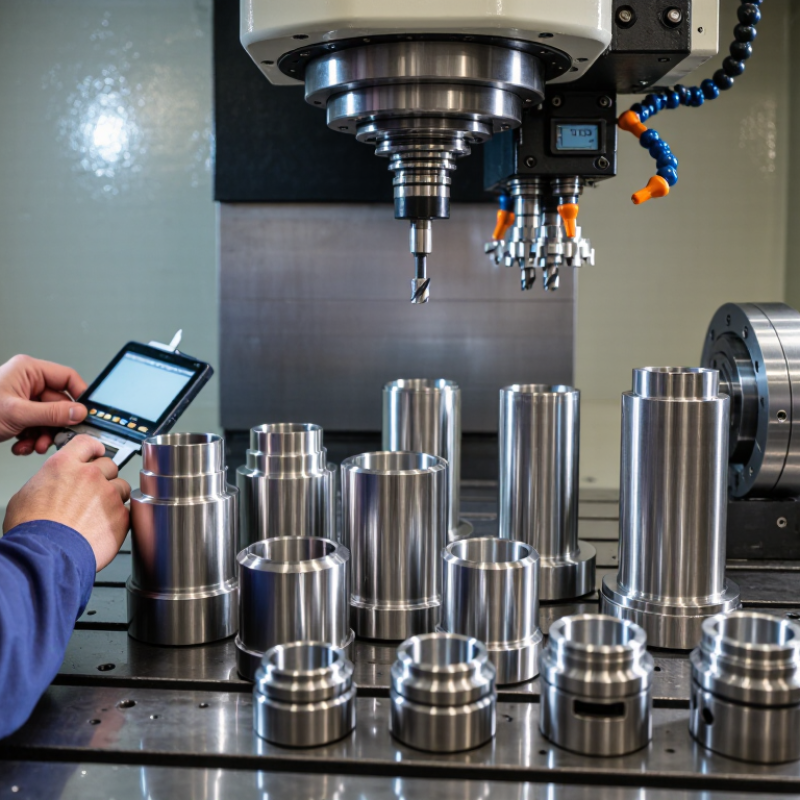
What Are CNC Stainless Steel Parts?
CNC stainless steel parts are metal components shaped by computer-controlled cutting tools. “CNC” means computer numerical control. The machine follows a digital drawing, then removes material from stainless steel bar, plate, or tube. Common grades include 304 and 316. They appear in fittings, shafts, brackets, medical equipment, food-processing systems, and precision housings.
These parts are valued for corrosion resistance, strength, and repeatable dimensions. The International Stainless Steel Forum reported approximately 58.4 million tonnes of global stainless crude steel production in 2023. That scale reflects strong demand across industrial and consumer applications.
However, stainless steel is not effortless to machine. It can work-harden quickly. A dull tool may rub the surface, create heat, and damage the finished area. Proper cutting speed, sharp carbide tooling, steady coolant flow, and controlled chip removal matter.
Tips: Confirm the steel grade before machining. Check critical holes with calibrated gauges, not visual judgment. Leave suitable stock for finishing, especially around thin walls. A drawing can look perfect, yet a small internal corner may trap chips or weaken the part. This is where practical review matters. Surface finish, burr removal, and cleaning should be specified clearly. ISO 2768 can support general tolerances, but it should not replace tighter requirements for critical features. Small mistakes still happen. A careful inspection plan reduces their cost.
How CNC Machining Shapes Stainless Steel Components
CNC machining shapes stainless steel by removing controlled layers from a solid bar, plate, or casting. A digital model guides milling, turning, drilling, and tapping operations. The result may be a valve body, medical housing, food-processing fitting, or compact shaft. According to the International Stainless Steel Forum’s 2023 production data, global stainless steel output reached about 58.4 million tonnes. That scale reflects strong demand for corrosion-resistant components.
Stainless steel behaves differently from softer metals. It can work-harden when a cutter rubs instead of cutting. Machinists therefore select sharp carbide tools, stable clamping, and steady feed rates. Flood coolant carries heat and chips away from the cutting zone. A small change in tool engagement can prevent burrs around a drilled hole. It can also reduce vibration.
The geometry develops gradually. Roughing removes excess material first, while finishing passes create smoother walls and accurate shoulders. Probing checks the setup before expensive metal is wasted. Coordinate-measuring inspection then verifies dimensions against the engineering drawing. ISO 2768 and material standards help define acceptable tolerances, but they do not replace process judgment. The process is not flawless. Thin walls may flex, and long tools may chatter. Even a perfect toolpath can fail when the workholding is weak. NIST manufacturing research continues to emphasize measurement and process monitoring, showing why reliable machining depends on data, not appearance alone.
Which Stainless Steel Grades Suit CNC Manufacturing?
CNC stainless steel parts are machined from solid bars, plates, or forgings. A computer-controlled tool removes material until the part reaches its programmed shape. Cutting speed, coolant flow, and tool selection strongly affect the finished surface.
Grade selection matters more than many buyers expect. Stainless steel 304 suits general brackets, shafts, housings, and food-processing components. It machines reliably and resists everyday corrosion. Stainless steel 316L performs better around saltwater, chemicals, and chloride exposure. Its lower carbon content also supports cleaner welded assemblies. However, 316L can feel slower and more demanding during CNC cutting. Stainless steel 303 offers excellent machinability because of its sulfur content. That benefit comes with weaker corrosion resistance and limited weldability. For high-strength parts, 17-4 PH stainless steel can be heat-treated after machining. Stainless steel 410 provides useful hardness, but it needs more careful corrosion planning. No grade is perfect. The wrong choice may still look polished while failing in service.
Tips: Match the grade to the environment first, then review tolerances and production volume. Ask for material certification and hardness data. Keep sharp internal corners realistic. They increase tool wear and machining time. Test a sample part when surface finish matters. In practice, designers sometimes over-specify 316L, while 304 would perform adequately and reduce cost. That judgment should be checked against temperature, chemicals, cleaning methods, and expected load.
What Steps Are Used to Produce CNC Stainless Steel Parts?
CNC stainless steel parts begin with a controlled digital model. An engineer reviews dimensions, tolerances, threads, radii, and surface requirements. Material selection follows load, corrosion exposure, temperature, and cleaning conditions. A machinist then chooses the suitable stainless grade and cuts stock slightly oversized. This allowance supports accurate fixturing and later finishing. Small details matter.
CAM software converts the model into precise cutting instructions. Toolpaths set cutting direction, depth, feed rate, and spindle speed. Stainless steel can harden when rubbed instead of cut, so sharp tools matter. The operator secures the blank in a rigid fixture and checks alignment with probing equipment. Coolant controls heat and clears chips from deep pockets. Roughing removes bulk material. Finishing passes create smooth bores, edges, and sealing surfaces. Threading may use taps or synchronized milling, depending on the geometry. A perfect first pass is not guaranteed. Vibration or heat can require adjustments.
After machining, technicians deburr edges and remove remaining chips. They inspect critical dimensions using calipers, micrometers, gauges, or coordinate measuring equipment. Surface finish is checked where sealing or sliding performance matters. Each result should be compared with the drawing, not visual judgment alone. Parts may receive cleaning or passivation when specified for corrosion resistance. Inspection records link measurements to the production batch. That traceability builds confidence. Yet even a well-planned process deserves review when tolerances are unusually tight. An overlooked corner radius can force a redesign.
Where Are CNC Stainless Steel Parts Used?
What Are CNC Stainless Steel Parts and How Are They Made?
CNC stainless steel parts are machined components shaped from bars, plates, or forgings. Computer-controlled lathes and mills remove material with measured cutting paths. Common operations include turning, drilling, milling, threading, and surface finishing. Stainless steel supports these processes because it resists corrosion and maintains strength across demanding environments. However, machining it requires careful tool selection, stable fixturing, and controlled heat. Poor settings can create burrs, discoloration, or premature tool wear.
Where Are CNC Stainless Steel Parts Used?
These parts appear in food-processing equipment, medical instruments, chemical systems, marine hardware, and energy infrastructure. Their cleanable surfaces suit pumps, valves, fittings, and conveyor components exposed to moisture or aggressive fluids. The International Stainless Steel Forum reported global crude stainless steel production of about 58.4 million tonnes in 2023. That volume reflects broad industrial demand, although it does not measure CNC machining directly. A 2024 industrial manufacturing outlook from a leading market research group also identified automation, medical equipment, and transportation as major precision-machining application areas.
Small details matter. A threaded stainless connector may sit beside a hot pipe, while a milled bracket may face vibration for years. Engineers must match the alloy to temperature, chemicals, load, and cleaning methods. Austenitic grades often support corrosion resistance, but they can work-harden during cutting. That makes feed control essential. Surface passivation can improve resistance after machining, yet it is not a substitute for correct material selection. The boundary is not always neat. A shiny part can still be poorly designed.

