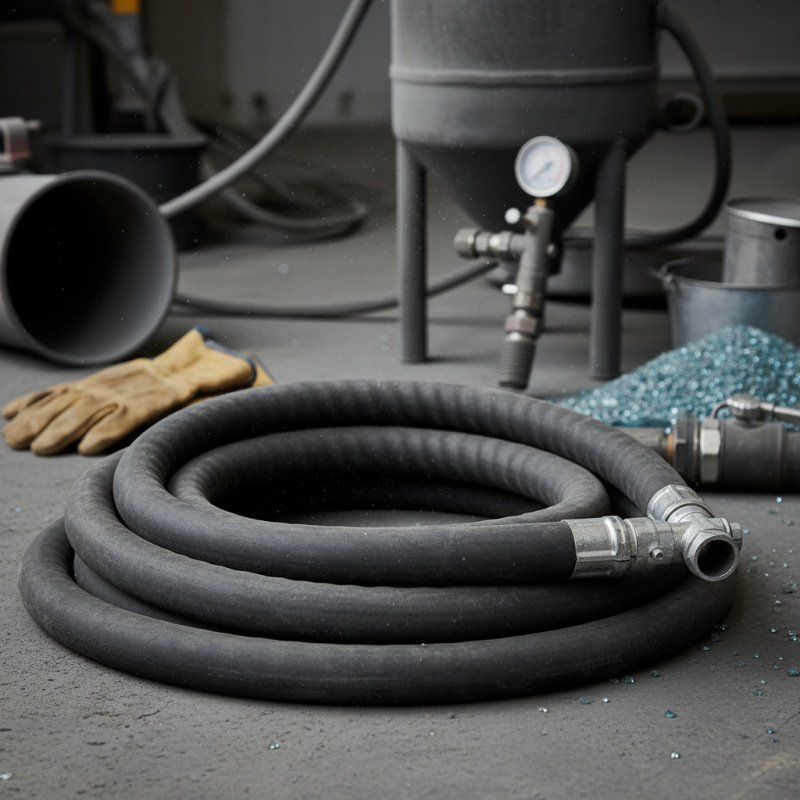
How to Choose the Right Sandblast Rubber Hose for Your Needs?
Choosing the right Sandblast rubber hose can significantly impact your work efficiency and safety. A quality hose must withstand high pressure and rough handling. It's vital to consider the specific requirements of your sandblasting tasks.
Different projects may require varying lengths, diameters, and materials for sandblast rubber hoses. A thick-walled hose will generally offer more durability. However, it could also be less flexible. This trade-off can sometimes be overlooked.
Pay attention to the hose's compatibility with your blasting equipment. Mismatched sizes can lead to leaks or inefficiencies. There’s often a temptation to choose based on price alone. But this could lead to future problems needing costly repairs. Always reflect on your actual needs before making a decision.
Understanding Sandblast Rubber Hoses: Types and Applications
Sandblast rubber hoses are essential for various industrial applications. These hoses are designed to transport abrasive materials like sand or grit. Understanding the different types of sandblast hoses is crucial to selecting the right one. There are primarily two types: standard and heavy-duty hoses. Standard hoses are lightweight and suitable for basic tasks. Heavy-duty hoses withstand more rigorous conditions, often found in construction or heavy manufacturing.
Data from industry reports suggest that choosing the correct hose can enhance efficiency. A well-matched hose reduces the risk of premature wear, which can be costly. For example, using a heavy-duty hose for light tasks might lead to unnecessary expenses. Conversely, using a standard hose in a rigorous environment can result in frequent replacements. Industry experts recommend reviewing factors like temperature, pressure rating, and abrasion resistance. These factors significantly impact the hose's longevity and performance.
Connections and fittings also require attention. Incorrect connections can lead to leaks and inefficiencies. Some reports indicate that up to 30% of sandblasting issues arise from improper hose fittings. This highlights the importance of ensuring compatibility with your equipment. A careful selection process prevents operational downtime and reduces overall project costs.
Key Factors to Consider When Selecting a Sandblast Hose
When selecting a sandblast rubber hose, it's vital to assess several key factors. One major aspect is the hose's diameter. A wider diameter allows for higher airflow and efficiency. In contrast, a narrow hose may restrict flow. It’s essential to match the diameter to your specific blasting requirements.
Another critical factor is the material of the hose. Materials like neoprene or polyurethane are common. They offer abrasion resistance and flexibility. A study by the American Society for Testing and Materials indicates that hoses made with higher-grade materials last up to 30% longer than standard options. Pay attention to the hose's working pressure as well. Different applications require different pressure levels. If pressure ratings are insufficient, hoses may burst.
Lastly, consider the length of the hose. Longer hoses can reduce pressure and efficiency. However, they provide access to hard-to-reach areas. Finding a balance is crucial. A too-short hose might not reach necessary spots, impacting job quality. Ultimately, evaluating these factors will help ensure you choose the right sandblast rubber hose for your needs.
Sandblast Hose Selection Criteria
Assessing Durability and Flexibility in Sandblast Rubber Hoses
When selecting a sandblast rubber hose, durability and flexibility are key factors. A durable hose resists wear from abrasive materials. Look for hoses made from high-quality rubber compounds. These materials can handle the rigors of sandblasting. Flexible hoses are also important for maneuvering around tight spaces. Stiff hoses can lead to kinks, reducing efficiency.
Testing the hose is essential. Bend it and observe how it responds. Does it return to shape easily? A hose that bends without breaking shows good flexibility. Check for reinforcement layers. These improve durability under pressure. A hose that seems sturdy but lacks flexibility may not perform well in real-world applications.
Remember that even the best hoses can fail. Regular inspections will help identify potential issues. Look for cracks or signs of wear. Consider the conditions where the hose will be used. Extreme temperatures can affect performance. A hose may function well in ideal conditions but struggle in harsher environments. Always weigh your specific needs against the qualities of the hose you choose.
The Importance of Hose Diameter and Length for Specific Uses
Selecting the right sandblast rubber hose involves understanding diameter and length. These factors significantly impact efficiency and safety. For instance, a hose that is too narrow can create excessive pressure, leading to wear and accidental bursts. Conversely, a hose that is too wide may not maintain sufficient velocity, resulting in inefficient material dispersion. Research indicates that the optimal diameter often ranges between 3/8 to 1 inch for most sandblasting tasks.
The length of the hose also plays a crucial role. Longer hoses can reduce pressure at the nozzle, affecting performance. A study revealed that reducing hose length by just 10 feet can enhance the velocity of the blast. This change can improve productivity, making the job quicker and less labor-intensive. Keep in mind that managing hose length and diameter is a balancing act.
Tips: Always measure the exact distance you’ll be working. Aim for the shortest feasible length. Remember: the right diameter can save time and resources. Sometimes, overthinking the specifics can delay your project. Rethink your choices. Make adjustments as needed.
Safety Standards and Maintenance Tips for Sandblast Hoses
When selecting a sandblast rubber hose, safety and maintenance are crucial. The hose needs to withstand heavy use and intense pressure. According to industry reports, over 30% of hose failures stem from inadequate maintenance. Regular inspection can significantly reduce accidents.
It's vital to check for wear and tear. Inspect for cracks or abrasions regularly. A compromised hose can lead to dangerous blasts or leaks. Moreover, hoses should conform to safety standards like ASTM D2000. Failure to meet these standards increases risks. Good practice suggests replacing hoses at least every two years, even if they appear fine.
Proper storage is equally important. Hoses should be stored in a dry, cool place away from direct sunlight. This prevents degradation. Keeping hoses clean can extend their lifespan. Sometimes, people ignore basic care routines. Neglect leads to costly repairs and potential accidents. Regularly review your maintenance schedule. Consider utilizing a checklist. Small changes can lead to significant improvements.