How to Choose the Best Hydraulic Car Parking System?
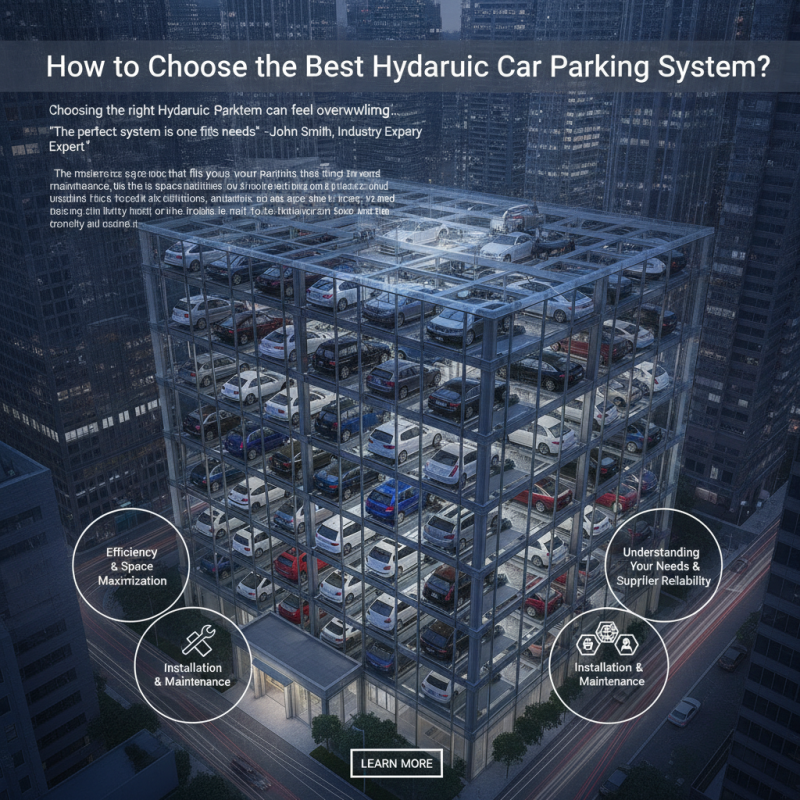
Choosing the right Hydraulic Car Parking System can feel overwhelming. The options are vast, and each choice comes with its advantages and challenges. Industry expert John Smith, a leader in automated parking solutions, once said, “The perfect system is one that fits your specific needs.” This emphasizes the importance of customization in selecting these systems.
Efficiency and space maximization are key factors. Hydraulic Car Parking Systems can significantly reduce the footprint of parking lots. They work especially well in urban areas where space is limited. However, potential users must consider installation costs and ongoing maintenance. Some systems may require more upkeep than anticipated. It's essential to weigh these elements against their benefits.
Understanding your parking needs is crucial. User requirements differ, and what works for one may not suit another. A clear analysis will help avoid common pitfalls. Additionally, potential buyers should consider the reliability of the suppliers. Always research the market thoroughly. A system that promises much might not deliver. True value lies in a balanced assessment of features, costs, and the long-term benefits of the Hydraulic Car Parking System.
Factors to Consider When Selecting a Hydraulic Car Parking System
Choosing the right hydraulic car parking system requires careful consideration of various factors. One key aspect is the available space. Assess the dimensions of your parking area to ensure that the system fits comfortably. Compact models work well in tight places, while larger ones can accommodate more vehicles if space allows.
Another important factor is the weight capacity. Different systems can support varying weights. Understand your vehicle's weight and choose a system that meets or exceeds this requirement. A lightweight system may save costs but could be unsuitable for heavier vehicles.
**Tips:** Check the hydraulic system’s maintenance needs. Some require regular servicing, while others have minimal upkeep. Also, consider the installation complexity. A simpler installation can save time and reduce costs.
Safety features cannot be overlooked. Look for systems with emergency stop functions and robust locking mechanisms. These features enhance user safety and ensure reliable operation. It's wise to review customer feedback to gauge performance and reliability. Such insights can inform a more educated choice.
Types of Hydraulic Car Parking Systems Available on the Market
When considering hydraulic car parking systems, it's essential to understand the various types available in the market. There are multiple designs catering to different needs. For instance, vertical stackers are popular for maximizing space in small areas. They allow vehicles to be stacked like shelves, making efficient use of vertical space. However, they may not accommodate larger vehicles well, which can be a drawback for some users.
Another option is the puzzle parking system. This system arranges cars in a compact, puzzle-like manner. It can fit many cars in a relatively small footprint. The process is usually automated, reducing the need for human labor. Still, maintenance can be challenging, requiring regular checks to ensure the machinery operates smoothly.
Rotary parking systems are another viable choice. These systems rotate vehicles to position them in tight spots. They can save time and space, ideal for urban environments. On the downside, they may not be as quick as expected, leading to delays during peak hours. Each type has its pros and cons, and your choice should consider your specific needs and usage patterns.
Key Features to Look for in a Hydraulic Car Parking System
When choosing a hydraulic car parking system, certain key features stand out. Flexibility in design is crucial. A system should adapt to different space constraints and vehicle types. According to a study by the International Parking Institute, flexibility can reduce overall parking space needs by up to 30%. This adaptability is essential for urban areas where space is limited.
Safety features are equally important. A reliable hydraulic system must include emergency stop mechanisms and safeguard systems against malfunction. Reports indicate that parking accidents can be reduced by 25% with enhanced safety features. Additionally, energy efficiency should not be overlooked. Many modern systems utilize eco-friendly hydraulic fluids, which can cut energy consumption by 20% compared to older models.
Effective maintenance protocols are vital too. Regular inspections ensure longevity and performance. However, maintenance needs vary widely among systems. Some require extensive upkeep, while others boast low-maintenance designs. This variability can impact costs and operation. Therefore, scrutinizing maintenance requirements and understanding potential challenges is essential before making a decision.
Price Considerations and Budgeting for Hydraulic Parking Solutions
When considering a hydraulic car parking system, budgeting plays a crucial role. The initial investment varies significantly based on the complexity and capacity of the system. Consider how many vehicles you need to accommodate. A compact residential solution will differ from a larger commercial structure. Evaluate ongoing costs like maintenance and energy consumption.
Tips for budgeting wisely:
1. Research multiple options. Gather quotes from various suppliers.
2. Factor in installation costs. This can add significantly to your budget.
3. Look for financing options. Some companies offer payment plans.
Additionally, it’s essential to include contingency funds in your budget. Unexpected expenses can arise. This helps avoid surprises down the line. Analyze how long you plan to use the system. Longer commitments may justify higher initial costs.
Remember to assess your local regulations too. Compliance costs can sneak in and affect your budget. A thorough review of all costs ensures a realistic financial plan. Investing time in research can save money later on.
Price Considerations for Hydraulic Car Parking Systems
Installation and Maintenance Requirements for Hydraulic Systems
Installation and maintenance are crucial for any hydraulic car parking system to function optimally. Proper installation ensures the system operates as intended, reducing the risk of malfunctions. It's important to place the hydraulic units on stable ground. Accurate leveling is necessary. An experienced technician should take charge of the setup. Following the manufacturer’s guidelines for hydraulic connections and power supply is vital. Each component must be securely fitted. Attention to detail here can prevent costly repairs later.
Maintenance should be a routine task. Regular inspection of hydraulic fluid levels is essential. Any leaks should be addressed immediately. Inspect seals and hoses for wear. These components are prone to issues over time. Keeping the system clean from dirt and debris increases its longevity. Users often neglect this, but it is critical. Scheduled maintenance checks can reveal hidden problems. This proactive approach helps ensure the system runs smoothly and safely. Engaging a qualified professional for maintenance can enhance reliability and performance.
How to Choose the Best Hydraulic Car Parking System? - Installation and Maintenance Requirements for Hydraulic Systems
| Dimension | Details |
| Type of System | 2-Post, 4-Post, and Puzzle Parking Systems |
| Load Capacity | Up to 5,000 lbs or more depending on the model |
| Power Supply | 220V to 480V, single or three-phase options |
| Installation Space Required | Minimum of 10x20 feet for compact systems |
| Maintenance Frequency | Every 6 months or as recommended by the manufacturer |
| Hydraulic Fluid Type | ISO VG 32 or equivalent |
| Safety Features | Emergency stop buttons, safety locks, and sensors |
| Typical Lifespan | 15 to 20 years with proper maintenance |
| Operating Noise Level | Below 70 dB during operation |