How to Choose the Best Lifted Golf Cart?
Choosing the best Lifted Golf cart starts with the ground beneath its tires, not the height of its stance. A cart used on smooth paths may need a different setup from one driven across rutted trails or uneven property. Lift height, tire size, and suspension all affect clearance, handling, and ride comfort. Bigger is not automatically better.
For transparency, the quote below is illustrative, from a fictional Lifted Golf specialist named Alex Morgan: “Choose the lift for the terrain you drive, not just the look you want.” It captures a practical trade-off. Larger tires can add clearance, but they may also change steering feel and reduce efficiency. Ask the dealer how the lift kit, wheels, and tires work together on the exact model you are considering. Check ground clearance, braking, stability, battery range, and parts support. Take a test drive if possible, especially over surfaces like those you expect to encounter. Notice how it turns and stops. Small details matter.
Looks matter. Fit matters more.
This guide will help you compare lifted golf carts by intended use, ride quality, maintenance, and overall value. It will also point out where specifications can be hard to compare. I would not treat one impressive number as proof of a better cart. Real-world performance depends on the full setup, and even a careful checklist cannot replace a suitable test drive.
Understand What Makes a Golf Cart Lifted
How to Choose the Best Lifted Golf Cart?
Understand What Makes a Golf Cart Lifted
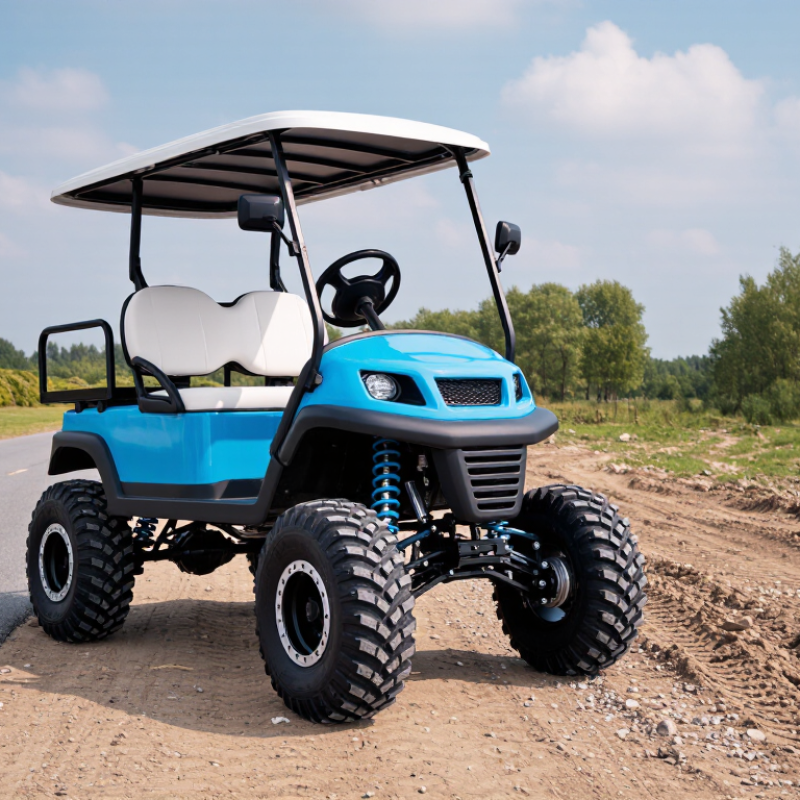
A lifted golf cart sits higher than a standard cart, usually because its suspension is raised or larger tires are fitted. The extra clearance can help on uneven paths, gravel, and shallow ruts. Look closely at the whole setup, not just the space beneath the frame. Taller tires can change handling, braking feel, and speedometer accuracy. A cart that looks ready for rough ground may still ride poorly if its suspension and tires are mismatched.
Check the lift height, tire size, suspension condition, and steering alignment before buying. Ask how the cart behaves with passengers and cargo, then test it on a safe, level route and a mild incline. NHTSA defines a low-speed vehicle as one designed for speeds of 20–25 mph, with a gross vehicle weight rating below 3,000 pounds (49 CFR § 571.3). That federal definition is a useful reference, but it does not mean every lifted golf cart is an LSV or suitable for public roads. Lift modifications can affect a cart’s stability and equipment requirements.
Tips: Measure ground clearance at the lowest point, and inspect for uneven tire wear. A taller stance is not automatically better. If the cart feels top-heavy, trust that concern and get the suspension checked.
Define Your Terrain, Passenger, and Cargo Needs
How to Choose the Best Lifted Golf Cart?
Define Your Terrain, Passenger, and Cargo Needs
Start with the ground you will actually cross. A lifted cart can help clear ruts, roots, and uneven paths, but added height alone does not guarantee stability. Check the steepest slopes, narrowest turns, and softest ground on your regular route. Larger tires may change handling and braking, so confirm that the suspension, brakes, and tire setup suit the cart’s intended load. The National Golf Foundation estimated 531 million U.S. golf rounds in 2023, a reminder that cart use spans many course conditions. Your own route matters more than a dramatic photo. Mud can be unforgiving.
Count passengers and cargo before choosing a seating layout. Include coolers, bags, tools, and any gear you routinely carry; then compare the total with the cart’s rated payload and seating capacity. Keep heavy items low and secure, since a high center of gravity can affect balance on slopes. NGF’s 2023 participation reporting counted 26.6 million on-course golfers in 2022, but that broad figure cannot tell you how many seats or how much cargo your cart needs. Be specific: two adults and clubs differ from four passengers with supplies. It is easy to underestimate the load. Leave room for real-world use, and reconsider the setup if the cart feels top-heavy or strains on your usual terrain.
Compare Lift Heights, Tires, and Suspension Systems
How to Choose the Best Lifted Golf Cart?
Compare Lift Heights, Tires, and Suspension Systems
Lift height sets the cart’s clearance, but more is not always better. A modest lift can help clear uneven paths without making entry awkward or raising the center of gravity too much. Measure the obstacles you actually encounter, such as a gravel rut or a raised trail edge. Small changes matter. Also check how a lift affects steering, braking, and the cart’s overall stability.
Tire size and tread should suit the surfaces you drive on. Larger tires may add clearance, yet they can feel heavier to steer and may reduce acceleration. Turf-friendly tread is gentler on lawns; deeper lugs can grip loose soil but may ride noisily on pavement. Match the tires to the cart’s suspension and intended load, not just its appearance.
A smoother ride depends on more than lift height: springs, shocks, and tire pressure all play a part.
Measure twice. I’d be cautious about choosing the tallest lift before testing how the finished cart handles turns and stops. A little less height may prove more comfortable day to day.
Evaluate Powertrain, Safety, and Legal Requirements
A lifted golf cart needs a powertrain suited to its actual workload, not just its appearance. Larger tires can reduce acceleration and put extra strain on the motor. Added passengers, tools, or a steep driveway affect range too. Check the battery type, charging time, and motor rating, then test the cart on a route similar to your own. A short, empty test drive can be misleading. Ask how the stated range was measured.
Safety deserves close attention. A raised chassis changes the cart’s center of gravity, especially during sharp turns or on uneven ground. Look for a stable suspension, tires with adequate clearance, and brakes that feel firm under load. Sit in every seat and check that passengers have secure handholds and suitable restraints. Small details matter. A loose steering feel or a long stopping distance is worth investigating before purchase.
Rules vary by location, and a lifted cart may be treated differently from a standard neighborhood vehicle. Contact your local transport authority before using it on public roads. Confirm requirements for road approval, lighting, mirrors, seat belts, speed limits, registration, and insurance. Do not assume that equipment fitted for one town satisfies another town’s rules. Keep written confirmation where available, and verify that the cart’s height and tire setup match any applicable inspection requirements.
Inspect Build Quality, Costs, and Long-Term Support
How to Choose the Best Lifted Golf Cart?
Start with the parts you can inspect. Look for even welds, straight lift components, and securely fastened hardware; rough edges or mismatched bolts deserve questions. Check tire clearance with the steering turned fully in both directions. Listen for rubbing, and look for fresh scuffs inside the wheel wells. Small details matter. A glossy finish is not proof of sound construction, and a quick inspection can miss hidden wear. Ask a qualified technician to assess anything you cannot verify.
Compare the full cost, not just the advertised price. Request an itemized quote covering installation, suitable tires, brake work, and any suspension changes. Ask whether the cart has been tested with its current load and setup. A short drive over uneven ground may reveal rattles or steering pull, but it cannot predict every repair. Budget for tire replacement and routine checks, too. Costs add up.
Long-term support can matter as much as the lift itself. Ask who handles warranty claims, which replacement parts are stocked, and how long common repairs usually take. Get coverage and exclusions in writing, including limits on modified components. If the answers are vague, pause before paying. Support may vary by seller, and even a careful buyer can overlook something.