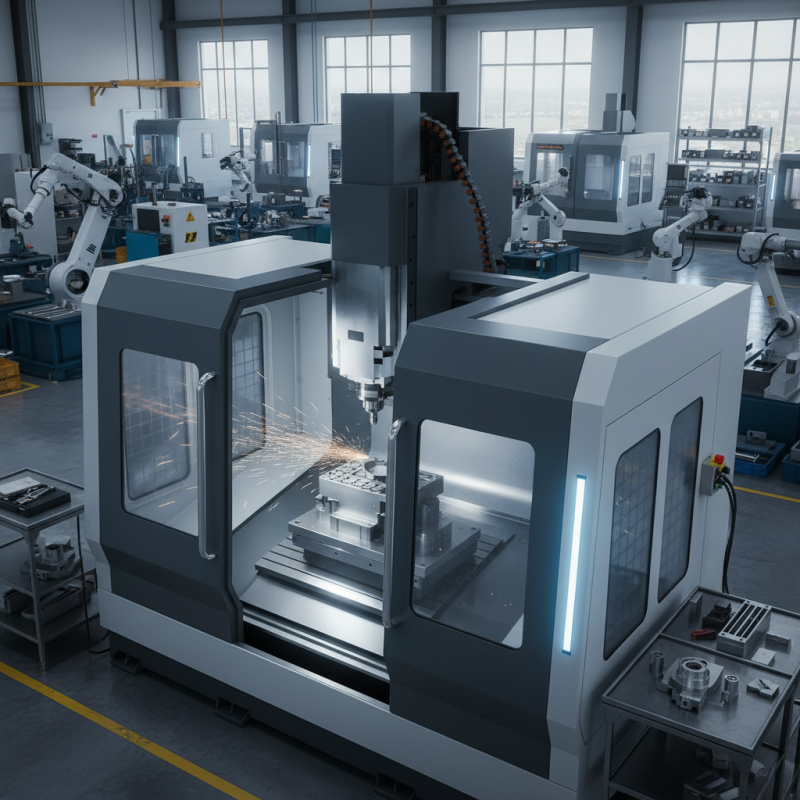
Why Choose CNC Machining for Your Manufacturing Needs?
Cnc Machining has become a go-to solution for various manufacturing needs. This technology offers precision and efficiency, making it invaluable in many industries. With CNC machining, manufacturers can produce complex parts with tight tolerances. It enhances the production process, minimizing waste and errors.
However, choosing CNC machining is not without its challenges. Companies must consider their specific needs, such as material selection and machine capabilities. The initial investment can be high, creating barriers for some businesses. Yet, the long-term benefits often outweigh these concerns.
CNC machining stands out for its versatility and speed. It enables rapid prototyping, which is essential for innovation. Businesses looking to stay competitive should explore this technology thoroughly. CNC machining is not just a convenience; it can redefine manufacturing standards when expertly applied.
Understanding CNC Machining and Its Advantages in Manufacturing
CNC machining represents a significant advancement in manufacturing technology. It employs computer-controlled machines to create precise parts. This method ensures uniformity and high accuracy, making it ideal for industries like aerospace and medical manufacturing. The process begins with a digital design. From there, tools follow exact movements, reducing human error.
One key advantage of CNC machining is its versatility. It can work with a variety of materials, from metals to plastics. This adaptability allows manufacturers to produce complex geometries. However, the initial setup can be time-consuming. Proper programming is crucial to achieve desired outcomes. Companies must invest time and resources into training operators.
Moreover, CNC machining can lead to waste if not monitored closely. Material costs can escalate with inefficient practices. Manufacturers should continuously analyze the process for improvements. Regular evaluations of machine efficiency can help avoid overproduction or unnecessary cuts. By identifying these issues, companies can enhance production and minimize costs.
The Precision and Efficiency of CNC Machining Processes
CNC machining stands out due to its precision and efficiency. This technology utilizes computer-controlled tools to craft components with meticulous accuracy. Each piece is produced to exact specifications, reducing waste and production costs. This high degree of precision is essential in industries like aerospace, medical devices, and automotive manufacturing.
Tip: Always verify your design files before starting the machining process. Small errors in your design may lead to significant issues in the final product.
The efficiency offered by CNC machining can accelerate production timelines. Parts that once took hours to create manually can be completed in minutes. This allows for quicker turnaround times. However, relying solely on machines may sometimes overlook the importance of manual checks.
Tip: Periodically review your machining strategies. Equipment maintenance and staff training can boost both efficiency and outcome quality. A blend of modern technology and human oversight fosters a more effective manufacturing process.
Comparing CNC Machining with Traditional Manufacturing Methods
CNC machining has gained popularity in recent years. This method offers precision and efficiency that traditional manufacturing methods often lack. Traditional techniques, like manual machining or casting, can lead to inconsistencies. In contrast, CNC machines operate using programmed commands, ensuring uniformity across hundreds or thousands of parts.
Tips: Always validate the design before production. A single error can multiply, causing delays and additional costs. Regular calibration of CNC machines also enhances accuracy. This diligence pays off in the long run.
Another consideration is production speed. CNC machining reduces the time it takes to create complex shapes. Traditional methods may require more labor and time. However, CNC machining may have higher initial costs. For small batches, this could be a factor. It's wise to analyze your project needs carefully.
Tips: Evaluate your batch sizes and project timelines before deciding. Smaller projects might benefit from traditional methods. Understanding the pros and cons of each approach helps in making informed choices. Investing time in this analysis can prevent costly mistakes later on.
Why Choose CNC Machining for Your Manufacturing Needs? - Comparing CNC Machining with Traditional Manufacturing Methods
| Feature | CNC Machining | Traditional Manufacturing |
| Precision | Highly precise tolerances (±0.01 mm) | Lower precision; varies by method |
| Production Speed | Fast production for small to medium runs | Slower production, especially for custom parts |
| Material Versatility | Works with metals, plastics, and composites | Limited to specific materials based on method |
| Cost Effectiveness | Cost-effective for low to medium volume | More cost-effective for high volume production |
| Setup Time | Shorter setup time | Longer setup time required |
| Flexibility | Highly adaptable to design changes | Less adaptable once production begins |
Applications of CNC Machining Across Different Industries
CNC machining has revolutionized production across various sectors. In the automotive industry, precision is key. CNC machines can create complex components with tight tolerances quickly. They help manufacturers meet rigorous standards and enhance performance.
In the aerospace sector, safety is paramount. CNC machining plays a vital role in crafting lightweight yet durable parts. Engineers rely on this technology for critical components, ensuring reliability in every flight. However, even with high precision, occasional errors may occur, prompting engineers to rethink their processes.
Medical applications also benefit from CNC machining. Customized implants and surgical tools require meticulous designs. Here, precision impacts patient outcomes directly. Yet, the challenge lies in balancing customization with production efficiency. Continuous refinement of techniques is necessary to meet ever-evolving needs.
Cost-Effectiveness and Long-Term Benefits of CNC Machining
CNC machining offers several cost-effective benefits that can significantly impact your manufacturing process. According to a report by Market Research Future, the global CNC machining market is expected to grow at a CAGR of 6.2% from 2021 to 2026. This growth reflects the increasing adoption of CNC technology in various industries, including automotive and aerospace. By employing CNC machining, companies can achieve precise tolerances and reduce scrap rates, ultimately minimizing production costs.
Moreover, CNC machining contributes to long-term savings. A study by the National Institute of Standards and Technology (NIST) indicates that using CNC can decrease labor costs by up to 30%. This is largely due to automation and reduced manual intervention. However, manufacturers should examine the initial investment against the potential returns. While CNC machines can be expensive, the efficiency gained can lead to decreased turnaround times and increased capacity for higher outputs.
Despite the advantages, CNC machining isn't flawless. Maintenance issues can arise, leading to downtime. Regular upkeep is crucial to avoid costly failures. Additionally, the learning curve can be steep. Operators need proper training to maximize benefits. Balancing these challenges with the financial benefits is essential for an informed decision. Embracing CNC machining can transform your operations, but it requires careful consideration.