

China Top 10 Dicing Machine Manufacturers for Global Buyers
Choosing the right Dicing Machine manufacturer in China requires more than comparing prices or browsing polished catalogs. Global buyers need dependable cutting accuracy, stable production, responsive service, and clear technical documentation. This guide introduces ten Chinese manufacturers serving industries such as semiconductors, electronics, ceramics, glass, and solar components.
The selection focuses on practical buying factors. These include spindle performance, blade compatibility, cutting depth, kerf control, automation, software, coolant management, and equipment stability. Factory experience matters, especially when a machine must process delicate wafers or brittle substrates. Buyers should also examine installation support, operator training, spare-part availability, warranty terms, and communication during commissioning. Small details often decide whether a machine performs well after shipment.
No ranking is perfect.
Market reputation can change quickly. A manufacturer may excel at semiconductor dicing but offer limited solutions for ceramics. Another may provide competitive equipment but weaker overseas support. Therefore, this list should support due diligence rather than replace it. Request sample cuts, inspect test reports, confirm production references, and compare actual tolerances under similar materials. Certifications and export experience are useful, but they do not guarantee every project will succeed. A realistic evaluation should include factory audits, video demonstrations, and direct technical discussions with engineers. Even then, unexpected adjustments may appear during installation. That is normal, and careful suppliers should explain how they handle them. With these considerations, global buyers can evaluate China’s top Dicing Machine manufacturers more confidently and identify partners suited to their materials, production scale, and long-term quality goals.
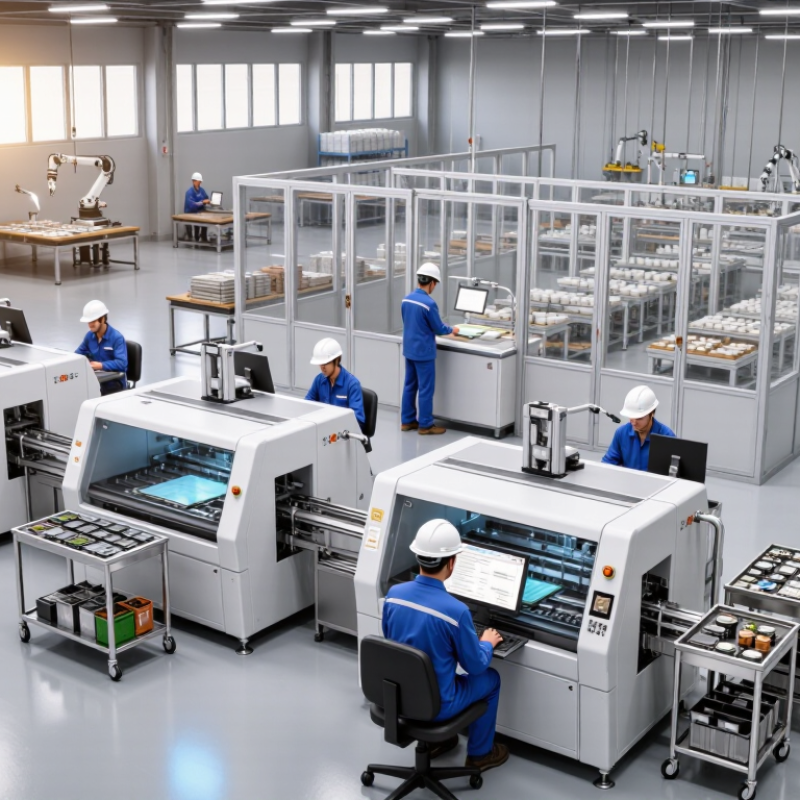
China’s Dicing Machine Industry: 150–300 mm Wafer Standards and Market Trends
China Top 10 Dicing Machine Manufacturers for Global Buyers
China’s dicing machine industry now serves 150 mm, 200 mm, and 300 mm wafer production. These sizes reflect different manufacturing generations and investment plans. A 150 mm line may support mature devices and specialty components. Meanwhile, 300 mm systems demand tighter handling, cleaner motion, and stronger process control.
Modern machines commonly combine diamond blades, automatic alignment, vision inspection, and software-based recipe management. Buyers should examine spindle stability, cutting depth control, kerf width, chipping performance, and wafer breakage rates. In practical evaluations, a machine can look impressive on paper. However, unstable cooling or poor fixture design may reduce output. That detail is easy to miss.
Tips: Request sample cutting with your actual wafer material and thickness. Check results under continuous operation, not only during demonstrations. Ask for data on blade life, calibration intervals, spare parts, training, and remote support. Confirm whether the machine can exchange recipes safely between 150 mm, 200 mm, and 300 mm formats. Leave room for operator error; real factories are rarely perfect.
China Top 10 Dicing Machine Manufacturers for Global Buyers - China’s Dicing Machine Industry: 150–300 mm Wafer Standards and Market Trends
| Rank | Supplier Code | Primary Wafer Compatibility | Typical Cutting Method | Typical Blade Diameter | Typical Spindle Speed | Suitable Applications | Automation Capability | Export-Oriented Market Segment | Current Market Trend |
|---|---|---|---|---|---|---|---|---|---|
| 1 | Manufacturer A | 150 mm, 200 mm and 300 mm wafers | Automatic blade dicing | 50–150 mm | 20,000–40,000 rpm | Silicon, glass, ceramic and semiconductor packages | Automatic alignment, vision inspection and programmable cutting recipes | High-volume semiconductor and electronics production | Demand is shifting toward higher throughput and reduced kerf loss. |
| 2 | Manufacturer B | 150 mm and 200 mm wafers | Semi-automatic blade dicing | 50–100 mm | 15,000–30,000 rpm | MEMS, LEDs, sensors and discrete devices | Recipe storage, automatic indexing and basic optical alignment | Flexible production lines and research-oriented facilities | Compact equipment is gaining interest among small and medium-sized fabs. |
| 3 | Manufacturer C | 200 mm and 300 mm wafers | High-speed blade dicing | 50–125 mm | 25,000–50,000 rpm | Logic, memory, power semiconductors and advanced packaging | Fully programmable axes, automatic wafer mapping and inline monitoring | Large-scale contract manufacturing and OSAT facilities | 300 mm compatibility remains a major purchasing requirement for advanced fabs. |
| 4 | Manufacturer D | 150 mm, 200 mm and specialty substrates | Blade and stealth-dicing configurations | 50–100 mm | 20,000–45,000 rpm | Compound semiconductors, sapphire, SiC and glass | Vision alignment, thickness compensation and custom workholding | Power electronics, optoelectronics and specialty materials | Hard and brittle materials are driving interest in low-damage cutting processes. |
| 5 | Manufacturer E | 150 mm and 200 mm wafers | Manual and semi-automatic blade dicing | 50–100 mm | 12,000–30,000 rpm | University laboratories, prototyping and low-volume production | Manual loading with programmable feed and cut-depth control | Cost-sensitive buyers and pilot manufacturing sites | Entry-level systems remain competitive where capital expenditure is limited. |
| 6 | Manufacturer F | 200 mm and 300 mm wafers | Automatic dual-spindle dicing | 50–125 mm | 25,000–45,000 rpm | High-density packages and wafer-level components | Automatic loading, dual-lane processing and production data logging | High-throughput packaging and assembly operations | Manufacturers are prioritizing equipment utilization and shorter cycle times. |
| 7 | Manufacturer G | 150 mm and 200 mm wafers | UV-compatible blade dicing | 50–100 mm | 18,000–35,000 rpm | Thin wafers, image sensors and fragile substrates | Thin-wafer support, UV tape compatibility and optical inspection | Consumer electronics and sensor manufacturing | Thin-wafer handling and chipping control are increasingly important specifications. |
| 8 | Manufacturer H | 200 mm and 300 mm wafers | Blade dicing with robotic handling | 50–150 mm | 20,000–40,000 rpm | Automotive electronics and industrial power modules | Robotic wafer transfer, barcode tracking and MES connectivity | Automotive-grade and traceability-focused production | Factory connectivity and process traceability are becoming standard requirements. |
| 9 | Manufacturer I | 150 mm, 200 mm and 300 mm wafers | Blade, grooving and multi-pass cutting | 40–125 mm | 20,000–45,000 rpm | Advanced packaging, compound substrates and custom parts | Multi-step recipes, automatic thickness control and inspection options | Engineering-intensive and customized production environments | Flexible platforms are favored for mixed wafer sizes and changing product designs. |
| 10 | Manufacturer J | 150 mm and 200 mm wafers | Precision manual and semi-automatic dicing | 50–100 mm | 15,000–30,000 rpm | R&D, medical devices and small-batch electronics | Digital control panel, programmable feed and optional vision alignment | Specialized exporters and low-to-medium volume buyers | Buyers increasingly compare service support, spare parts and operator training. |