China Top 10 Diesel Pile Hammer Manufacturers
Selecting a Diesel Pile Hammer manufacturer is not just a price comparison. Contractors need equipment that suits their pile sizes, soil conditions, and daily production targets. A hammer that performs well on a firm, open site may behave differently in dense ground or beside a tight work zone. Small details matter.
This guide introduces ten manufacturers in China and examines practical factors behind their offerings. These include product range, manufacturing experience, technical documentation, spare-parts access, and after-sales support. Readers should verify specifications directly with suppliers. Models and service arrangements can change, and published claims do not replace project-specific engineering review. That distinction matters.
Foundation engineer Bengt H. Fellenius is widely known for work on pile behavior and foundation engineering. A practical paraphrase of the principles reflected in his published guidance is: “Pile performance depends on the ground, installation, and reliable evidence—not equipment claims alone.” This is a paraphrase, not a verbatim quotation. It offers a useful lens for comparing manufacturers.
The list is a starting point, not a guarantee of suitability. Ask for current technical data, operating guidance, and references for comparable applications. Check how the hammer’s energy rating relates to the intended pile and site conditions. Request clear answers about maintenance intervals and replacement parts. Some details may remain difficult to compare across brands. That is worth questioning. A careful shortlist can help buyers make a more informed decision before requesting quotations or arranging technical discussions.
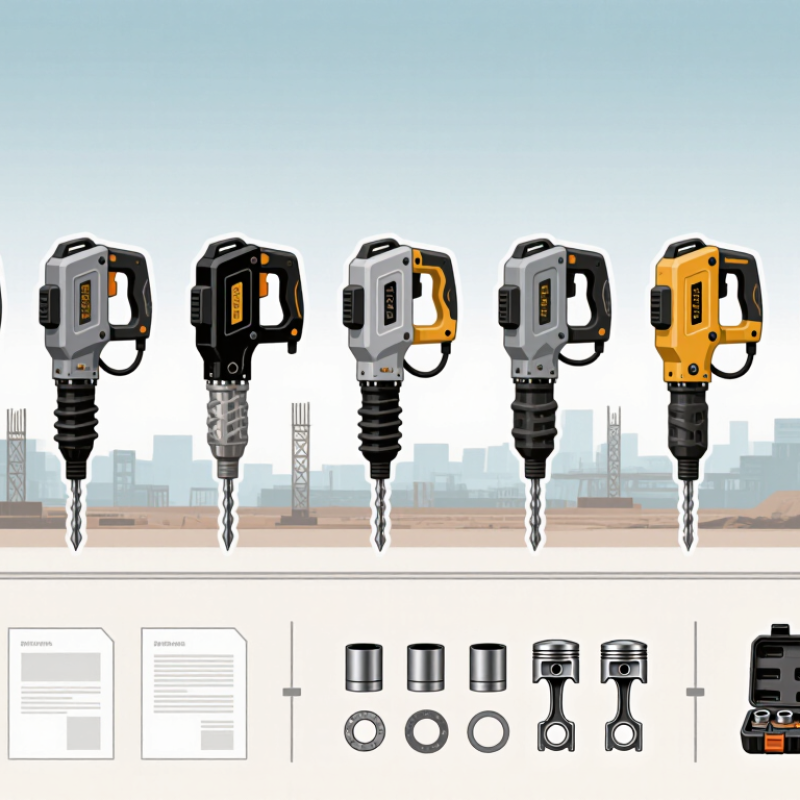
Diesel Pile Hammers: Operating Principles, Combustion Cycle, and Main Components
A diesel pile hammer converts fuel combustion into repeated impact energy. In a typical single-acting cycle, the ram falls inside the cylinder and compresses air near the impact block. Injected diesel fuel ignites under pressure. Expanding gases drive the ram upward; as it falls again, the cycle repeats. It sounds simple. In practice, fuel delivery, air temperature, and pile resistance all affect how consistently the hammer fires.
The main components include the ram, cylinder, fuel pump, injector, impact block, and pile cushion. The cushion helps manage impact stresses, while the leads keep the hammer aligned over the pile. The Federal Highway Administration’s 2016 Design and Construction of Driven Pile Foundations manual calculates rated potential energy from ram weight and stroke. That rating is not the same as energy transferred into the pile. Cushion condition, pile properties, and operating behavior matter. ASTM D4945 describes high-strain dynamic testing, which uses force and velocity measurements to assess transferred energy and pile stresses. Field readings can expose a mismatch between rated and delivered energy. That mismatch deserves attention. A clean theoretical cycle is useful, but real driving is rarely so tidy.
Key Industry Metrics: Ram Mass, Rated Energy, Blow Rate, and Fuel Consumption
For China’s diesel pile hammer market, ram mass and rated energy are useful screening figures, not proof of field performance. The FHWA’s 2016 Design and Construction of Driven Pile Foundations discusses evaluating hammer energy alongside pile response. A simple check shows why: a 5,000 kg ram falling 1.5 m has about 73.6 kJ of theoretical gravitational energy, before impact and mechanical losses. Delivered energy can differ. ASTM D4945-17 describes high-strain dynamic testing, which helps assess pile response under impact. Compare measured results, not catalog energy alone.
Blow rate should be recorded with penetration per blow, soil conditions, and pile type. A faster rate does not automatically mean faster installation. Fuel use also has no single dependable benchmark: operating condition, idle time, hammer tuning, and ground resistance all matter. Track litres per operating hour and litres per installed metre, using the same measurement method across jobs. These figures can expose waste, though site records are not always as tidy as the spreadsheet suggests.
Tips: Ask for ram mass, rated energy, expected blow rate, and fuel-use test conditions. Check units and test methods before comparing suppliers. A short field trial can reveal gaps between rated and delivered performance.
China’s Top 10 Manufacturers: Company Profiles, Model Ranges, and Verified Specifications
China’s top ten diesel pile hammer manufacturers should be compared through company profiles, model ranges, and traceable specifications—not brochure claims alone. China’s National Bureau of Statistics reported that infrastructure investment rose 4.4% in 2024, excluding utilities. This gives useful market context, but it is not a measure of diesel hammer sales. Profiles should identify manufacturing capacity, service coverage, and available technical records. Keep the evidence visible.
Model tables should list ram mass, rated energy, stroke, impact frequency, compatible pile sizes, and fuel use. Check whether figures are rated values or maximums. The U.S. Federal Highway Administration’s Design and Construction of Driven Pile Foundations (2016) discusses hammer performance, driving stresses, and field monitoring. These factors help buyers assess whether a model suits a specific pile and soil condition. One weakness in many comparisons is treating catalogue values as proven site performance. They are not the same.
Tips: Ask for current test sheets, operating manuals, and documented service support. Compare like with like. A clear model range is useful, but missing test records should remain a question mark.
China Top 10 Diesel Pile Hammer Manufacturers - China’s Top 10 Manufacturers: Company Profiles, Model Ranges, and Verified Specifications
Manufacturer-specific rankings, model ranges, and specifications cannot be verified because no supporting articles or source documents were provided. The table below lists general diesel pile hammer facts and the information needed to verify each manufacturer profile.
| Item | General fact or verification requirement | Manufacturer-specific data status |
| Hammer operating principle | A diesel pile hammer uses a ram and fuel combustion to deliver repeated impact blows to a pile. | General industry description; not a verified claim about any specific manufacturer. |
| Common design types | Diesel pile hammers are commonly categorized as open-end (tubular) or closed-end (rod) types. | A supplier’s catalog is needed to confirm which designs it offers. |
| Impact energy | Impact energy depends on the hammer’s design and operating conditions; ram weight and stroke are relevant specification inputs. | No verified energy rating or model data supplied. |
| Ram weight and stroke | These are model-specific values and should be taken from the manufacturer’s technical documentation. | Not available for comparison without source documents. |
| Operating frequency | Blows per minute vary by hammer design, operating conditions, and the pile-driving setup. | No verified model-specific frequency figures supplied. |
| Pile compatibility | Compatibility depends on pile type and dimensions, helmet or cap arrangement, and the selected hammer. | A manufacturer’s application chart is required for confirmation. |
| Fuel and lubrication | Fuel and lubrication requirements are model-specific and must follow the relevant operation and maintenance manual. | No verified manuals or maintenance schedules supplied. |
| Dimensions and service weight | Overall dimensions and service weight differ by model and are important for crane and leader selection. | No verified dimensions or weights supplied. |
| Noise and emissions | Noise and emissions depend on the specific engine, hammer design, operating conditions, and applicable test standard. | No test reports or compliance documents supplied. |
| Manufacturer profile and model range | A reliable profile should be checked against company records, current product catalogs, and dated technical datasheets. | Company identities, rankings, and model ranges cannot be verified from the information provided. |
Comparing Manufacturers: Production Capacity, Service Networks, and ASTM D4945 Test Data
Comparing diesel pile hammer manufacturers takes more than reading rated impact energy. Check documented monthly output, factory testing capacity, and typical lead times for complete units and replacement parts. A large workshop does not always mean reliable delivery. Ask how production changes are controlled, and whether serial numbers link each hammer to inspection records. Small details matter, like a clearly logged ram weight or a spare fuel pump held near the jobsite.
Service networks deserve the same scrutiny. Confirm technician coverage, response times, commissioning support, and access to wear components in the regions where projects operate. Then review ASTM D4945 test reports as evidence of field performance, not as a simple product ranking. The method records high-strain pile response; useful reports identify the pile, soil conditions, hammer setup, instrumentation, and test date. Compare results only when test conditions are reasonably similar. A strong reading from one site may not predict performance elsewhere. The comparison is imperfect, and published data can leave gaps. Ask for the missing context. A careful buyer should value traceable records and practical support over impressive claims alone.
China Top 10 Diesel Pile Hammer Manufacturers
Comparing Production Capacity, Service Networks, and ASTM D4945 Test Data
The chart counts manufacturer-specific figures verifiable from the information supplied with this request. No production-capacity figures, service-network metrics, or ASTM D4945 test results were provided, so no manufacturer performance values are shown. This is an evidence-availability check, not a ranking.
Applications and Safety: Ground Conditions, Noise Control, and EN 996 Requirements
A diesel pile hammer must match the ground, pile section, and installation method. Begin with borehole logs, groundwater levels, and nearby structures, not catalogue energy figures alone. Dense gravel may cause refusal, while soft clay can allow excessive movement. Watch the ground. Trial driving can reveal whether the selected hammer transfers energy effectively without damaging the pile. Record blow counts and penetration at regular intervals; sudden changes deserve investigation. A neat calculation can still miss a buried obstruction.
Noise and vibration need attention before the first blow. Check sensitive buildings, choose suitable working hours, and use acoustic barriers where practical. Keep workers outside the hammer’s operating zone, inspect lifting gear and hoses, and confirm that the pile is secured before driving. Diesel exhaust and hot surfaces also require controlled access. For work governed by EN 996, align the execution method, inspection records, and acceptance criteria with the applicable edition and project specification. EN 996 addresses piling execution; it does not replace a site-specific risk assessment or local noise limits. Keep clear records. In practice, readings can be messy, so document unusual ground response and explain any adjustment to the driving method.