China Top 10 Belt Measuring Tool Manufacturers?
Choosing among China’s top Belt Measuring Tool manufacturers takes more than comparing catalog photos. These tools help technicians check belt length, fit, and wear, whether they work with automotive belts or industrial drive systems. A few millimeters can matter. So can the measuring range, scale readability, and how securely the tool holds a belt during inspection. This guide introduces ten manufacturers to consider and explains what buyers should examine before requesting a quote. It is a starting point, not a laboratory certification or a claim that one supplier suits every application.
A practical review should look at product specifications, manufacturing experience, material choices, and quality-control practices. Ask whether the tool supports the belt types and length standards used in your facility. Check the scale against a known reference, inspect the moving parts, and confirm that markings remain easy to read under workshop lighting. Details matter. For export orders, buyers can also request sample units, documentation, and clear information about customization, lead times, and after-sales support. A polished website alone proves little. No shortlist is perfect, and public product information may be incomplete or outdated. That is worth remembering. Verify current specifications directly with each manufacturer, especially when measurement accuracy affects maintenance decisions. The right supplier is not simply the one with the lowest price; it is the one whose tool, production capability, and communication match the job.
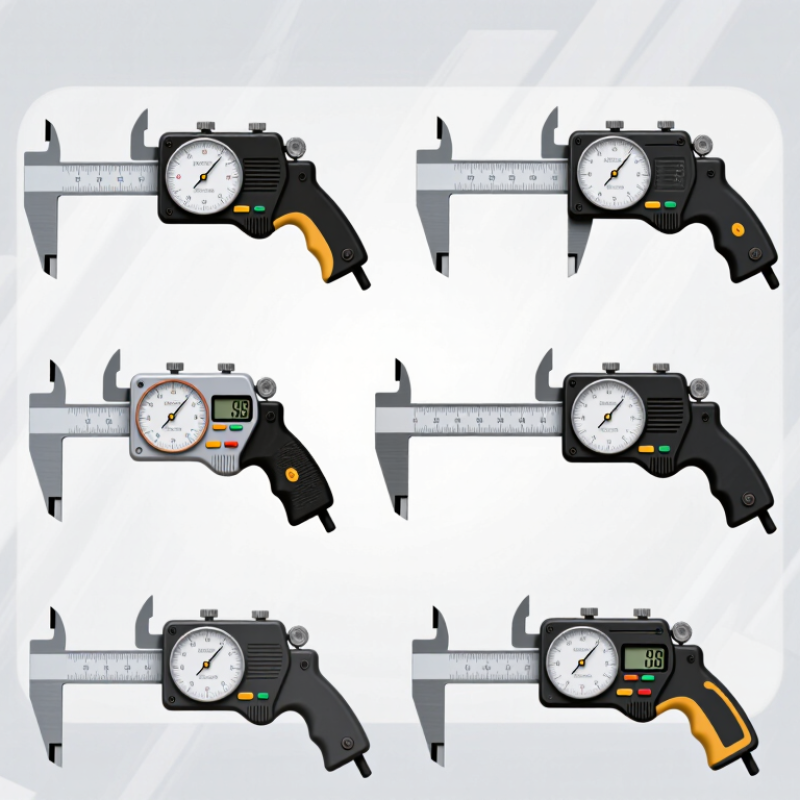
What Are Belt Measuring Tools and Where Are They Used?
Belt measuring tools help users check a belt’s length, width, profile, and operating tension. Common tools include flexible measuring tapes, belt-length gauges, calipers, and tension meters. A tape can trace a removed belt around its full loop, while calipers measure its cross-section. For an installed drive, a tension meter checks how much force is needed to deflect the belt by a specified distance. Small differences matter.
These tools are used in factories, repair shops, farms, and vehicle service areas. A technician may measure a worn conveyor belt before ordering a replacement, or check drive-belt tension after installation. On a production line, regular measurements can reveal stretching or uneven wear before slippage interrupts work. Measurements are most useful when taken with the belt clean and the machine safely stopped.
The method depends on the belt type. Measuring a flexible belt laid flat can give a different result from measuring it under tension, so the procedure should match the equipment instructions. Record the tool used and the measurement conditions for repeat checks. Not always. A single reading may miss damage, such as a cracked edge or glazing, so visual inspection still matters. I would not treat a gauge reading as the whole diagnosis.
Belt Measuring Tools: Common V-Belt Profile Dimensions
Calipers and belt profile gauges help identify a V-belt by checking its nominal top width and thickness. The chart shows standard classical V-belt profile dimensions in millimeters; belt length is measured separately.
How China's Belt Measuring Tool Manufacturing Industry Is Structured
China’s belt measuring tool industry is not one uniform factory sector. It combines specialist instrument makers, metalworking suppliers, and contract manufacturers. Some firms focus on flexible tapes for body or garment measurement. Others produce steel tape measures, belt-length gauges, or fixtures for production lines. The distinction matters. A tool designed for retail sizing may not suit repeated factory checks.
Manufacturing often begins with material selection and component sourcing. Steel strips need controlled thickness and clear graduations; flexible tapes require stable printing and edges that resist fraying. Assembly may include winding mechanisms, cases, hooks, and calibration checks. Small production details affect daily use. A loose hook can change a reading. So can a worn reference surface. Not glamorous, but important.
The supplier landscape also includes testing and export-service partners, though their roles vary by product and order size. Buyers should ask how a stated tolerance is verified, what reference standard is used, and whether inspection records are available. Samples can reveal print clarity and handling, but they cannot prove long-term durability alone. Factory capability is uneven, and a polished catalog is not enough. This is where assessments can be imperfect: public information rarely shows every subcontracting step or process change.
What Criteria Help Identify Leading Chinese Manufacturers?
When comparing Chinese belt measuring tool manufacturers, look beyond catalog prices. Ask for the stated accuracy, measuring range, resolution, and repeatability of the exact model. A 2022 ISO Survey reported more than 1.2 million ISO 9001 certificates worldwide, but certificates are not proof that a specific tool measures accurately. Check the supplier’s current certificate scope and request calibration records tied to the product or production batch. Small details matter.
A capable manufacturer should explain how it controls incoming materials, verifies scales or sensors, and handles rejected units. Request recent inspection reports, not only a sample made for a sales meeting. Compare readings from several units against a traceable reference, especially near the tool’s maximum range. Ask how readings change with repeated use, temperature, or belt surface conditions. These checks take time. Buyers sometimes skip them, and that can be a costly mistake. Also confirm lead times, spare-part availability, packaging, and whether technical support can interpret test results clearly.
Tips: Send the same belt and test procedure to each shortlisted supplier. Record the readings, repeat them, and ask each factory to explain any variation. A confident answer should include evidence, not just promises.
Profiles of 10 Belt Measuring Tool Manufacturers in China
China’s belt-measuring-tool suppliers vary in materials, accuracy controls, and production scale. The National Bureau of Statistics’ Statistical Communiqué on 2023 national economic and social development reported 5.0% growth in manufacturing value added. This offers broad industrial context, not proof of any factory’s measuring accuracy. Details matter.
These ten anonymized profiles represent supplier strengths to compare, not a verified ranking. Profile 1 makes compact steel tapes for workshop use; Profile 2 focuses on flexible body-measuring tapes. Profile 3 produces reinforced cases for job-site handling, while Profile 4 emphasizes clear, high-contrast markings. Profile 5 serves private-label orders with varied lengths. Profile 6 offers metric and imperial scales. Profile 7 specializes in sewing and apparel applications. Profile 8 handles small production runs. Profile 9 supplies longer-reach tapes for industrial measurement. Profile 10 combines several tape formats and accessories.
Ask for evidence. Buyers should request sample readings against a calibrated reference, graduations and tolerance details, and inspection records from recent batches. Check how the hook moves, whether the tape returns smoothly, and if markings remain legible after repeated use. These practical checks matter more than polished catalogue claims. The profiles are starting points; factory capabilities and quality systems still need independent verification.
How to Compare Manufacturers by Quality, Product Range, and Service
When comparing belt measuring tool manufacturers in China, look beyond product photos. Ask how each factory checks scale accuracy, material thickness, and measurement consistency. Request inspection records and test a sample against a known length. A clear result matters more than a confident sales claim. A polished catalog proves little.
Compare product range by the details your work actually needs: belt width, measuring length, scale units, housing material, and options for custom markings. A broad catalog can be useful, but only if the models suit your production process. Ask whether replacement parts are available and how changes affect delivery time. Small details count.
Service is easiest to judge through specific questions. How quickly does the supplier answer technical requests? Can it provide drawings, sample updates, and a written response to quality concerns? Check whether quoted lead times include inspection and packing. A fast reply is not the same as dependable support. That distinction is easy to miss.
No comparison is perfect; sample testing takes time, and one batch may not represent every future order. Keep your criteria written down, then compare evidence rather than promises.