

China Top Aluminum MIG Welder Manufacturers and Suppliers
Choosing an Aluminum Mig Welder for production or workshop use involves more than comparing prices. Aluminum transfers heat quickly, and its soft wire can feed unevenly through a standard setup. Small details matter. A stable wire feeder, suitable torch or spool gun, and adjustable welding settings can affect the finished bead. Buyers should also check whether the machine supports the wire types and thicknesses they plan to use.
China’s aluminum MIG welder manufacturers and suppliers offer a wide range of equipment, from compact workshop machines to systems designed for heavier production. This guide introduces ways to assess them with practical questions, not brochure claims alone. Look for clear specifications, documented quality checks, responsive technical support, and realistic delivery terms. Ask for sample welds on comparable aluminum, and confirm the power supply, duty cycle, and included accessories before ordering. Details like these can prevent an attractive quotation from becoming an awkward fit on the shop floor.
A supplier’s experience is worth examining. So is the evidence behind it. Product photographs can help, but they do not replace a test report or a direct technical discussion. Even careful research has limits; performance may vary with operator skill, material preparation, and setup. That distinction is easy to miss. The sections ahead outline what to compare, what to verify, and where buyers may need more information before selecting a supplier.
What Defines an Aluminum MIG Welder and Its Core Components
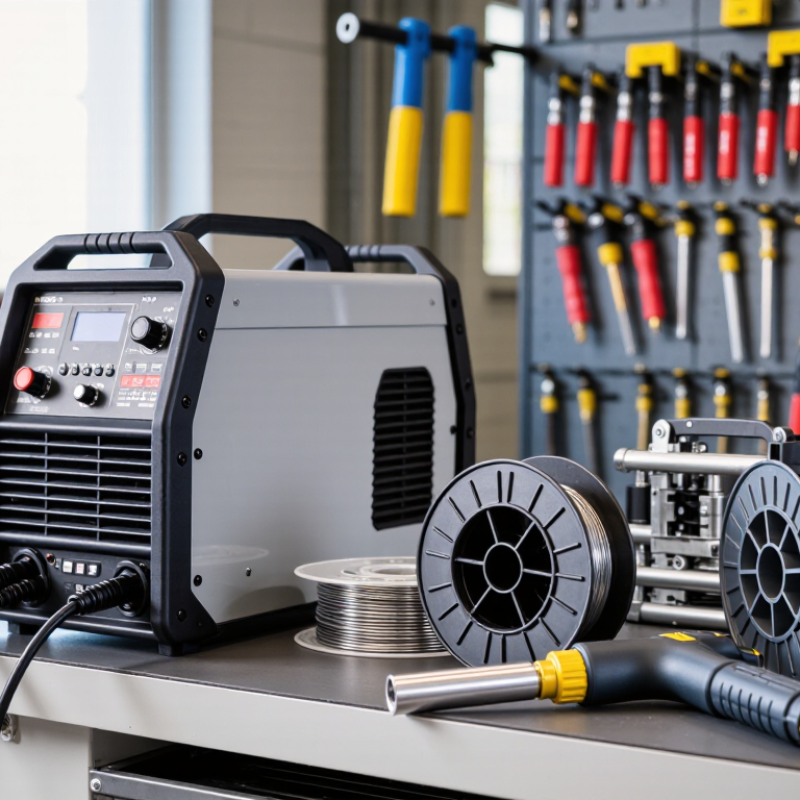
An aluminum MIG welder is a gas metal arc welding system configured for aluminum wire and shielding gas. Its job is to feed soft filler wire steadily while maintaining a controlled arc. Core parts include a constant-voltage power source, wire feeder, welding torch, contact tip, ground lead, and gas regulator.
Feed quality matters. Aluminum wire bends easily, so feed design matters. A spool gun places the wire spool near the torch, reducing the distance it travels. A push-pull setup uses paired drive motors to help control feeding over longer leads. Neither arrangement replaces correct setup.
Look for smooth drive rolls, often U-groove rollers, and a low-friction liner suited to the wire. The liner and contact tip must match the wire diameter; a mismatch can cause bird-nesting or erratic starts.
Argon is commonly used as shielding gas for aluminum, with flow adjusted to the torch, joint, and surroundings. Keep the wire dry and the joint free of oil or oxide; contamination can cause porosity.
Operators should confirm polarity and settings against the machine instructions and material thickness. Worth checking twice. It sounds straightforward, but wire feeding still deserves careful attention.
How Aluminum MIG Welding Technology Works
In aluminum MIG welding, a continuously fed wire acts as both electrode and filler metal. The arc melts the wire and the joint edges, while argon shielding gas protects the molten pool from air. Aluminum conducts heat quickly, so a cold-looking workpiece can still need substantial current. Its oxide layer melts at a much higher temperature than the metal beneath it. Clean surfaces matter.
Wire feeding needs particular care. Soft aluminum wire can buckle or tangle inside the feeder, especially through a long torch liner. A spool gun or push-pull system helps keep the wire moving steadily. Many applications use direct-current electrode positive and argon, but settings depend on alloy, thickness, joint design, and position. Pulse MIG can help control heat and metal transfer on thinner sections. In practice, the setup is less forgiving than some guides suggest; test pieces reveal problems early.
Tips: Remove oil and oxide with a dedicated stainless-steel brush just before welding. Keep the torch angle steady and the contact tip close to the joint. Start with the machine maker’s procedure, then adjust using a sample of the same thickness. Watch for soot, irregular feeding, or a wandering arc. Those details are easy to miss.
How Aluminum MIG Welding Technology Works
At approximately 20°C, pure aluminum conducts heat much more readily than low-carbon steel. In aluminum MIG welding, this rapid heat dissipation makes appropriate heat input and travel speed important for achieving consistent fusion. Values are approximate and vary with alloy and composition.
China’s Aluminum MIG Welder Manufacturing Landscape
China’s aluminum MIG welder manufacturing landscape includes equipment makers, component suppliers, and factories focused on welding systems. Production capability can vary widely. Some suppliers build compact machines for repair shops, while others configure higher-output units for fabrication lines. For aluminum work, stable wire feeding matters: soft aluminum wire can buckle in a poorly matched feeder. Spool-gun options, suitable drive rolls, and adjustable burn-back settings are practical details worth checking.
Manufacturers commonly tailor machines around output range, duty cycle, control type, and cooling needs. A workshop joining thin sheet may value smooth low-current control more than maximum amperage. Ask suppliers for test records using aluminum wire and the thickness you expect to weld. Also check whether sample welds show consistent bead shape and manageable spatter. A polished specification sheet is not proof. The picture is not perfectly uniform.
Supplier comparisons should include component traceability, inspection procedures, spare-part availability, and clear technical support. Request confirmation of input voltage, torch connection, wire-feed compatibility, and included accessories before ordering. If possible, test a production sample under realistic conditions. Keep notes on arc starts, feeding interruptions, and heat buildup during repeated welds. Small differences become obvious there. Price matters, but the least expensive quote may omit useful setup guidance or service details. A careful comparison takes time, and even then, some uncertainty remains.
Key Chinese Aluminum MIG Welder Manufacturers and Suppliers
China’s aluminum MIG welding sector includes equipment manufacturers, component makers, and suppliers that configure complete welding packages. Some focus on inverter power sources with pulse control; others provide wire feeders, torches, and accessories. Buyers should clarify whether a supplier builds the core machine or integrates equipment from several factories. That distinction matters.
For aluminum, stable wire feeding is essential because soft wire can buckle or snag. Ask about push-pull systems, spool-gun options, pulse settings, and compatibility with the wire diameters you use. Request test welds on the intended material and thickness, not just a demonstration on mild steel. A neat bead helps, but it does not prove consistent performance.
Reliable suppliers can provide clear specifications, production inspection details, and practical guidance on setup and maintenance. Check duty cycle, input-power requirements, spare-parts availability, and response times for technical support. Match filler wire to the base alloy and application with qualified advice. A datasheet can still leave gaps. I would also ask how the supplier handles faults found after delivery; answers may be less polished than the catalog, but often more useful.
How to Evaluate Suppliers, Products, and After-Sales Support
China Top Aluminum MIG Welder Manufacturers and Suppliers
When comparing aluminum MIG welder suppliers in China, look beyond catalog claims. Ask for the rated output range, duty cycle, wire-feed accuracy, and compatible spool gun or push-pull setup. Request a live demonstration using the wire alloy and material thickness you expect to run. A polished demo is useful, but it can hide setup problems. Test it cold.
Review the product manual, inspection records, and spare-parts list before ordering. Check whether the supplier can explain common aluminum-feed issues, such as bird-nesting or inconsistent wire speed, in clear steps. After-sales support matters just as much: confirm response times, remote troubleshooting options, warranty coverage, and access to replacement liners and contact tips. Ask for evidence. A low quote may still cost more if essential parts are difficult to obtain. Even a careful checklist can miss something; revisit it after the first production week.
Tips: Share your intended wire diameter, alloy, and workpiece thickness when requesting a quotation. Keep written records of test settings and support promises. If answers are vague, pause and ask again.

