

R&D Ergo new logo

ERGONOMIC SOLUTIONS FOR OVER 25 YEARS.

To serve you better | Now merging service and customer support with our sister company Liftsafe Engineering and Service Group.

What Is the Best Variable Frequency Converter in 2026?

Choosing the best Variable Frequency Converter in 2026 is not a beauty contest between control panels or feature lists. The right choice depends on the motor, load, operating hours, and installation environment. A pump in a quiet plant room has different needs from a conveyor that starts under heavy load. Even a well-known brand can be the wrong fit.

Peter Vas, a respected author on electrical machines and drives, offers a useful engineering lens. A fair paraphrase of his drive-focused approach is: “Match the converter to the motor, load, and duty—not the price alone.” This is a paraphrase, not a verified verbatim quotation. It captures a practical point: ratings and control functions matter only when they suit the actual application.

This guide compares converters by criteria that affect day-to-day performance. We will examine power and overload ratings, motor compatibility, speed-control methods, protection features, commissioning, and service support. We will also consider energy use, but not treat efficiency claims as guarantees; real savings depend on the system and its operating profile. Look for clear manuals, published specifications, and support that can answer application questions. Check the exact model, not just the product family.

There is no universal winner. Some comparisons are imperfect because manufacturers report features differently, and that deserves scrutiny. The goal is a shortlist you can verify against your motor nameplate, load profile, and site conditions. Small details matter.
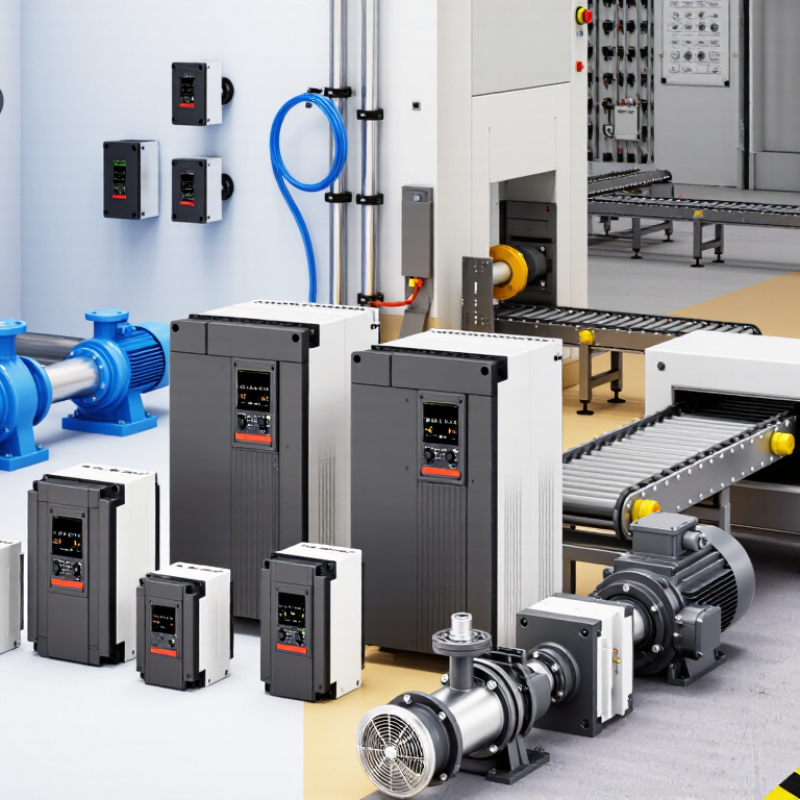
What Is the Best Variable Frequency Converter in 2026?

What a Variable Frequency Converter Is and How It Works

What Is the Best Variable Frequency Converter in 2026?

What a Variable Frequency Converter Is and How It Works

A variable frequency converter, often called a variable frequency drive, controls an AC motor’s speed by changing the frequency and voltage supplied to it. Inside, a rectifier converts incoming AC power to DC. A DC bus smooths that power, and an inverter switches it back into adjustable-frequency AC. Lower frequency generally means slower motor rotation. The motor’s pole count and operating load also matter. It is not magic.

The International Energy Agency has estimated that electric motor-driven systems consume about 45% of global electricity. That figure explains why matching motor speed to actual demand matters. The U.S. Department of Energy’s Variable Speed Pumping guide describes the affinity laws: for a centrifugal pump, power can fall roughly with the cube of speed. At 80% speed, the theoretical power demand is about 51% of full-speed demand. Real savings vary with system pressure, controls, and operating hours. A badly tuned drive can disappoint.

Tips: Check the motor nameplate, load profile, and cooling needs before choosing a converter. For pumps and fans, test whether slower operation maintains required flow. Record power use before and after installation; estimates alone can mislead.

Key Factors for Evaluating Converters in 2026

Choosing the best variable frequency converter in 2026 starts with the motor and its workload, not a feature list. Check the motor nameplate for voltage, current, rated frequency, and connection type. A pump may need smooth speed control, while a loaded conveyor may demand strong starting torque. Match the converter’s current rating to the motor’s actual operating conditions. A small sizing error can cause nuisance trips or unnecessary cost.

Tips: Record the motor’s normal and peak load before comparing units. Check overload capacity, low-speed cooling needs, enclosure rating, and available supply voltage. Ask whether the installation needs braking or built-in filtering. Verify these details against the equipment manual.

Control quality matters too. Look for stable speed at low frequencies, clear fault codes, and parameters that technicians can adjust without guesswork. Consider communication options only if the wider system will use them. Review heat, dust, and vibration around the mounting location; a converter’s stated rating does not remove the need for proper installation. A spreadsheet can miss awkward site conditions. That is worth admitting. If possible, test the chosen setup with the real motor and load before committing to a larger rollout.

What Is the Best Variable Frequency Converter in 2026? Key Factors for Evaluating Converters in 2026

Output-frequency range is a key factor when evaluating a variable frequency converter. For a four-pole motor, theoretical synchronous speed is calculated as 120 × frequency ÷ pole count. Actual induction-motor speed is slightly lower under load because of slip; check that the converter supports the motor and required operating range.

Comparing Converter Types and Their Practical Trade-Offs

What Is the Best Variable Frequency Converter in 2026?

The best variable frequency converter depends on the motor, load, and power supply. For many standard pumps and fans, a voltage-source inverter is a practical choice. It converts incoming AC to DC, then produces adjustable-frequency AC for motor speed control. It is widely applicable, but cable length and switching noise can affect motor insulation.

Regenerative converters suit applications that frequently slow down, such as lifts or high-inertia machines. They can return braking energy to the supply, but add cost and require careful system design. Matrix converters avoid a large DC-link capacitor, yet their controls and application limits can make them less straightforward. There is no universal winner. Even a well-matched converter may need extra filtering or cooling in a dusty, hot cabinet.

Tips: Check the motor’s voltage, current, insulation, and cooling method before selecting a converter. For long motor cables, ask the supplier or engineer whether output filtering is needed. Compare braking needs, harmonic limits, enclosure rating, and service access—not just purchase price. Small details matter. I would still verify the design against the actual load profile; a catalogue match can be misleading.

Matching a Converter to Motor, Load, and Operating Conditions

The best variable frequency converter in 2026 is the one suited to the motor and its duty. Start with the motor nameplate: voltage, full-load current, frequency, and insulation details. Match the converter’s continuous output current to the motor, not just its advertised kilowatt rating. Small mismatch, big trouble.

Load type changes the choice. A centrifugal pump or fan usually needs variable-torque control, while a loaded conveyor may demand strong starting torque and greater overload capacity. Check acceleration time, starts per hour, and stopping behavior. A braking resistor may be needed when heavy loads slow quickly. Guessing here is costly.

Then account for the site. High cabinet temperatures, dust, altitude, long motor cables, and low-speed operation can affect cooling or electrical performance. Check derating data and confirm motor and cable requirements with a qualified technician. One detail is easy to miss: a self-cooled motor may overheat while running slowly under load. A specification sheet helps, but it cannot describe every operating cycle. Measure the actual load where possible, then review the choice after commissioning; the first estimate is rarely perfect.

How to Choose the Best Variable Frequency Converter for Your Needs

Choosing the best variable frequency converter starts with the motor, not the product label. Check the motor’s rated voltage, current, power, and frequency against the converter’s specifications. Current matters especially when a machine starts under load or runs at low speed. A fan usually behaves differently from a loaded conveyor. Small details matter. If the application needs steady torque at low speeds, confirm that the converter can provide it continuously, not just briefly. Oversizing may seem like a safe shortcut, but it can add cost and complicate setup.

Next, consider the electrical supply, operating environment, and control method. A dusty workshop, a hot enclosure, or long motor cables can affect installation choices. Check the manufacturer’s technical documentation for temperature limits, protection ratings, cable guidance, and compatibility with the motor. That sounds minor. It is not always. Decide whether simple speed adjustment is enough, or whether the system needs feedback, braking, or communication with other equipment. Ask an electrician or qualified automation specialist to review uncertain wiring and protection requirements. Before committing, compare clear specifications and confirm that the converter supports the machine’s real duty cycle. A neat feature list can distract from a poor fit. I’d still leave room for adjustment after commissioning; actual load conditions can differ from estimates.

What Is the Best Variable Frequency Converter in 2026? — How to Choose the Best Variable Frequency Converter for Your Needs
Drive Type or Selection Factor Best Suited For Typical Benefits Limitations to Consider What to Check Before Choosing
General-purpose V/Hz drive Basic pumps, fans, and conveyors where precise low-speed torque or speed regulation is not required. Usually a straightforward, economical option for variable-speed operation of compatible AC motors. Typically offers less precise speed and torque control than vector-control methods, especially at low speed. Confirm motor compatibility, supply voltage and phase, rated output current, required speed range, and control inputs.
Sensorless vector drive Conveyors, mixers, machine tools, and other loads that need stronger speed or torque control without an encoder. Can provide improved torque control over basic V/Hz control while avoiding a motor-mounted speed sensor. Performance depends on correct motor data and setup; operation at very low speed may not meet every application’s needs. Check the drive’s stated control performance, motor-tuning procedure, overload rating, and required low-speed torque.
Closed-loop vector drive Applications requiring accurate speed regulation or high starting and low-speed torque, such as hoists and some winding systems. Feedback from an encoder can improve speed regulation and control under changing loads. Requires compatible feedback equipment, additional wiring, configuration, and maintenance considerations. Verify encoder compatibility, feedback options, braking arrangements, safety requirements, and the motor’s operating limits.
Fan and pump drive Variable-torque loads such as many centrifugal pumps and fans. May include application functions such as sleep and wake control, PID control, and pump or fan sequencing. Not every pump or fan has a variable-torque load profile; system design and minimum-flow or ventilation requirements still apply. Confirm the load profile, required flow or pressure control, minimum operating speed, environmental rating, and any bypass needs.
Heavy-duty or high-overload drive Loads with demanding starts, frequent acceleration, or substantial torque requirements, such as loaded conveyors and crushers. May provide a higher overload capability than a light-duty rating when correctly selected and installed. Heavy-duty ratings, overload duration, and derating limits differ by product and operating conditions. Size against the motor’s full-load current and the application’s overload profile; check ambient-temperature and altitude derating.
Regenerative drive or braking solution Systems that frequently decelerate or drive an overhauling load, such as some centrifuges, hoists, and test stands. A regenerative front end can return suitable braking energy to the supply; a braking resistor can dissipate energy where appropriate. Regeneration adds system complexity and may require power-quality review; resistor sizing and duty cycle must be engineered. Determine whether energy must be returned to the supply, estimate braking power and frequency, and check electrical-code requirements.
Voltage and phase match Every installation. Matching the drive input and motor output ratings supports safe, dependable operation. A similar nominal voltage does not guarantee compatibility; input phase and permitted motor connection matter. Match supply voltage and phase to the drive input, then match the drive output voltage and current to the motor nameplate.
Current and overload sizing Every motor-driven application, especially high-inertia or frequently started loads. Sizing by current and load duty helps avoid nuisance trips and inadequate torque. Choosing by horsepower or kilowatts alone can be insufficient when motor current, overload, or derating differs. Compare drive continuous output current with motor nameplate full-load current; include starting, overload, and derating requirements.
Enclosure and installation environment Installations exposed to dust, moisture, heat, vibration, or washdown. An appropriate enclosure and installation design can help protect equipment and improve service life. Enclosure ratings do not remove the need for suitable cooling, clearances, wiring practices, or environmental protection. Check the required IP or NEMA enclosure rating, ambient temperature, ventilation, altitude, and any corrosive or hazardous-area conditions.
Controls, communications, and safety Automated equipment, networked systems, and machinery requiring coordinated or safety-related functions. Suitable I/O and communications can support integration with a PLC or building-control system; some drives offer safety functions. Protocols and safety functions vary. A drive safety feature does not replace a complete machine risk assessment. Confirm required fieldbus, analog and digital I/O, functional-safety certification, local regulations, and system-level safety design.
Best choice in practice Any application where the “best” drive depends on load, motor, site conditions, and control requirements. A properly sized drive with the necessary control mode and protection is generally a better fit than selecting by feature count alone. There is no single best variable frequency converter for every application; performance and ratings must be checked against the actual installation. Use the motor nameplate, load profile, supply details, control requirements, environment, and applicable electrical standards to make the final selection.