7 Best Shrink Fit Tool Holders for Global Buyers
Choosing the right Shrink Fit Tool Holder can influence cutting stability, surface quality, and tool life. Global buyers also face different machine standards, delivery conditions, and after-sales expectations. A holder that performs well in one workshop may disappoint another.
This guide reviews seven leading options for international purchasing decisions. It considers runout accuracy, clamping strength, thermal resistance, balancing quality, and cooling compatibility. These details matter when machining steel, aluminum, stainless steel, or hardened materials. We also examine shank formats, available sizes, heating requirements, and supplier documentation. Clear specifications reduce costly surprises.
No holder wins every application.
Practical experience shows that small design choices can create visible results. A smooth internal bore may support better tool seating. A balanced body can reduce vibration at higher spindle speeds. A suitable heating system can shorten setup time beside the machine. Still, product claims require careful checking. Catalog accuracy does not always guarantee workshop performance.
Buyers should compare test data, tolerance statements, material quality, and warranty terms. They should also confirm compatibility with local equipment and voltage standards. Regional service access deserves attention, especially for urgent replacement needs. Price alone is a weak measure of value. A cheaper holder may increase tool consumption or finishing time.
This selection is useful, but not absolute. Application conditions vary widely. Readers should validate each option through supplier records, sample testing, and real machining trials. That final step remains easy to overlook.
What Shrink Fit Tool Holders Are and How They Work
Shrink Fit Tool Holders: What They Are and How They Work
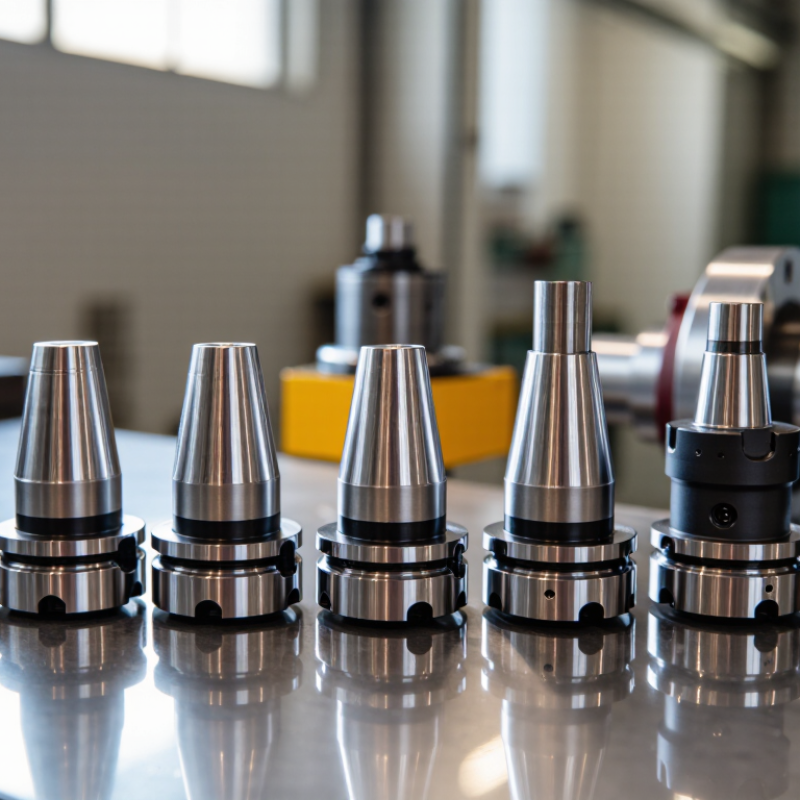
Shrink fit tool holders secure cutting tools through thermal expansion and contraction. A heating unit expands the holder’s bore slightly. The operator inserts the tool, then allows the holder to cool. The metal contracts around the shank, creating strong, even clamping pressure. The fit is tight.
Unlike mechanical collet systems, shrink holders have no gripping fingers or internal moving parts. This design can reduce interference near the workpiece and improve balance during high-speed milling. Tool runout still matters. A 2023 Gardner Intelligence World Machine Tool Survey valued global machine-tool consumption at more than 80 billion dollars, showing the scale of precision manufacturing demand. Better holding systems support that demand, but they cannot correct poor tool preparation.
A practical warning: heating temperature, cycle time, and tool cleanliness must match the holder’s specifications. Oil, chips, or an incorrect shank diameter can weaken the connection. Grand View Research’s 2024 CNC machine market analysis forecasts continued growth through 2030, increasing pressure for repeatable machining performance. In daily production, technicians should verify runout with a calibrated gauge and inspect the bore after repeated thermal cycles. The promise is impressive, but not automatic. Some users overlook removal equipment, which can slow changeovers and damage tools. Proper training remains essential.
Key Criteria for Evaluating Shrink Fit Tool Holders
When evaluating shrink fit tool holders, measure repeatability before chasing maximum clamping force. The 2024 World Machine Tool Survey valued global machine-tool production at roughly 89 billion dollars in 2023. That scale increases pressure for stable, interchangeable tooling. Check holder taper accuracy, gauge length, and runout at the cutting position. A practical target is below 3 microns at 3×D, although each application needs verification.
Heat-cycle performance matters equally. Confirm the recommended heating range, cooling method, and number of safe cycles. Poor thermal control can enlarge the bore or damage surface hardness. Review the supplier’s test method, not only its headline figure. The USCTI and AMT 2024 U.S. Cutting Tool Consumption report placed annual tool consumption near 2.7 billion dollars in 2023. Small holding errors can therefore create expensive scrap across high-volume production. Coolant delivery is another checkpoint. Compare through-holder pressure ratings, sealing design, and chip evacuation around the nose.
Balance quality should match spindle speed. A G2.5 rating at a stated rpm is more useful than a vague “precision balanced” claim. Also inspect material certificates, dimensional inspection records, and replacement availability. ISO 1947 offers guidance for balancing quality, but it does not replace application testing. A neat checklist can mislead. I still run a short trial cut, measuring surface finish, tool life, and pull-out resistance. The cheapest holder may pass inspection and fail after repeated heating. That uncomfortable result deserves attention.
Seven Leading Shrink Fit Tool Holders for Global Buyers
Seven leading shrink fit tool holders serve different machining realities. Standard holders suit general milling and offer reliable concentricity. Slim holders reach deep pockets but need careful cutting parameters. Heavy-duty holders support aggressive roughing with greater radial stiffness. Balanced holders perform well at high spindle speeds. Sealed holders reduce coolant entry around sensitive interfaces. Extended-reach holders access deep cavities, although vibration becomes harder to control. Modular holders improve flexibility when jobs change frequently.
According to Fortune Business Insights, the global machine tools market reached about USD 86.83 billion in 2023. That scale reflects continued demand for accurate, repeatable workholding.
The International Federation of Robotics reported 541,302 industrial robots installed worldwide in 2023. More automated cells now require holders that maintain predictable tool position across repeated cycles.
Experience on the shop floor suggests that runout matters more than attractive specifications. A holder with 3-micron runout can still disappoint if heating is uneven.
Check the details.
Global buyers should compare balancing grades, bore tolerance, heating compatibility, and available lengths. ISO 1940-1 balancing guidance helps engineers evaluate high-speed applications consistently. However, catalog data may not describe thermal growth, cleaning effort, or actual service life. That gap deserves attention. A practical trial should measure runout at the tool tip, cutting noise, surface finish, and removal force. Seven leading designs can all work, but the best choice depends on spindle speed, cutter diameter, coolant method, and cavity depth. Sometimes the least impressive holder performs better in production.
Comparing Accuracy, Clamping Force, and Tool Life
7 Best Shrink Fit Tool Holders for Global Buyers
Comparing Accuracy, Clamping Force, and Tool Life
The seven strongest choices usually include standard, slim, heavy-duty, coolant-through, balanced, modular, and short-gauge designs. Accuracy depends on fit, heating control, and spindle condition. Premium holders often target less than 3 micrometres of radial runout at three times the tool diameter. However, buyers should verify the test method. That figure is not universal.
Clamping force matters during titanium or hardened-steel cutting. A tight thermal grip limits micro-slippage and protects the cutting edge. Slim holders improve access inside deep cavities, but their smaller bodies may reduce stiffness. Heavy-duty versions resist vibration better, although they can restrict visibility. Coolant-through designs support chip evacuation and can extend tool life in high-feed work. The 2024 World Robotics report recorded 541,302 industrial robot installations worldwide in 2023, showing the growing need for repeatable, automated machining. Yet automation exposes weak setups quickly. A damaged heating coil or dirty tool shank can ruin impressive specifications. Small details matter.
Tool life should be compared through identical tests, including material, speed, feed, overhang, and coolant pressure. ISO 230-2 provides a useful framework for evaluating machine positioning accuracy, but it does not certify every holder’s cutting performance. In practice, I would record runout before and after 100 heating cycles. That extra check is easy to miss. Choose the holder that maintains grip after repeated changes, not merely the one with the strongest first measurement.
7 Best Shrink Fit Tool Holders for Global Buyers - Comparing Accuracy, Clamping Force, and Tool Life
Comparison of commonly specified shrink-fit holder configurations. Performance varies with holder geometry, heating equipment, tool shank tolerance, cutting conditions, and maintenance.
| Rank | Holder configuration | Typical taper / size | Tool shank range | Radial runout* | Balance quality | Estimated static clamping force* | Typical tool-life effect | Best suited for |
| 1 | Premium short, slim shrink holder | HSK-A63 / Ø20 mm | Ø6–20 mm | ≤3 µm at 3×D | G2.5 at 25,000 rpm | Approx. 3.0–5.0 kN | High consistency in finishing; may reduce uneven edge wear | High-speed finishing and 5-axis machining |
| 2 | Heavy-duty balanced shrink holder | SK40 / Ø25 mm | Ø6–25 mm | ≤3 µm at 3×D | G2.5 at 20,000 rpm | Approx. 5.0–8.0 kN | Strong resistance to pull-out and fretting in roughing | Steel, stainless steel, and general rough machining |
| 3 | Extended-reach shrink holder | BT40 / Ø20 mm | Ø6–20 mm | ≤5 µm at 3×D | G2.5 at 18,000 rpm | Approx. 3.0–5.0 kN | Good access with a moderate stability trade-off at long reach | Deep cavities and five-axis applications |
| 4 | Slim precision shrink holder | HSK-E50 / Ø16 mm | Ø3–16 mm | ≤3 µm at 3×D | G2.5 at 30,000 rpm | Approx. 1.5–3.5 kN | Supports stable finishing and predictable small-tool wear | Aluminum, graphite, and small-diameter cutters |
| 5 | Universal production shrink holder | BT50 / Ø32 mm | Ø6–32 mm | ≤5 µm at 3×D | G6.3 at 12,000 rpm | Approx. 6.0–10.0 kN | Consistent performance across a broad cutter-size range | General-purpose production and heavier milling |
| 6 | Coolant-through shrink holder | SK50 / Ø25 mm | Ø6–25 mm | ≤5 µm at 3×D | G6.3 at 12,000 rpm | Approx. 5.0–8.0 kN | Improved chip evacuation can extend edge life in deep cuts | Deep-hole milling and high-volume material removal |
| 7 | Compact universal shrink holder | CAT40 / Ø20 mm | Ø6–20 mm | ≤5 µm at 3×D | G6.3 at 15,000 rpm | Approx. 3.0–5.0 kN | Balanced option for repeatable everyday machining | Job shops and mixed-material production |
Technical notes: Runout figures are typical specification targets measured near the holder nose with a precision tool and correct shank tolerance. Clamping-force values are engineering estimates for clean, correctly heated holders and should not be treated as universal test results. Tool life depends on tool material, coating, workpiece, cutting parameters, coolant, overhang, and machine rigidity. Balance grades are commonly referenced under ISO 16084; actual allowable speed also depends on the complete tool assembly.
Selecting the Right Holder for Your Machine and Application
7 Best Shrink Fit Tool Holders for Global Buyers
Selecting the right shrink fit holder starts with the machine, not the catalog. Check the spindle interface, maximum speed, available heating system, and tool diameter. A compact holder suits deep cavities, while a heavier body can reduce vibration during rough milling. Measure the complete gauge length. Do not guess. A few millimeters can affect clearance and accuracy.
International Federation of Robotics reported 4,281,585 industrial robots operating worldwide in 2023. This growth increases demand for repeatable, automated tool changes. For high-speed machining, select holders with documented balance quality, low runout, and suitable thermal ratings. ISO 12164 interface dimensions help buyers compare compatible spindle connections across markets. Coolant delivery also matters. Through-tool coolant can improve chip evacuation in narrow pockets, but the holder must support the required pressure.
For a seven-holder shortlist, compare small, standard, heavy-duty, extended, slim, coolant-through, and high-speed configurations. Match each option to cutting force, reach, and material. A short holder is usually more rigid. An extended holder offers access but may amplify deflection. That trade-off is easy to overlook. In one practical setup, checking runout at both the holder nose and tool tip reveals problems that a spindle-only inspection misses. Document heating time, insertion depth, and tool length for repeatable results. Perfect data is rare. Recheck assumptions after the first production batch.
7 Best Shrink Fit Tool Holder Options for Global Buyers
The chart compares representative engineering values for common shrink fit holder configurations. Lower radial runout supports better tool life and surface finish, while higher practical spindle speed is useful for high-speed machining. Always verify the exact rating for the holder, tool diameter, machine spindle, and balancing grade before selection.