10 Best Safety Harness Suppliers for Global Buyers
Choosing a Safety Harness supplier is a practical decision with real consequences. A worker clipping onto a lifeline needs equipment that fits, documented instructions, and dependable quality—not just a polished catalog. For global buyers, the challenge is matching those essentials with product availability, traceability, and support across markets.
The risk is measurable. The U.S. Bureau of Labor Statistics recorded 1,069 fatal work injuries in construction in 2022; 395 involved falls, slips, or trips. These figures cover the United States, not every market, but they show why fall protection deserves careful purchasing. OSHA Assistant Secretary Doug Parker stated, “Falls are the leading cause of death in construction, and they are preventable.” A harness alone cannot prevent every fall. Correct selection, fit, compatible components, training, and inspection matter too.
This guide introduces 10 Safety Harness suppliers for global buyers and the questions worth asking before requesting a quote. Check product specifications, test documentation, sizing options, replacement-part access, and the supplier’s ability to explain its quality controls. Ask how products are identified and supported after delivery. A neat certificate folder helps. So does a clear answer from a real technical contact. Still, paperwork is not proof that a harness suits every task; buyers should verify requirements for the intended use and destination. That takes extra time. It is easy to overlook. The suppliers discussed here offer a starting point for comparison, not a substitute for competent, site-specific evaluation.
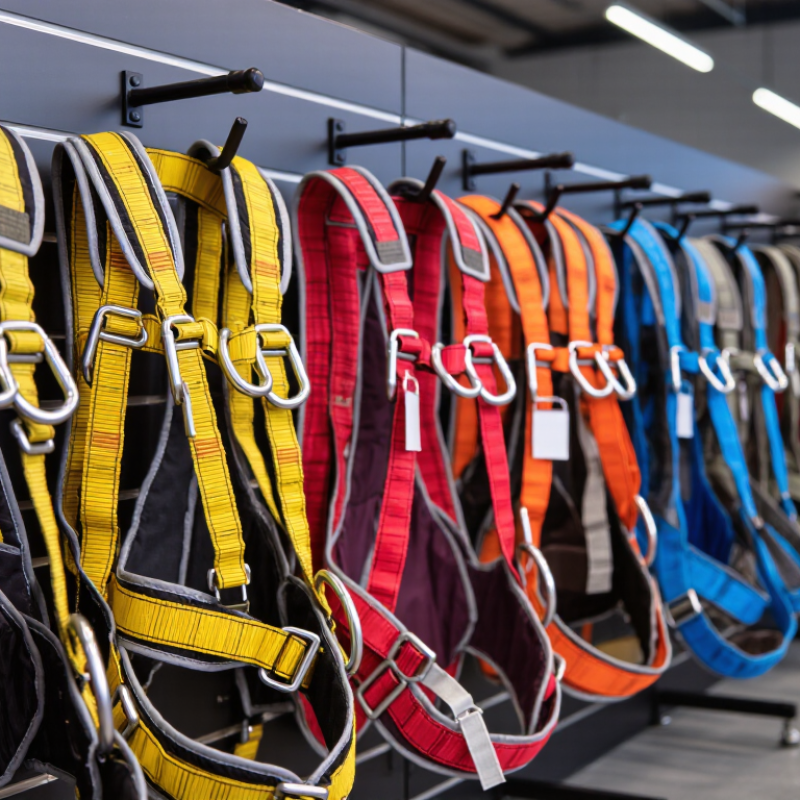
How OSHA’s 6-Foot Construction Rule Guides Harness Selection
OSHA’s six-foot construction rule generally requires fall protection when workers face falls of six feet or more to a lower level. It does not mean every exposed worker must wear a harness: guardrails, safety nets, or a personal fall arrest system may suit the task. Site conditions matter. That distinction matters.
When a harness is part of the plan, consider the full system, not the straps alone. Check that it fits snugly over the worker’s clothing and allows the required movements, such as reaching across a roof edge. Confirm compatible connectors and an anchor that meets OSHA criteria: typically 5,000 pounds per attached worker, or a system designed under a qualified person’s supervision. Also calculate fall clearance; a worker can still strike the ground or equipment if there is not enough room below.
A harness that looks right on a supply shelf may feel restrictive on a lift or near sharp edges. Test fit and movement in the actual work setting, and account for weather, tools, and rescue access. Inspect equipment before use and follow the manufacturer’s instructions. No single model solves every hazard. Review the plan with workers, especially when the job layout changes.
Key Harness Standards for Global Buyers: ANSI/ASSP Z359.11 and EN 361
For global buyers, ANSI/ASSP Z359.11 and EN 361 are not interchangeable labels. ANSI/ASSP Z359.11-2021 sets performance and testing requirements for full-body harnesses used in fall-arrest systems. EN 361:2002 specifies requirements for full-body harnesses, including attachment points intended for fall arrest. Check the exact standard and edition named on the product documentation. A harness certified to one standard should not be assumed to meet the other.
The risks behind these checks are real. The U.S. Bureau of Labor Statistics reported 885 fatal work injuries from falls, slips, or trips in 2023. That figure covers many workplaces and is not a harness-effectiveness measure, but it underscores why buyers should verify equipment before use. Inspect labels, instructions, size range, and designated attachment points. Then confirm the harness fits the worker and works with the connecting device and anchorage. Paperwork matters. So does fit.
Tips: Ask suppliers for current test certificates and traceable product documentation. Check stitching, webbing, buckles, and labels before each use, following the manufacturer’s instructions. Retire damaged equipment. A detail that is easy to overlook: compliance alone cannot correct poor fit or an incompatible system. Recheck both during procurement and worker training.
Key Full-Body Harness Standards for Global Buyers
Edition years of two widely referenced harness standards
ANSI/ASSP Z359.11-2021 and EN 361:2002 are different standards with their own requirements and conformity routes. Edition year alone does not indicate equivalent requirements or product certification; buyers should verify the applicable standard and documentation for each harness.
How to Evaluate the 10 Best Safety Harness Suppliers Worldwide
Evaluating the 10 best safety harness suppliers worldwide requires more than comparing prices and product photos. Start with evidence: ask for current test reports, applicable certifications, material specifications, and clear instructions for inspection and use. Check that documents identify the exact model, not just a similar product. Details matter.
Look closely at production controls. Can the supplier trace webbing, buckles, and finished units to specific batches? Ask how defects are recorded and how design or material changes are communicated. Request samples in the sizes and configurations you plan to buy. Examine stitching, labels, adjustment range, and packaging, then compare the samples with the technical documents. A polished brochure is not proof of consistent manufacturing. Ask for evidence.
Reliable suppliers also explain lead times, minimum order quantities, customization limits, and replacement-part availability in writing. Test their responsiveness with practical questions about fit, compatibility, and documentation for your destination market. A quick reply is useful; a precise reply is better. One caveat: a factory visit or sample review cannot guarantee every future batch will perform identically. Keep evaluating quality after delivery, and treat vague answers as a reason to investigate further—not as a small inconvenience.
What OSHA’s 22.2 kN Anchorage Requirement Means for Buyers
10 Best Safety Harness Suppliers for Global Buyers
What OSHA’s 22.2 kN Anchorage Requirement Means for Buyers
OSHA’s 22.2 kN figure refers to an anchorage’s strength, not the harness itself. For a personal fall arrest system, the anchorage generally must support 5,000 pounds (22.2 kN) per attached worker. Alternatively, a qualified person can design the system with a safety factor of at least two. Buyers should confirm which approach applies to the intended use and jurisdiction. The distinction matters. A strong harness cannot compensate for an unsuitable roof anchor or connector.
When comparing suppliers, ask for product instructions, inspection criteria, and traceable test documentation. Check that harnesses, lanyards, connectors, and anchors are compatible as a complete system. Consider the worksite too: sharp edges, swing-fall risks, and limited fall clearance can change which equipment is suitable. Paper ratings help, but they do not replace a site assessment. This is easy to overlook.
Tips: Request written anchorage specifications and verify the rated capacity for the number of workers attached. Inspect equipment before each use, and remove damaged or questionable items from service. Train workers on fit, connection, and rescue procedures. If documentation is unclear, pause the purchase and ask a qualified safety professional to review the setup.
Comparing Global Suppliers on Certification, Fit, Traceability, and Support
Global buyers should compare safety harness suppliers on evidence, not catalogue claims. The U.S. Bureau of Labor Statistics reported 395 fatal falls, slips, and trips in construction in 2022. That figure makes reliable fall protection more than a purchasing detail. Ask suppliers for current, model-specific certificates and test documentation against the standards required in each destination market. A generic certificate may not cover every configuration.
Fit matters just as much. Request sizing charts, adjustment guidance, and compatibility details for connectors and other equipment. A harness should sit snugly without restricting movement; check strap placement and buckle security during a supervised fit test. Traceability also deserves scrutiny. Can the supplier link each unit to a batch, production date, and inspection record? Clear records make recalls and scheduled inspections easier. They are not glamorous, but they matter.
Tips: Ask for sample inspection records and a written support process before ordering. Confirm response times for technical questions, replacement parts, and product changes. A polished manual helps. Hands-on training helps more. Suppliers may offer strong paperwork yet uneven field support; buyers should test that support before a large order. I would also document fit feedback from actual users, because one size chart rarely tells the whole story.