10 Best Power Substation Suppliers for Global Buyers?
Power Substation infrastructure is becoming a critical purchasing priority for utilities, industrial groups, and renewable energy developers. Electricity demand is rising, while grids must connect more solar, wind, storage, and data centers. The International Energy Agency’s Electricity 2024 report forecasts global electricity demand growth of about 4% annually through 2026. That growth places pressure on transformers, switchgear, protection systems, and construction schedules.
The challenge is visible on the ground. A new 132 kV substation may require high-voltage breakers, relay panels, steel structures, control cables, and carefully tested transformers. The IEA’s Renewables 2024 report also notes that more than 1,500 GW of renewable projects are in advanced development but await grid connections. Supplier capability therefore matters beyond catalogue pricing. Buyers must examine engineering experience, IEC or IEEE compliance, factory-testing procedures, spare-parts support, cybersecurity controls, and local service coverage.
This guide reviews 10 Best Power Substation Suppliers for Global Buyers using practical procurement criteria. These include project references, voltage-range capability, delivery performance, customization, lifecycle support, and financial reliability. Manufacturer claims still require verification. No shortlist is perfect. A strong supplier in compact GIS equipment may not suit a remote utility project requiring outdoor AIS yards and long-distance commissioning support. Market rankings can also change as ownership, capacity, and regional regulations evolve. The following suppliers are selected as credible starting points, not automatic purchasing decisions. Global buyers should match each company’s proven experience with site conditions, grid codes, environmental requirements, and the risks of delayed energization.
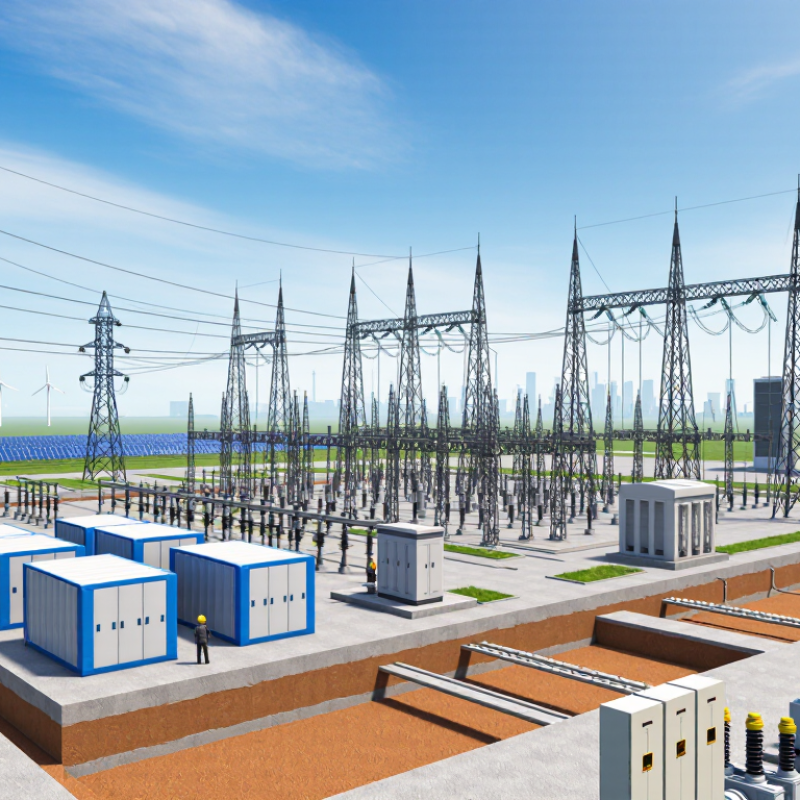
IEA Grid Outlook: Why Annual Investment Must Exceed $600 Billion by 2030
The IEA Grid Outlook signals a difficult reality: annual grid investment must exceed $600 billion by 2030. This is not merely a construction target. It reflects aging substations, rising electricity demand, and slower permitting processes.
For global buyers, substation suppliers must offer more than transformers and switchgear. They need proven engineering records, transparent testing, and dependable after-sales support. A practical evaluation should examine short-circuit ratings, insulation performance, protection systems, and local service capacity. Factory acceptance tests matter. So do spare parts.
A substation may look excellent on paper. Field conditions can expose weak planning. Coastal sites demand stronger corrosion protection. Remote projects need clear maintenance procedures and trained technicians. Digital monitoring can detect overheating before a failure, but poor data integration reduces its value. That risk is often underestimated.
Procurement teams should also review delivery history, certification, cybersecurity controls, and financial stability. A low initial price may hide expensive delays. I have seen project schedules weaken when technical documents arrive late or interfaces remain unclear. Better suppliers invite independent inspections and explain limitations openly. No supplier is perfect. Careful buyers should question optimistic promises, especially when grid expansion is moving faster than manufacturing capacity.
Ranking Framework: IEC 62271, IEEE Standards and Substation Reliability Metrics
A credible ranking of power substation suppliers should begin with compliance, not catalog size. IEC 62271-1 defines common requirements for high-voltage switchgear, while IEC 62271-200 tests metal-enclosed assemblies under internal arc conditions. IEEE C37.20.2 and IEEE C37.09 add practical benchmarks for switchgear construction and testing. Suppliers should provide valid type-test reports, routine-test records, seismic data, and clear protection coordination documents.
Reliability needs measurable evidence. Compare forced-outage rates, mean time between failures, mean time to repair, and auxiliary-system availability. CIGRE reliability surveys show that transformer failures are often linked to insulation aging, bushings, and tap changers. These details matter more than polished brochures. The 2024 Uptime Institute outage analysis reported that 54% of respondents experienced outages costing at least 100,000 dollars. Substation downtime quickly becomes a commercial risk. Very quickly.
A practical ranking can assign 30% to IEC and IEEE compliance, 25% to field reliability, 20% to testing transparency, 15% to service response, and 10% to lifecycle cost. Evidence should include five-year failure data from comparable voltage classes. Factory acceptance testing is useful, but it cannot prove long-term performance. I would also review spare-parts lead times and technician coverage near the project site. This part is often underestimated. The framework is not perfect; weather, grid design, and operator training can distort comparisons. Still, it creates a more defensible shortlist for global buyers.
Ten Supplier Profiles: Voltage Classes, Manufacturing Scale and Global Reach
10 Best Power Substation Suppliers for Global Buyers?
The ten supplier profiles focus on voltage classes, production capacity, and international delivery experience. Some specialize in compact 11kV and 33kV substations for factories, mines, and urban facilities. Others engineer 66kV to 132kV systems for regional networks. A smaller group handles 220kV and 500kV projects, requiring advanced insulation, protection, and testing systems.
Manufacturing scale reveals practical differences. Large facilities may operate several assembly lines, automated welding cells, and dedicated high-voltage laboratories. Medium-sized suppliers often provide more flexible engineering support. Their teams can adjust busbar layouts, transformer ratings, and enclosure designs faster. Yet capacity claims need evidence. Buyers should request factory-audit records, recent test certificates, reference projects, and production schedules.
Global reach involves more than shipping equipment overseas. Reliable suppliers maintain qualified installation partners, spare-parts channels, and responsive commissioning teams. They understand local grid codes, climate conditions, customs documents, and site safety requirements. Experience in coastal regions matters when salt contamination threatens outdoor equipment. High-altitude projects require different insulation and cooling calculations. No supplier is perfect. A polished catalogue can hide weak after-sales service or delayed documentation. Buyers should compare warranty terms, factory acceptance procedures, payment milestones, and technical response times before choosing. That comparison may feel slow. It usually prevents expensive surprises.
10 Best Power Substation Suppliers for Global Buyers
Reference comparison of standard utility voltage classes used in international substation procurement. The chart uses recognized nominal voltage levels and avoids company-specific or brand-specific performance claims.
Voltage classes are grouped by commonly used transmission and distribution engineering ranges. Actual supplier capabilities, factory capacity, certifications, and regional coverage should be verified during technical and commercial qualification.
Commercial Comparison: Lead Times, Warranty Coverage and Lifecycle Cost
Selecting among the 10 best power substation suppliers requires more than comparing purchase prices. Lead time affects project financing, installation crews, and revenue schedules. Standard switchgear may ship within 12 to 20 weeks, while custom transformers often require longer production windows. Ask for a dated manufacturing schedule, factory acceptance testing, and shipping responsibilities. A confident promise is not enough.
Warranty coverage deserves careful reading. Strong agreements define coverage for transformers, breakers, protection relays, control panels, and software separately. Check the warranty period, response time, labor costs, replacement parts, and exclusions for overheating or poor site conditions. Some suppliers offer five-year equipment coverage but limit field service sharply. That difference matters during a nighttime failure.
Lifecycle cost includes energy losses, inspection labor, spare parts, training, and outage risk. A lower-priced unit may consume more power for twenty years. I once treated a two-week lead-time advantage as decisive. That was too narrow. The delayed supplier had better diagnostics and local service, reducing future downtime. Request tested loss data, maintenance intervals, and references from comparable voltage classes. Also verify who owns engineering changes after the contract is signed. Small design revisions can create large delays. Keep a risk allowance; delivery forecasts are useful, but rarely perfect.
Buyer Due Diligence: Type Tests, ISO 9001 and Grid-Code Compliance
10 Best Power Substation Suppliers for Global Buyers?
Buyer Due Diligence: Type Tests, ISO 9001 and Grid-Code Compliance
Global electricity demand is forecast to grow by 3.4% annually through 2026, according to the International Energy Agency’s Electricity 2024 report. That growth increases pressure on substation buyers. A supplier’s brochure is not enough. Request complete type-test reports for transformers and switchgear, including temperature-rise, lightning-impulse, short-circuit, and partial-discharge results. Check the tested design against the offered model, voltage class, and cooling method. A certificate with the wrong configuration is nearly useless.
Tips: Ask for report numbers, laboratory accreditation, test dates, and witnessed-test records. Confirm that ISO 9001 covers the manufacturing site, not only the parent organization. Review calibration logs, nonconformity records, and corrective-action closure. Small paperwork gaps often reveal larger process weaknesses.
Grid-code compliance requires more than a signed declaration. Compare the supplier’s protection settings, fault-ride-through capability, harmonic limits, reactive-power range, and communication protocols with the project connection study. The International Renewable Energy Agency has repeatedly identified grid flexibility and system integration as major deployment challenges in its renewable energy outlooks. Factory acceptance tests should reproduce critical operating conditions whenever practical. I have seen technically strong equipment delayed because drawings used an outdated utility template. That is an uncomfortable lesson. Compliance should be verified line by line, with independent engineering review and clear responsibility for every interface.