

2026 Top Folding Mesh Door Types for Global Buyers
In 2026, global buyers are looking beyond simple doorway coverage. They need practical airflow, insect protection, privacy, and smooth daily operation. A Folding Mesh Door can support these needs in homes, cafés, warehouses, clinics, and retail spaces. However, one design rarely suits every building.
This guide introduces the main Folding Mesh Door types available to international buyers. It examines pleated screens, magnetic mesh panels, sliding-fold systems, heavy-duty commercial models, and custom-sized options. Each type has different strengths. Mesh density affects ventilation and insect control. Track quality affects movement. Frame materials influence durability, weight, and maintenance. Small details matter.
Buy carefully.
The discussion also considers installation conditions, shipping dimensions, packaging protection, replacement parts, and supplier communication. Buyers should confirm opening measurements, folding direction, material specifications, fire-safety requirements, and local building rules before ordering. Product claims should be supported by clear test reports, warranty terms, and traceable manufacturer information. A low price may hide weaker rollers, thin frames, or difficult repairs.
Real projects are less perfect than catalog images. Dust can collect in tracks. Strong wind can stress lightweight panels. Frequent use can expose poor stitching or weak magnets. These limitations deserve attention, not marketing language. This overview aims to help distributors, contractors, architects, and homeowners compare products with greater confidence. It focuses on realistic performance, documented quality, and long-term value across different climates and markets.
What Are Folding Mesh Doors and How Do They Work?
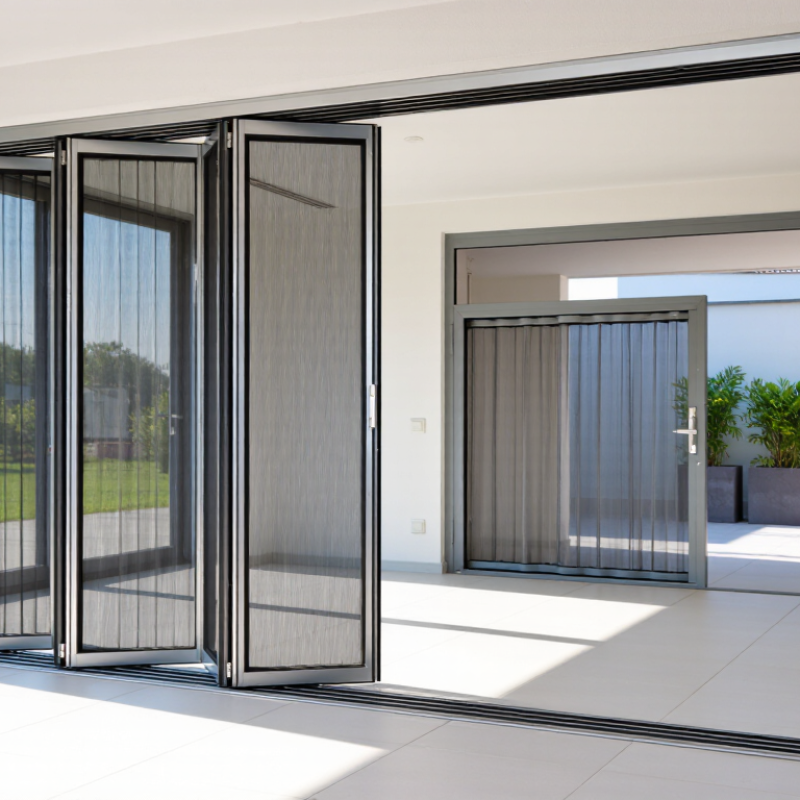
Folding mesh doors use a flexible insect screen that folds into compact pleats when opened. Unlike hinged doors, they move along a top track and usually close with a side magnet, latch, or guided panel. Their main parts include mesh fabric, sliding carriers, frame profiles, tension cords, and floor or side guides. When pulled, the mesh expands across the doorway; when released, it gathers neatly beside the frame.
Common types include pleated mesh doors, accordion-style screens, and double-opening systems for wide entrances. Pleated models suit balconies and ordinary doors because they need little storage space. Accordion screens can cover larger openings, but their folds may collect dust. Double-opening designs allow smoother movement through busy passages. In field measurements, frame alignment matters more than many buyers expect. A small error can cause dragging, uneven folds, or light gaps. The design is practical, but not flawless.
Tips: Measure the opening at several points, not just the top. Check the track before choosing a door. Keep the mesh away from sharp tools and abrasive surfaces. For coastal or humid areas, ask about corrosion-resistant frame materials. Test the closing force by hand. If the screen feels loose, the installation may need adjustment rather than replacement.
Which Folding Mesh Door Types Are Available in 2026?
In 2026, global buyers can choose several folding mesh door types. Pleated accordion doors remain common for balconies, kitchens, and narrow passages. Their mesh folds into compact vertical stacks, leaving more usable opening width. Center-opening models suit wider entrances, while single-side systems work better beside cabinets or walls. Retractable pleated doors add cassette housing and guided tracks. They look cleaner, but installation errors can cause uneven closing.
Magnetic folding screens offer quick, tool-light access for apartments and temporary openings. They usually use overlapping mesh strips and automatic magnetic closure. Hinged mesh panels provide stronger frame stability and better control in windy areas. Heavy-duty fiberglass or stainless-steel mesh is available for pets, frequent traffic, and coastal exposure. Motorized folding screens also appear in larger residential and commercial projects, although they cost more and require careful electrical planning. Small details matter.
Market data supports this wider selection. Grand View Research reports continued growth in global window-covering demand, driven by renovation and energy-conscious buildings. Mordor Intelligence’s insect-screen market analysis projects steady growth through the late 2020s, with residential replacement as a major demand source. These reports do not isolate folding doors, so they are useful indicators, not exact category sales. In practice, I would not select a door by mesh type alone. Track drainage, UV exposure, threshold height, and daily opening frequency can change the result. Even a well-rated system may disappoint when its bottom guide collects sand.
2026 Top Folding Mesh Door Types for Global Buyers - Which Folding Mesh Door Types Are Available in 2026?
| Folding Mesh Door Type | Basic Construction | Common Opening Configuration | Typical Mesh Materials | Best-Suited Applications | Main Advantages | Key Considerations for Buyers | Typical Customization Options |
|---|---|---|---|---|---|---|---|
| Pleated Folding Screen Door | A pleated mesh panel folds into compact vertical folds and travels along a top and bottom track. | Single-panel or double-panel opening; available for doors, balconies, and wider passages. | Fiberglass mesh Polyester mesh Aluminum frame | Residential entrances, apartment balconies, patios, and low-to-moderate traffic openings. | Compact storage, good airflow, broad size flexibility, and relatively low visual obstruction. | Check track height, panel tension, mesh repairability, and resistance to wind or frequent use. | Frame color, mesh color, magnetic closure, pet-resistant mesh, handle style, and custom dimensions. |
| Accordion Folding Mesh Door | Several connected mesh sections fold in an accordion pattern to one or both sides of the opening. | Usually single-side stacking; double-side versions are available for large openings. | Fiberglass mesh PVC-coated polyester Aluminum or PVC frame | Patio doors, garden rooms, porches, utility areas, and medium-width residential openings. | Simple folding action, economical construction, and effective insect separation when properly fitted. | Bottom tracks may collect dirt; regular cleaning and accurate installation help maintain smooth movement. | Number of folds, track profile, locking method, frame finish, opening direction, and panel width. |
| Bi-Fold Mesh Door | Two framed mesh leaves are hinged together and fold toward one side of the opening. | Single opening with left-hand or right-hand folding; commonly used for standard door widths. | Fiberglass mesh Aluminum mesh Aluminum frame | Back doors, kitchens, balconies, service entrances, and frequently used residential doorways. | Easy to operate, relatively rigid, and often more tolerant of repeated opening than lightweight roll-up screens. | Requires sufficient side clearance for folded leaves; hinges and alignment should be checked during installation. | Leaf width, hinge position, magnetic catch, pet door, kick plate, handle, and powder-coated frame colors. |
| Multi-Panel Folding Mesh Door | Three or more framed mesh panels are connected by hinges and fold into a compact stack. | Single-side or center-opening configurations for wider entrances and room dividers. | Fiberglass mesh Stainless steel mesh Aluminum frame | Large patios, conservatories, verandas, commercial terraces, and indoor-outdoor transitions. | Covers wide spans while retaining ventilation and allowing sections to be opened selectively. | More panels increase hardware requirements, folded-stack space, and the need for accurate track alignment. | Panel count, center opening, top-hung or floor-guided design, mesh grade, threshold, and access hardware. |
| Folding Sliding Mesh Door | Linked mesh panels fold while sliding along a guide track, combining folding and lateral movement. | Single-side stacking or center opening; suitable for medium and large openings. | Fiberglass mesh Polyester mesh Aluminum frame | Wide balcony doors, patio openings, sunrooms, and spaces where side stacking is preferred. | Efficient use of opening width, controlled panel movement, and flexible access through part or all of the opening. | Rollers, guides, and tracks must be protected from debris; floor levelness can affect operation. | Track quantity, roller system, opening direction, panel size, threshold height, and locking points. |
| Magnetic Folding Mesh Door | Flexible mesh panels fold or part at the center and close using magnets sewn into reinforced vertical edges. | Center opening with hands-free passage; single or double-panel versions are common. | Fiberglass mesh Polyester mesh Magnetic strips | High-traffic household doors, kitchens, rental properties, and temporary seasonal insect barriers. | Fast installation, no rigid bottom track in many designs, and convenient passage for people and pets. | Magnetic alignment, seam strength, wind exposure, and attachment quality are important for reliable closing. | Mesh density, magnetic strength, reinforced edges, hook-and-loop mounting, pet access, and custom sizing. |
| Top-Hung Folding Mesh Door | Folding panels are supported mainly by an overhead track, reducing dependence on a floor guide. | Single-side or center-opening systems for residential and light commercial openings. | Fiberglass mesh Polyester mesh Aluminum frame | Accessible thresholds, covered patios, interior partitions, and locations where floor tracks are undesirable. | Cleaner floor area, easier passage for wheeled items, and reduced exposure of the lower guide to dirt. | Header strength, overhead load capacity, installation tolerance, and lateral stability must be verified. | Carrier type, header profile, panel count, soft-close hardware, bottom guide, and frame finish. |
| Heavy-Duty Commercial Folding Mesh Door | Reinforced folding panels, stronger hinges or carriers, and durable mesh are designed for frequent operation. | Large single-side or center-opening systems; manual operation is most common, with powered options available for some designs. | Stainless steel mesh Heavy-duty fiberglass Aluminum frame | Restaurants, warehouses, loading-area separations, hospitality venues, workshops, and public facilities. | Higher durability, improved impact resistance, and suitability for repeated daily use. | Confirm cycle rating, corrosion resistance, emergency access, safety clearances, and local building requirements. | Mesh gauge, reinforced corners, protective kick plates, inspection panels, access control, and custom tracks. |
Note: Product performance varies with mesh specification, frame design, opening size, installation quality, climate, and frequency of use. Buyers should confirm local insect-control, fire-safety, accessibility, and building-code requirements before ordering.
How Do Materials and Designs Affect Door Performance?
2026 Top Folding Mesh Door Types for Global Buyers
How Do Materials and Designs Affect Door Performance?
Folding mesh doors perform differently because their materials manage airflow, impact, moisture, and repeated movement. Fiberglass mesh is light and flexible, making it suitable for frequent opening and closing. However, it can tear under sharp contact or heavy use. PVC-coated polyester offers stronger resistance to abrasion and moisture. It may feel less transparent, especially in darker colors. Aluminum frames provide useful rigidity without excessive weight. In coastal areas, corrosion-resistant finishes deserve careful checking.
Design details often decide whether the door remains reliable. A fine mesh improves insect control, but it can reduce airflow. Wider openings need reinforced folding panels and stable upper tracks. Magnetic closures support quick passage, while adjustable tension helps reduce gaps at the sides. Poor alignment can create friction and early wear.
From site inspections, I have seen attractive doors fail because of weak hinges or poorly supported tracks. This is easy to overlook. Buyers should compare mesh density, frame thickness, fastener quality, and replacement access. Outdoor exposure also changes the choice. Strong sunlight can weaken some synthetic fabrics, while rain may affect untreated metal parts. No material performs perfectly everywhere. A practical specification should match local weather, traffic frequency, cleaning habits, and installation skill. Even then, performance may differ from laboratory expectations. That gap deserves honest consideration.
What Should Global Buyers Compare Before Purchasing?
Global buyers should compare folding mesh doors by climate, opening size, and daily traffic. Type alone is not enough. Pleated, retractable, sliding, and magnetic systems behave differently under wind, dust, and frequent use. Measure the opening at several points, not just the top. A few millimeters of variation can cause poor sealing or track friction. Check mesh density, tear resistance, UV stability, and corrosion protection for coastal projects. WHO reports that vector-borne diseases represent over 17% of infectious diseases worldwide and cause more than 700,000 deaths annually. Good mesh performance therefore supports comfort and practical insect control.
Energy performance also deserves attention. The 2024 Global Status Report for Buildings and Construction states that buildings consumed 32% of global energy and produced 34% of global carbon emissions in 2022. A mesh door cannot replace insulation, but it can support natural ventilation when outdoor conditions permit. Compare frame materials, airflow, drainage, and the door’s effect on accessible thresholds. Ask for test evidence, installation tolerances, spare-part availability, and cleaning instructions. Standards such as ASTM E283 and ISO 4892 can help assess air leakage and weathering, although they do not answer every field question. On site, installers often overlook floor alignment. That small error becomes a daily annoyance. Buyers should also compare warranty terms across climates. A specification that works in a dry warehouse may fail beside salt spray, heavy rain, or intense sunlight. My own caution is simple: attractive folding panels are easy to approve, but long-term repair access is often forgotten.
How Are Folding Mesh Doors Installed and Maintained?
Installing a folding mesh door starts with accurate measurements. Measure the opening width at the top, middle, and bottom. Check the height on both sides. Uneven walls are common, especially in older homes. Record the smallest measurement before choosing the door size.
Clean the frame and remove loose dust before installation. Fix the upper track level, then secure the side guides with suitable screws. Keep the track straight; even a small bend can make the panels drag. Leave enough clearance for smooth folding. Test the door several times before tightening every screw. In practice, the first fit is not always perfect.
Maintenance is simple but should be regular. Brush dust from the mesh, rollers, and track each month. Wipe the screen with mild soap and clean water. Avoid sharp tools and harsh chemicals, which may weaken the mesh. Check screws after heavy use or seasonal temperature changes. If the panels scrape, inspect the track before applying lubricant. Some tracks need only cleaning, not oil. A loose guide or warped frame can cause repeated problems. That detail is easy to overlook. Replace damaged mesh early, because a small tear can spread when the door folds. A careful installation reduces noise, improves airflow, and helps the folding system serve reliably for years.
2026 Top Folding Mesh Door Types for Global Buyers
Typical installation time and recommended mesh-cleaning interval by folding mesh door type.
The figures are representative industry planning benchmarks for standard residential openings. Actual installation time depends on opening size, wall condition, frame preparation, and installer experience. Clean the mesh and tracks at least twice a year, or more often in dusty, coastal, or high-traffic environments.

