

R&D Ergo new logo

ERGONOMIC SOLUTIONS FOR OVER 25 YEARS.

To serve you better | Now merging service and customer support with our sister company Liftsafe Engineering and Service Group.

2026 Best Electric Power Substation Suppliers for Buyers

Electric Power Substations are becoming a critical investment as electricity demand rises and power systems add more renewable generation. The International Energy Agency’s Electricity Grids and Secure Energy Transitions report (2023) estimates that annual grid investment must exceed USD 600 billion by 2030, nearly double current levels, to meet global needs. Its Electricity 2024 report also projects strong global electricity demand growth through 2026. These trends put practical pressure on buyers: equipment must arrive on schedule, integrate with existing networks, and remain serviceable for decades.

Choosing a supplier is therefore about more than comparing transformer ratings or quoted prices. Buyers should examine proven project experience, protection and control capabilities, testing procedures, delivery capacity, and access to long-term maintenance. Ask for references from substations with comparable voltage levels and operating conditions. Check what is included in commissioning and training. Small details matter: relay settings, spare-parts availability, and the clarity of technical documentation can affect a project long after installation. The comparison is useful, but it cannot replace project-specific engineering review.

This 2026 guide introduces suppliers serving different buyer needs, from turnkey delivery to specialist equipment and digital substation solutions. It draws on public company information and industry context, while encouraging buyers to verify current specifications, certifications, and regional support directly. No shortlist fits every site. A supplier with strong global reach may not be the best choice for a remote project with limited service access.
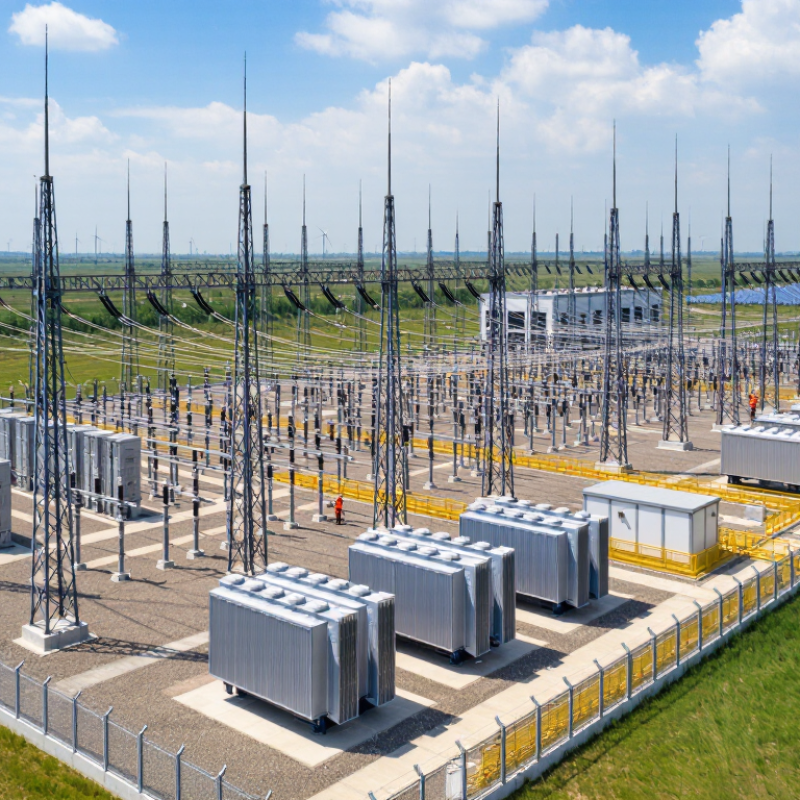
2026 Best Electric Power Substation Suppliers for Buyers

What Electric Power Substation Suppliers Provide

Electric power substation suppliers do more than ship transformers, breakers, and busbars. They help turn load forecasts, voltage requirements, site conditions, and operating goals into a practical design. Typical services include equipment selection, protection and control planning, layout drawings, and coordination across system interfaces. Details matter. A mismatch in ratings or clearances can create installation problems later.

Many suppliers also coordinate manufacturing schedules, factory inspections, packing, and delivery. Depending on the contract, they may provide installation guidance, relay configuration, testing, and commissioning support. Buyers should clarify who is responsible for each connection between major equipment and the utility network. Not just hardware. Responsibility boundaries belong in writing, not in assumptions.

After energization, support may include operator training, maintenance plans, spare-parts guidance, troubleshooting, and equipment condition checks. Ask for drawings, test records, manuals, and service response times before ordering. Compare technical compliance, long-term support, and realistic delivery dates alongside price. Yet documents cannot predict every site issue; limited access, severe weather, or design changes can reveal gaps. Discuss these risks with the project engineer early.

2026 Best Electric Power Substation Suppliers for Buyers

Common Substation System Voltage Classes

Substation suppliers typically provide equipment and engineering suited to a project’s voltage level, such as power transformers, circuit breakers, switchgear, busbars, and protection and control systems. The voltage classes shown are common examples; actual standards and available ratings vary by country and project.

How to Define Substation Project Requirements

Define the substation before comparing suppliers. Record the required voltage, MVA capacity, fault level, bus arrangement, and number of incoming and outgoing circuits. Add a single-line diagram, site coordinates, elevation, ambient temperature range, and available land. These details affect equipment ratings, clearances, foundations, and delivery planning. Small details matter. Identify the protection, metering, communications, and control interfaces too. A missing relay or cable requirement can create expensive changes late in design.

Build the specification around present demand and credible growth. The International Energy Agency’s 2023 report, Electricity Grids and Secure Energy Transitions, says annual grid investment must more than double by 2030, exceeding USD 600 billion. That global figure is not a substation budget; it signals pressure to plan networks ahead of demand. Include expected load additions, redundancy needs, outage limits, and expansion space. A load forecast can be wrong. State its assumptions, such as new industrial connections or electric-vehicle charging, and ask suppliers to show how designs accommodate revisions. Set measurable acceptance criteria for factory tests, commissioning, documentation, and operator training. Clear requirements make bids easier to compare, even when the project brief still has gaps.

How to Evaluate Supplier Experience and Capabilities

For buyers comparing electric power substation suppliers in 2026, experience should mean evidence from projects like yours—not simply years in business. The International Energy Agency’s 2023 report, Electricity Grids and Secure Energy Transitions, says annual grid investment needs to rise from about $300 billion to more than $600 billion by 2030. That pressure makes delivery capability worth checking closely. Ask for references involving similar voltage levels, fault duties, climates, and operating conditions. Details matter.

Review the supplier’s actual scope: engineering, protection and control, equipment integration, factory testing, commissioning, and documentation. Request sample test records, project schedules, and examples of how design changes were handled. A polished brochure proves little. Check who will answer a technical question during commissioning, and whether replacement parts and field support are available after handover. Speak with previous customers, where possible, about delays and unresolved defects—not only successful energization.

I would also challenge my own shortlist when evidence is thin. A supplier may have impressive projects but limited capacity for your schedule. Ask how many qualified engineers and test teams are assigned, and how subcontractors are managed. Verify claims against records. Be specific. One missed protection setting can matter more than a long list of completed projects.

How to Compare Equipment, Services, and Delivery Options

Comparing electric power substation suppliers starts with the equipment schedule, not the brochure. Check transformer capacity, voltage class, switchgear ratings, protection relays, and enclosure ratings against your project requirements. Ask whether equipment has been tested as a coordinated system, and request sample factory test reports. Small details matter. A control cabinet’s wiring labels, for example, can affect commissioning time. Confirm spare-parts availability and expected support life, too.

Services can differ as much as equipment. Compare the scope for engineering reviews, installation guidance, commissioning, operator training, and warranty support. Ask who handles interface questions when protection, control, and communications systems come from different manufacturers. Get response times in writing. A polished proposal may still leave gaps; identify who owns each task before approving it. That takes patience.

Delivery estimates deserve the same scrutiny. Request a schedule showing design approval, production, factory testing, shipping, and site delivery as separate milestones. Clarify packaging, transport responsibilities, and what happens if a component arrives damaged. For staged projects, check whether partial shipments match the construction sequence. Compare the documents supplied with each shipment, including test records and operating manuals. A low price or short lead time can look convincing, but neither tells the whole story. Some comparisons remain imperfect; note assumptions rather than hiding them.

How to Assess Compliance, Pricing, and Long-Term Support

2026 Best Electric Power Substation Suppliers for Buyers
How to Assess Compliance, Pricing, and Long-Term Support

Selecting a substation supplier means looking beyond the quoted equipment price. The IEA’s 2023 report, Electricity Grids and Secure Energy Transitions, places annual grid investment near $300 billion. It says investment must exceed $600 billion by 2030. That pressure makes delivery schedules and documented quality increasingly important. Ask suppliers for applicable IEC or IEEE standards, type-test records, routine-test results, and clear equipment ratings. Match each document to the project specification; a certificate alone may not prove a particular configuration was tested.

Compare like with like. A low bid can omit commissioning, control-system integration, spare parts, or freight. Request a line-item quote showing those costs, warranty limits, exclusions, and expected lead times. Check whether proposed transformers and switchgear match the site’s voltage, fault level, climate, and access constraints. Details matter. Even a careful spreadsheet can miss the cost of replacing a part that is unavailable locally.

Long-term support deserves the same scrutiny as compliance. Ask who handles technical queries after installation, what response times are contractually offered, and which critical spares will remain available. Review training plans, maintenance instructions, and the process for software or protection-setting updates. Seek references for projects with similar operating conditions, not just similar equipment. Supplier promises can sound reassuring; measurable service commitments are easier to verify.

2026 Best Electric Power Substation Suppliers for Buyers - How to Assess Compliance, Pricing, and Long-Term Support

Assessment dimension Weight Evidence to request Buyer benchmark
Standards and regulatory compliance 25% A compliance matrix identifying the applicable project specifications and standards; relevant design and test documentation. Depending on equipment and jurisdiction, references may include IEC 62271 series for high-voltage switchgear, IEC 60076 series for power transformers, or applicable IEEE/ANSI standards. Every mandatory requirement is mapped to documented evidence, with deviations clearly listed and approved before award. Confirm local grid-code, permitting, and utility requirements separately.
Technical fit and scope clarity 20% Equipment schedules, single-line diagrams, ratings, interface drawings, protection and control scope, civil requirements, and a list of exclusions and assumptions. Rated voltage, current, short-circuit withstand, insulation level, environmental conditions, and interfaces match the project specification; responsibilities across package boundaries are explicit.
Manufacturing quality and testing 15% Quality-management documentation, inspection and test plans, applicable type-test reports, routine-test procedures, and sample test records. ISO 9001 certification relates to a quality-management system, not automatic approval of a specific product. Tests are traceable to the offered equipment and specification; inspection hold points, non-conformance handling, and customer witness options are agreed in the contract.
Price and total cost of ownership 15% A comparable, itemized quotation covering equipment, engineering, testing, packaging, freight, duties, installation support, commissioning, spares, and warranty terms. Compare bids on the same technical scope and delivery basis. Assess lifecycle costs—including maintenance, consumables, and replacement parts—not purchase price alone.
Delivery and project execution 10% A project schedule showing design reviews, drawing approvals, manufacturing, factory acceptance testing, shipment, and site support; confirmation of schedule assumptions and critical-path items. Milestones and dependencies are contractually clear, and quoted lead time is supported by a project-specific schedule rather than treated as a universal industry benchmark.
Warranty, service, and long-term support 15% Written warranty scope and duration, service response process, spare-parts availability, technical-documentation package, training options, and arrangements for remote or on-site assistance. Support commitments define response times, escalation contacts, parts ordering, and exclusions; confirm support coverage for the installation location and expected equipment life.
Total evaluation weight 100% Score each dimension consistently (for example, 1 = does not meet requirements, 3 = meets requirements, 5 = exceeds documented requirements). Record evidence and unresolved risks alongside each score.

Standards, certifications, approvals, costs, and delivery schedules are project- and jurisdiction-dependent. Verify current requirements and supplier-submitted evidence for each procurement.