

R&D Ergo new logo

ERGONOMIC SOLUTIONS FOR OVER 25 YEARS.

To serve you better | Now merging service and customer support with our sister company Liftsafe Engineering and Service Group.

10 Best Industrial Ventilation Fans for 2026

Choosing an Industrial Ventilation Fan in 2026 requires more than comparing airflow ratings. A powerful motor cannot correct poor duct design, weak filtration, or badly placed exhaust points. The right system must control heat, dust, fumes, humidity, and pressure without creating new hazards for workers.

Dr. Jeffrey Siegel, an indoor-air-quality researcher and ventilation specialist, has stated, “Ventilation is not simply air movement; it is control of exposure.” That principle shapes this guide. It also prevents a common mistake: treating fan selection as a simple horsepower contest. A factory may need high air volume near a welding station, steady negative pressure in a chemical area, or corrosion-resistant housing beside a washdown line. Each condition changes the best choice.

This list examines ten leading Industrial Ventilation Fan options for 2026. It considers airflow, static pressure, motor efficiency, noise, controls, maintenance access, and practical installation limits. Real facilities rarely match laboratory conditions. Filters clog. Belts loosen. Dust settles where drawings never predicted. Some published performance claims also deserve careful questioning.

The strongest fan is not always the largest one. It is the model that delivers dependable control under actual operating conditions. We compare these products with that reality in mind, while recognizing that no ranking can replace a site assessment by a qualified ventilation professional. Safety comes first. So does honest evaluation.
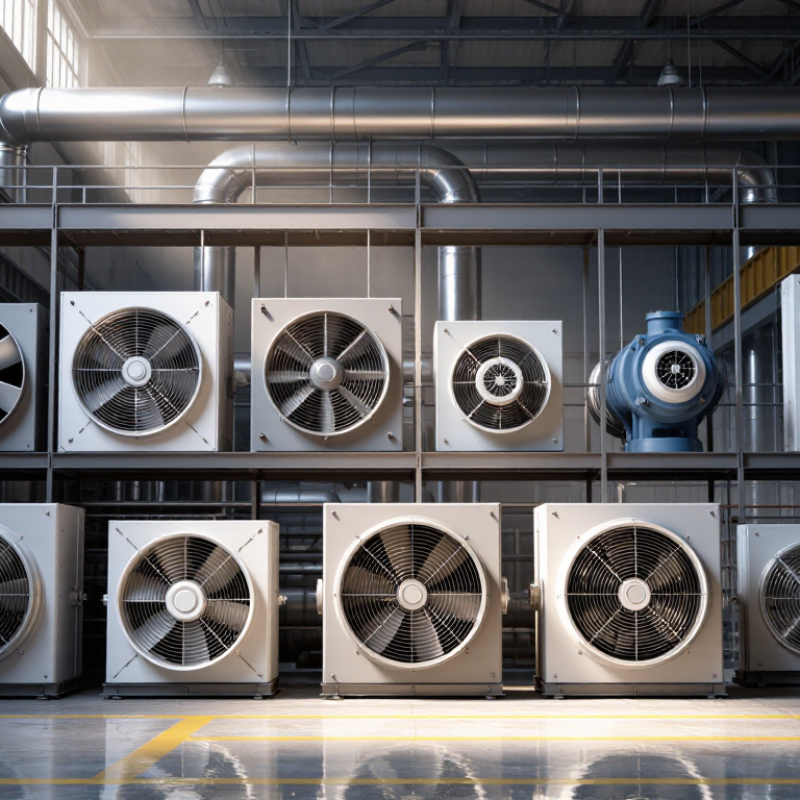
10 Best Industrial Ventilation Fans for 2026

What Industrial Ventilation Fans Are and Why They Matter in 2026

10 Best Industrial Ventilation Fans for 2026

What Industrial Ventilation Fans Are and Why They Matter in 2026

Industrial ventilation fans move air through factories, warehouses, workshops, and processing areas. They remove heat, dust, fumes, moisture, and stale air. Unlike ordinary room fans, they are designed for higher airflow, longer operating hours, and demanding environments.

They matter because indoor air conditions affect safety, productivity, equipment life, and energy use. In a welding bay, a properly positioned exhaust fan can pull fumes away from workers. In a warehouse, roof-mounted units can release trapped heat near the ceiling. Airflow is not enough, though. Engineers must check static pressure, duct resistance, motor efficiency, noise levels, and maintenance access.

Small details often decide performance. A fan may move 20,000 cubic feet per minute in open air but perform poorly through restrictive ducts. Variable-speed controls can reduce energy use when full airflow is unnecessary. Corrosion-resistant housings help in damp areas, while sealed motors may suit dusty spaces. Guards and emergency shutoffs also deserve careful attention.

The ranking is not absolute. A compact axial fan may suit a loading area, while a centrifugal model handles heavier duct resistance. Field measurements should guide the choice. Temperature, airborne particles, operating schedules, and local building requirements can change the best option. Paper specifications can mislead. Real conditions matter more.

How to Evaluate Industrial Ventilation Fans by Performance and Design

A useful industrial ventilation fan is not simply the unit with the highest airflow rating. Evaluate airflow at the required static pressure, since long ducts, filters, and bends can reduce delivery. The U.S. Department of Energy’s Improving Fan System Performance guide recommends assessing the whole fan system, not just the fan itself. That means checking the operating point against the system curve. Look for stable performance near the intended duty point. Too much capacity can waste energy and create unwanted noise.

Design details matter on the factory floor. Compare fan energy index (FEI), motor efficiency, speed controls, and access for cleaning. AMCA Publication 205 defines FEI as a way to compare fan energy performance at a given duty point; an FEI of 1.0 represents the baseline. Check the test conditions behind any rating. Also inspect the housing, impeller, guards, and corrosion protection against dust, moisture, and temperature. A compact fan may fit neatly above a work cell, but maintenance access can still be awkward. It happens. Noise and vibration deserve a real site check, not just a catalog comparison. OSHA’s technical guidance treats noise exposure as a workplace hazard, so measure sound where workers stand. Revisit assumptions after installation; real duct losses can surprise you.

Ten Leading Industrial Ventilation Fans for Different Workplace Needs

Choosing among the ten leading industrial ventilation fans depends on the workplace, not popularity. Axial fans suit large halls where high air volume and low resistance matter. Tube axial fans move air through ducts, while vane axial models handle higher pressure more efficiently. Centrifugal fans work better with filters, bends, and long duct runs. Backward-curved designs can reduce energy use. Forward-curved units provide compact airflow for smaller systems. Mixed-flow fans balance pressure and volume. Roof exhaust fans remove rising heat. Wall-mounted propeller fans improve general circulation. Corrosion-resistant fans support humid or chemically exposed areas.

Site experience shows that airflow figures alone can mislead. Measure room volume, duct resistance, heat sources, dust levels, and worker locations before selecting equipment. A welding area may need local extraction, not a powerful circulation fan. A warehouse may benefit from several slower fans instead of one loud unit. Check motor protection, guarding, vibration control, and access for cleaning. Noise matters too. A technically efficient fan can still fail if employees avoid the work area.

Maintenance records should guide the final decision. Inspect belts, bearings, blades, and mounting bolts on a defined schedule. Keep spare parts practical and available. Conditions change.

A small mistake in pressure estimates can weaken the entire system. Recheck measurements after installation, because real buildings rarely match drawings perfectly. Performance testing with airflow readings offers stronger evidence than catalog claims alone.

Comparing Airflow, Energy Use, Noise, Durability, and Maintenance

Choosing among the 10 best industrial ventilation fans for 2026 means comparing measured performance, not just advertised airflow. Check airflow at the pressure your ductwork actually creates; a free-air rating may shrink once filters, bends, and louvers are installed. AMCA Publication 211 describes certification procedures for fan aerodynamic performance, offering a useful benchmark when comparing published ratings. Ask for test conditions and curves. Numbers need context.

Energy use deserves equal attention. The U.S. Department of Energy’s Improving Fan System Performance guide recommends assessing the whole system, since throttling, oversized motors, and avoidable resistance can waste power. Compare input watts with delivered airflow at your operating point, then consider variable-speed control where demand changes during the day. A lower purchase price can become an expensive choice if the fan runs continuously. That happens.

Noise and durability affect workers and maintenance schedules. NIOSH recommends limiting occupational exposure to 85 dBA over an eight-hour workday; measure sound where people work, not only beside the fan. For durability, inspect housing materials, corrosion protection, bearing access, and vibration limits. Ask how often lubrication and belt checks are needed, and whether parts can be reached without removing nearby ductwork. One overlooked access panel can turn routine service into downtime.

10 Best Industrial Ventilation Fans for 2026 — Comparing Airflow, Energy Use, Noise, Durability, and Maintenance

This comparison ranks fan types by common industrial use cases, not by brand. Airflow, motor input, and sound levels are indicative ranges for commonly available sizes and operating conditions; they are not guaranteed specifications for a particular unit.

Rank Fan Type Best Suited For Typical Airflow Typical Motor Input Indicative Sound Level Durability Considerations Maintenance Needs
1 Vane axial fan High-volume supply or exhaust in long ducts and demanding ventilation systems 5,000–150,000 m³/h 0.75–30 kW About 65–90 dBA at 1 m Robust when correctly selected for pressure and temperature; check blade and casing materials for corrosive or hot air. Inspect blades, bearings, belts (if fitted), fasteners, and vibration regularly; clean deposits that could unbalance the rotor.
2 Backward-inclined centrifugal fan Energy-conscious air handling where moderate-to-high static pressure is needed 1,000–80,000 m³/h 0.37–22 kW About 60–88 dBA at 1 m Generally suitable for continuous service when operated within its performance range; wheel and housing material determine corrosion resistance. Check bearings, belt tension where applicable, wheel cleanliness, and alignment; inspect for vibration or buildup.
3 Radial-blade centrifugal fan Dusty, particulate-laden, or material-handling exhaust applications 1,000–50,000 m³/h 0.37–18 kW About 65–92 dBA at 1 m Simple, rugged wheel designs can tolerate heavier contamination; abrasive particles may accelerate wear. Inspect the wheel and housing for wear, buildup, and imbalance; check bearings and clear material from the inlet as needed.
4 Tube axial fan Straight-through duct ventilation with relatively low-to-moderate system resistance 2,000–60,000 m³/h 0.18–7.5 kW About 62–88 dBA at 1 m Durability depends on motor protection, bearing quality, and exposure to moisture, heat, or contaminants. Clean blades and guards; inspect mounting, electrical connections, bearings, and vibration.
5 Roof axial exhaust fan General building exhaust and heat removal through a roof opening 2,000–60,000 m³/h 0.18–5.5 kW About 60–84 dBA at 1 m Weather exposure makes corrosion-resistant finishes, secure roof mounting, and suitable weather protection important. Inspect the curb, weather seal, guards, fasteners, and motor; remove debris and check the fan after severe weather.
6 Mixed-flow inline fan Ducted systems needing more pressure capability than a basic axial fan in a compact layout 1,000–30,000 m³/h 0.12–5.5 kW About 58–82 dBA at 1 m Typically compact; service life is affected by operating temperature, dust loading, and whether the fan is accessible for inspection. Check the impeller, duct connections, bearings, and vibration; clean the unit according to the amount of dust in the airstream.
7 Wall axial fan Direct wall-mounted ventilation in workshops, warehouses, and utility spaces 1,000–35,000 m³/h 0.09–2.2 kW About 55–78 dBA at 1 m Simple installation can be dependable; outdoor exposure and corrosive air require suitable coatings and motor protection. Clean blades and guards, inspect wall fixings and shutters, and check the motor and electrical connections.
8 Forward-curved centrifugal fan Compact air-handling equipment and lower-pressure duct or enclosure ventilation 500–20,000 m³/h 0.12–7.5 kW About 58–85 dBA at 1 m Best suited to relatively clean air; accumulated dust on the many wheel blades can affect balance and performance. Keep the wheel and inlet clean; inspect bearings, belt condition where fitted, and vibration.
9 Panel axial fan Ventilation through equipment panels, enclosures, and modular wall openings 1,500–45,000 m³/h 0.12–3.0 kW About 58–82 dBA at 1 m Performance and service life depend on panel rigidity, guarding, and protection from moisture and airborne contaminants. Clean the grille and blades; check mounting hardware, guards, and electrical connections.
10 Portable axial fan Temporary ventilation, spot cooling, and moving air through flexible ducting 1,000–20,000 m³/h 0.12–2.2 kW About 65–90 dBA at 1 m Frequent handling can damage cords, frames, or guards; choose construction appropriate to the work environment. Inspect the cord, plug, frame, and guard before use; clean the blades and check for loosened parts or unusual vibration.
Sound levels vary with fan size, speed, distance, room acoustics, ductwork, and measurement method. Airflow and motor input should be compared at the same duty point and static pressure. Always confirm final selection, materials, and inspection intervals against the equipment specification and site requirements.

How to Select, Install, and Maintain the Right Industrial Ventilation Fan

Selecting an industrial ventilation fan starts with the room, not the catalog. Measure floor area, ceiling height, heat load, dust, fumes, and moisture. Then estimate the required air changes per hour and compare them with tested airflow at real static pressure. Free-air ratings can mislead. A fan moving 20,000 cubic feet per minute on paper may perform poorly through long ducts, filters, louvers, or restrictive screens. Choose corrosion-resistant materials for damp spaces and spark-resistant construction where risk assessments require it. Confirm motor temperature limits, noise levels, control compatibility, and local electrical requirements before purchase.

Installation affects performance as much as fan size. Mount the unit on a rigid, level frame with vibration isolators. Keep intake and discharge paths clear, and protect openings with suitable guards. Seal duct joints carefully; small leaks create large losses over time. Provide safe access for cleaning and inspection. During commissioning, record airflow, amperage, vibration, and sound. These readings reveal gradual problems. Inspect blades, bearings, belts, guards, and electrical connections regularly. Clean dust before it hardens. Replace damaged parts promptly. I have seen a correctly sized fan underperform because a dirty screen was ignored for months. Selection is not always the problem.

Tips: Leave space around the motor and service panels. Label the isolation switch clearly. Recheck airflow after process changes. If measurements conflict, stop and investigate rather than trusting assumptions. Manufacturer data helps, but field conditions decide.